'%3e%3cpath%20d='M34.1406%205.85938C30.3906%202.10547%2025.3047%200%2020%200C14.6953%200%209.60938%202.10547%205.85938%205.85938C2.10938%209.61328%200%2014.6953%200%2020C0%2025.3047%202.10547%2030.3906%205.85938%2034.1406C9.61328%2037.8906%2014.6953%2040%2020%2040C25.3047%2040%2030.3906%2037.8945%2034.1406%2034.1406C37.8906%2030.3906%2040%2025.3047%2040%2020C40%2014.6953%2037.8945%209.60938%2034.1406%205.85938ZM37.0117%2023.543H31.1602V13.5391H27.6328V19.9414C28.1211%2020.6914%2028.3711%2021.582%2028.3711%2022.5625V22.625C28.3711%2023.668%2028.1172%2024.6055%2027.6328%2025.4297V26.6094H36.082C33.4883%2032.9375%2027.2891%2037.3789%2020.0039%2037.3789C10.3711%2037.3789%202.62109%2029.6289%202.62109%2020C2.62109%2010.3711%2010.3711%202.62109%2020%202.62109C29.6289%202.62109%2037.3789%2010.3711%2037.3789%2020C37.3789%2021.1484%2037.2617%2022.2656%2037.0508%2023.3477C37.0391%2023.4141%2037.0234%2023.4766%2037.0117%2023.543Z'%20fill='white'/%3e%3cpath%20d='M22.3086%2018.5352C20.4336%2018.125%2019.9531%2017.8398%2019.9766%2017.1836V17.1406C19.9766%2016.6992%2020.3477%2016.2148%2021.4023%2016.2148C22.582%2016.2148%2023.8867%2016.6797%2025.0781%2017.4766L26.8516%2015.0195C25.4453%2013.8906%2023.707%2013.3398%2021.5547%2013.3398C18.5195%2013.3398%2016.4375%2015%2016.4063%2017.4766V17.5352C16.3633%2020.2617%2018.5859%2020.9805%2021.293%2021.6016C23.0391%2021.9766%2023.5703%2022.3164%2023.5703%2022.9609L23.5469%2022.9766C23.5469%2023.3906%2023.2578%2023.7031%2022.7852%2023.8359C22.5742%2023.9062%2022.1289%2023.9727%2021.5156%2023.9727C20.7617%2023.9727%2019.7539%2023.8633%2018.6328%2023.4844C18.0898%2023.2891%2017.4727%2023.0039%2016.8047%2022.6133L20.1406%2026.625C20.2813%2026.6602%2021.0977%2026.8516%2021.7734%2026.8516C25.0039%2026.8516%2027.0859%2025.2461%2027.1094%2022.6328V22.5703C27.1602%2020.1133%2025.2148%2019.1719%2022.3086%2018.5352Z'%20fill='white'/%3e%3cpath%20d='M5.24219%2013.5664V26.6133H8.75391V23.7578L10.2969%2021.9531L14.2031%2026.6133H18.3867L12.3555%2019.5195L17.4023%2013.5664H13.4531L8.75391%2019.0586V13.5664H5.24219Z'%20fill='white'/%3e%3c/g%3e%3cdefs%3e%3cclipPath%20id='clip0_97_2430'%3e%3crect%20width='40'%20height='40'%20fill='white'/%3e%3c/clipPath%3e%3c/defs%3e%3c/svg%3e)


Estimated read time: 3-4 minutes
This archived news story is available only for your personal, non-commercial use. Information in the story may be outdated or superseded by additional information. Reading or replaying the story in its archived form does not constitute a republication of the story.
WASHINGTON — Measures of U.S. inflation in September showed that the pace of price increases is still grinding lower, though at a slow and uneven pace.
Consumer prices in the United States increased 0.4% from August to September, below the previous month's 0.6% pace. Thursday's report from the Labor Department also showed that year-over-year inflation in September was unchanged from a 3.7% rise in August.
And underlying inflation declined a bit last month: So-called core prices, which exclude volatile food and energy costs, climbed 4.1% in September from 12 months earlier, down from a 4.3% annual pace in August. That is the smallest such increase in the core measure in two years.
Still, on a month-to-month basis, prices are continuing to rise faster than is consistent with the Fed's 2% target. Core prices increased 0.3% from August to September, the same as in the previous month.
The main driver of last month's inflation was an uptick in housing costs. Rental prices and a measure that the government computes of the cost of home ownership, which together make up about a third of the total inflation index, accounted for most of overall inflation from August to September. Those costs also accounted for more than two-thirds of the increase in core prices.
Rental prices rose 0.5% on a monthly basis for a second straight month. Measured year over year, rental costs are up 7.4%, down from a 7.8% rise in August.
Higher gas prices also helped drive inflation for a second straight month. Those prices rose 2.1% just from August to September, after a 10.6% surge the previous month.
Consumers did receive some relief from clothing prices. They dropped 0.8% last month and are up 2.3% compared with a year earlier. Used car prices dropped for a fourth straight month, declining 2.5%. They're now down 8% from a year ago.
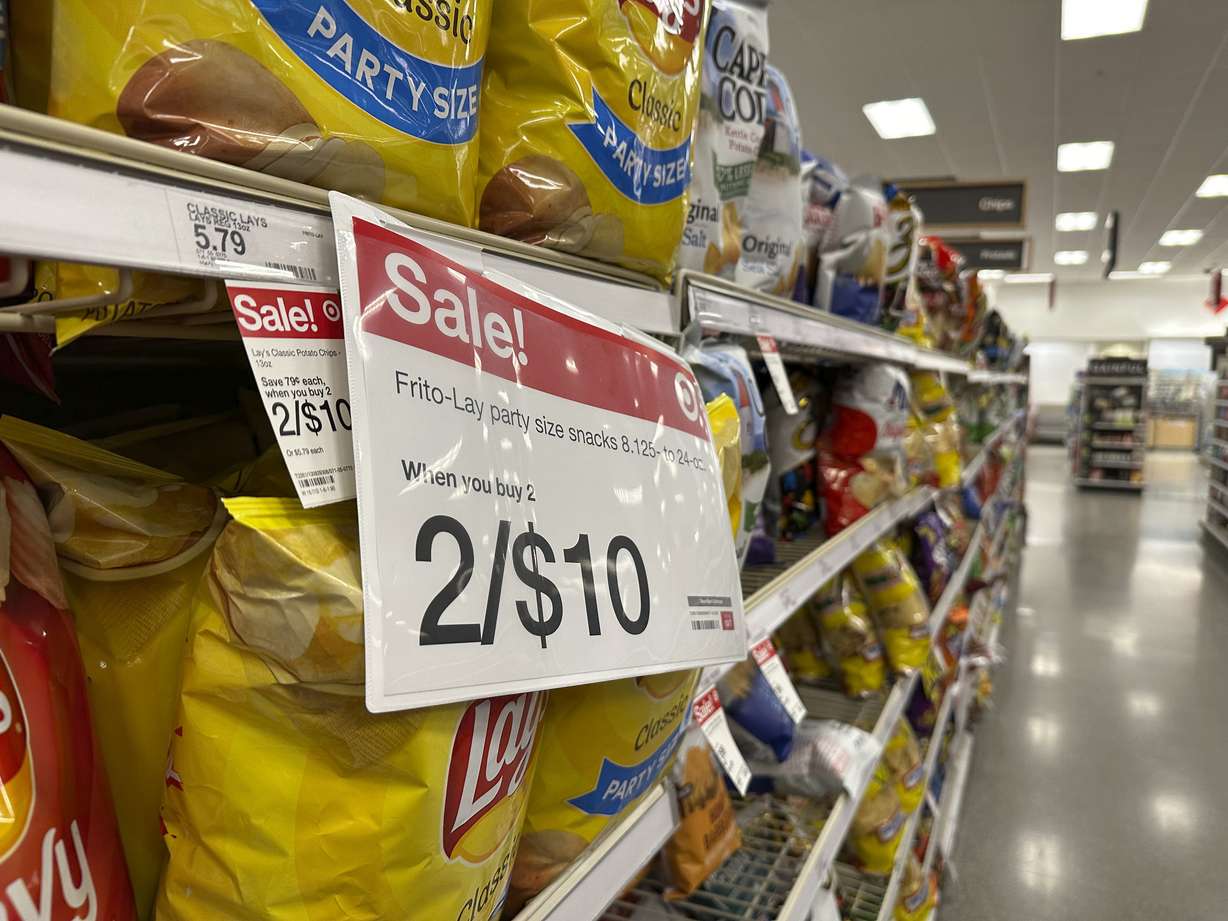
Grocery prices, after soaring last year, have cooled. They ticked up just 0.1% from August to September and are 2.4% higher than they were a year ago.
Economists and Fed officials have long cautioned that inflation would likely ease in a bumpy and uneven way, though it is still expected to keep slowing into 2024. Thursday's inflation data follows several speeches this week by Fed officials suggesting that they are inclined to leave their benchmark interest rate unchanged at their next meeting Oct. 31- Nov. 1.
Longer-term interest rates have spiked since the Fed's policymakers last raised their key rate in July. Those higher long-term bond rates have led to more expensive mortgages, auto loans and business borrowing, a trend that could help cool inflation pressures without further Fed rate hikes.
Several factors have combined to force up longer-term rates. They include the belated acceptance by financial markets of the likelihood that the economy will remain on firm footing and avoid a recession.
The government's budget deficit is also worsening, requiring more Treasury debt to fund it. The result has been an increased supply of Treasuries, which means a higher yield is needed to attract enough buyers.
A larger reason, though, is that investors regard the future path of inflation and interest rates as increasingly uncertain and demand a higher long-term Treasury yield to compensate for that risk.
We're in this position where we can kind of watch and see what happens.
–Christopher Waller, Fed governing board
On Wednesday, Christopher Waller, a member of the Fed's governing board who has previously backed sharply higher rates to fight inflation, suggested that price increases are steadily cooling, potentially allowing the Fed to leave interest rates unchanged. Optimism has been growing that the Fed can tame inflation through the series of 11 interest rate hikes it imposed beginning in March 2022 without causing a recession.
"We're in this position where we can kind of watch and see what happens," Waller said. If core inflation stays as low as it has in recent months, "we're pretty much back to our target."