'%3e%3cpath%20d='M34.1406%205.85938C30.3906%202.10547%2025.3047%200%2020%200C14.6953%200%209.60938%202.10547%205.85938%205.85938C2.10938%209.61328%200%2014.6953%200%2020C0%2025.3047%202.10547%2030.3906%205.85938%2034.1406C9.61328%2037.8906%2014.6953%2040%2020%2040C25.3047%2040%2030.3906%2037.8945%2034.1406%2034.1406C37.8906%2030.3906%2040%2025.3047%2040%2020C40%2014.6953%2037.8945%209.60938%2034.1406%205.85938ZM37.0117%2023.543H31.1602V13.5391H27.6328V19.9414C28.1211%2020.6914%2028.3711%2021.582%2028.3711%2022.5625V22.625C28.3711%2023.668%2028.1172%2024.6055%2027.6328%2025.4297V26.6094H36.082C33.4883%2032.9375%2027.2891%2037.3789%2020.0039%2037.3789C10.3711%2037.3789%202.62109%2029.6289%202.62109%2020C2.62109%2010.3711%2010.3711%202.62109%2020%202.62109C29.6289%202.62109%2037.3789%2010.3711%2037.3789%2020C37.3789%2021.1484%2037.2617%2022.2656%2037.0508%2023.3477C37.0391%2023.4141%2037.0234%2023.4766%2037.0117%2023.543Z'%20fill='white'/%3e%3cpath%20d='M22.3086%2018.5352C20.4336%2018.125%2019.9531%2017.8398%2019.9766%2017.1836V17.1406C19.9766%2016.6992%2020.3477%2016.2148%2021.4023%2016.2148C22.582%2016.2148%2023.8867%2016.6797%2025.0781%2017.4766L26.8516%2015.0195C25.4453%2013.8906%2023.707%2013.3398%2021.5547%2013.3398C18.5195%2013.3398%2016.4375%2015%2016.4063%2017.4766V17.5352C16.3633%2020.2617%2018.5859%2020.9805%2021.293%2021.6016C23.0391%2021.9766%2023.5703%2022.3164%2023.5703%2022.9609L23.5469%2022.9766C23.5469%2023.3906%2023.2578%2023.7031%2022.7852%2023.8359C22.5742%2023.9062%2022.1289%2023.9727%2021.5156%2023.9727C20.7617%2023.9727%2019.7539%2023.8633%2018.6328%2023.4844C18.0898%2023.2891%2017.4727%2023.0039%2016.8047%2022.6133L20.1406%2026.625C20.2813%2026.6602%2021.0977%2026.8516%2021.7734%2026.8516C25.0039%2026.8516%2027.0859%2025.2461%2027.1094%2022.6328V22.5703C27.1602%2020.1133%2025.2148%2019.1719%2022.3086%2018.5352Z'%20fill='white'/%3e%3cpath%20d='M5.24219%2013.5664V26.6133H8.75391V23.7578L10.2969%2021.9531L14.2031%2026.6133H18.3867L12.3555%2019.5195L17.4023%2013.5664H13.4531L8.75391%2019.0586V13.5664H5.24219Z'%20fill='white'/%3e%3c/g%3e%3cdefs%3e%3cclipPath%20id='clip0_97_2430'%3e%3crect%20width='40'%20height='40'%20fill='white'/%3e%3c/clipPath%3e%3c/defs%3e%3c/svg%3e)


Estimated read time: 4-5 minutes
This archived news story is available only for your personal, non-commercial use. Information in the story may be outdated or superseded by additional information. Reading or replaying the story in its archived form does not constitute a republication of the story.
SALT LAKE CITY — A person's spirituality is connected with their well-being, and a Utah-based organization is researching that relationship further.
The organization, Radiant Foundation, released a detailed report on faith and wellness at the Gallup headquarters in London on Monday, as part of the Wellbeing Forum. It also presented research into the foundation's mental health app called Skylight, which is designed to include spirituality as a mental health resource.
John Dye, executive director of Skylight, said there was a lot of interest in their presentation at the forum. He said people were particularly interested in data showing that Skylight use reduces anxiety, which is known as the "gateway emotion" for lack of sleep and loneliness. People between 18 and 35 spend over four hours a day on their phones, Dye said, adding that the data shows much of that time is harmful to mental health.
The app is similar to applications like Headspace and Calm, but he said Skylight "entered through a different door" — spiritual wellness. The app is full of references to a higher power, but not a specific higher power.
"Cracking that anxiety code is one key thing to show. ... There's more research that needs to be done but this is absolutely a way that we can pursue some headway into the maladies of mental health with this generation," Dye said.
Faith and wellness
The report, entitled "Faith and Wellness: The Worldwide Connection Between Spirituality and Well-being," considers Gallup World Poll data for over 10 years, which includes interviews from 1.47 million people in 140 countries. It concludes there is a "strong association" between religiosity, meaning the importance of daily religion, and both mental health and physical health.
Ilana Ron-Levey, Gallup managing director, said the report shows growing research that people with stronger spirituality or faith have better mental health.
"Many individuals may not fully appreciate the positive impact that spiritual life and practices can have on their mental and physical well-being, and this study further uncovers the complex interplay between spirituality and well-being across countries and regions," Ron-Levey said.
The study found people who value religion are more likely to be engaged in their communities and volunteering, and are more likely to have people they can turn to when in need.
"We are facing a worldwide mental health crisis and we can't afford to overlook any aspect of life or activity that can improve well-being," said Aaron Sherinian, Radiant Foundation CEO.
Although the study did show a general increase in well-being resulting from spirituality, the United Kingdom and some other European countries had the opposite trend. People in the U.K. who reported being religious were less likely to report better mental health, and in much of Europe, being more religious had a negative impact on physical health.
Dye said they don't have additional research into the reasons for that difference yet, but it looks like religion has a more positive impact, comparatively, on health in less wealthy countries.
Mental health care at our fingertips
Skylight is a free social media app designed by the Radiant Foundation, which is part of the Deseret Management Corporation, the parent company of KSL. Dye said it has about 500,000 registered users, and 2 million users in general. He said on average, people spend about 10 minutes on the app each session.
Jen Huberty, who completed the study on the social media app Skylight, said developers chose to use "spiritual" instead of "religious" because it is more inclusive and "applies across faith."
She said although Generation Z and young Millennials are sometimes considered less religious, they are spiritual — often building their own ideas and beliefs. Huberty said most of the people in these generations are in a "digital world" which is often associated with negative impacts on mental health, but this app uses that to improve mental health.
Huberty explained Skylight is broader than most mental health apps and uses affirmations, meditation, walks in nature and prayer as helps to users.
The app has been successful and shows significantly lower anxiety scores for people who use it more than three times a week, but the foundation has not yet compared its effectiveness with other mental health applications.
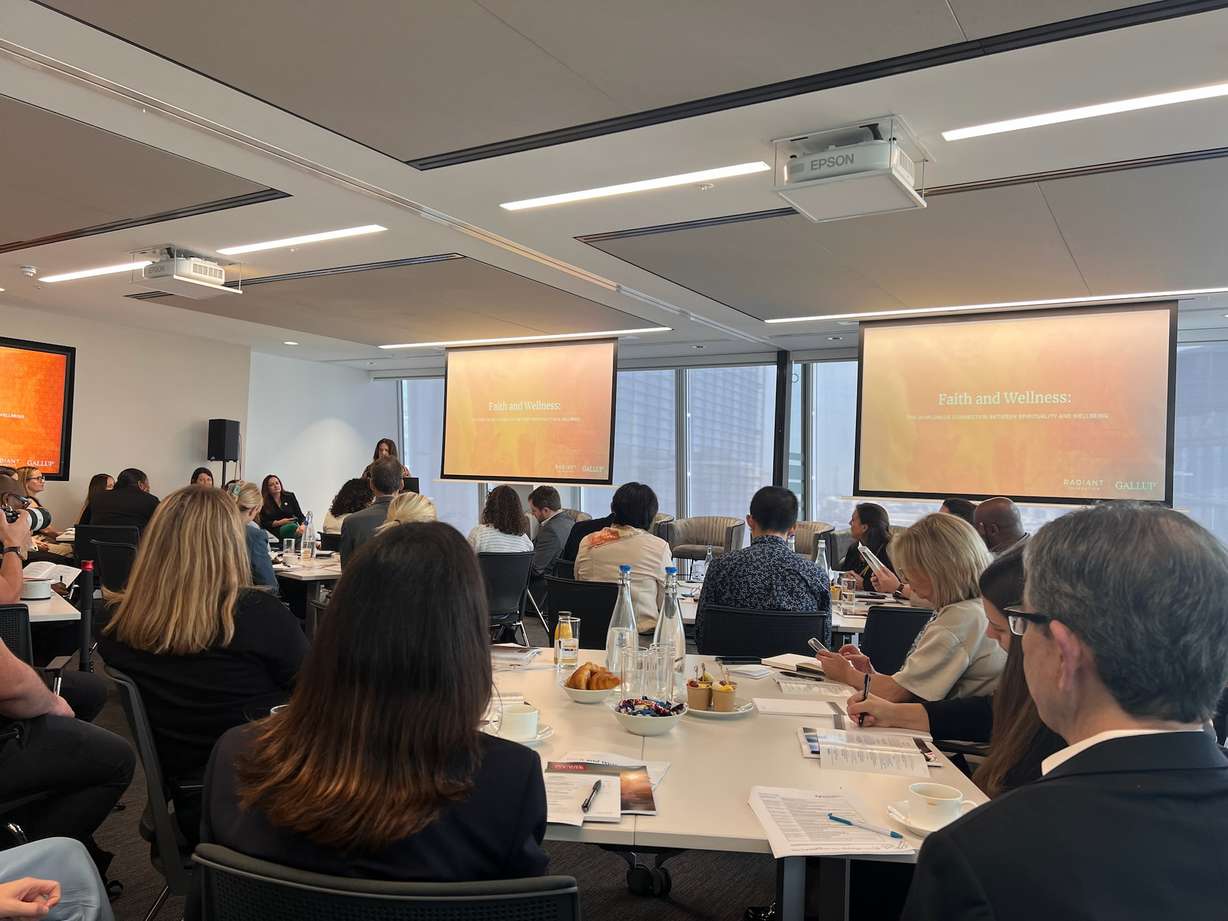
The study focused on younger generations because they are more impacted by mental health issues, Dye said, adding that they want to help people between 18 and 35 connect with God, because they believe that relationship with a higher power will help.
He said they recognize people still need therapy, medication and exercise for mental health, but they believe a few minutes connecting with God will give people more resilience to daily challenges.
By the end of this decade, Dye said, Generation Z and Millennials will make up about a third of the work force and if mental health issues in those generations are not addressed, it will have a large societal impact.
The app does not attempt to replace religion, he said, but aims to help people of any age along their own spiritual journey.
"We are committed to providing data-backed tools and practices to help our users find the peace that only comes by connecting with a higher power," Dye said.