'%3e%3cpath%20d='M34.1406%205.85938C30.3906%202.10547%2025.3047%200%2020%200C14.6953%200%209.60938%202.10547%205.85938%205.85938C2.10938%209.61328%200%2014.6953%200%2020C0%2025.3047%202.10547%2030.3906%205.85938%2034.1406C9.61328%2037.8906%2014.6953%2040%2020%2040C25.3047%2040%2030.3906%2037.8945%2034.1406%2034.1406C37.8906%2030.3906%2040%2025.3047%2040%2020C40%2014.6953%2037.8945%209.60938%2034.1406%205.85938ZM37.0117%2023.543H31.1602V13.5391H27.6328V19.9414C28.1211%2020.6914%2028.3711%2021.582%2028.3711%2022.5625V22.625C28.3711%2023.668%2028.1172%2024.6055%2027.6328%2025.4297V26.6094H36.082C33.4883%2032.9375%2027.2891%2037.3789%2020.0039%2037.3789C10.3711%2037.3789%202.62109%2029.6289%202.62109%2020C2.62109%2010.3711%2010.3711%202.62109%2020%202.62109C29.6289%202.62109%2037.3789%2010.3711%2037.3789%2020C37.3789%2021.1484%2037.2617%2022.2656%2037.0508%2023.3477C37.0391%2023.4141%2037.0234%2023.4766%2037.0117%2023.543Z'%20fill='white'/%3e%3cpath%20d='M22.3086%2018.5352C20.4336%2018.125%2019.9531%2017.8398%2019.9766%2017.1836V17.1406C19.9766%2016.6992%2020.3477%2016.2148%2021.4023%2016.2148C22.582%2016.2148%2023.8867%2016.6797%2025.0781%2017.4766L26.8516%2015.0195C25.4453%2013.8906%2023.707%2013.3398%2021.5547%2013.3398C18.5195%2013.3398%2016.4375%2015%2016.4063%2017.4766V17.5352C16.3633%2020.2617%2018.5859%2020.9805%2021.293%2021.6016C23.0391%2021.9766%2023.5703%2022.3164%2023.5703%2022.9609L23.5469%2022.9766C23.5469%2023.3906%2023.2578%2023.7031%2022.7852%2023.8359C22.5742%2023.9062%2022.1289%2023.9727%2021.5156%2023.9727C20.7617%2023.9727%2019.7539%2023.8633%2018.6328%2023.4844C18.0898%2023.2891%2017.4727%2023.0039%2016.8047%2022.6133L20.1406%2026.625C20.2813%2026.6602%2021.0977%2026.8516%2021.7734%2026.8516C25.0039%2026.8516%2027.0859%2025.2461%2027.1094%2022.6328V22.5703C27.1602%2020.1133%2025.2148%2019.1719%2022.3086%2018.5352Z'%20fill='white'/%3e%3cpath%20d='M5.24219%2013.5664V26.6133H8.75391V23.7578L10.2969%2021.9531L14.2031%2026.6133H18.3867L12.3555%2019.5195L17.4023%2013.5664H13.4531L8.75391%2019.0586V13.5664H5.24219Z'%20fill='white'/%3e%3c/g%3e%3cdefs%3e%3cclipPath%20id='clip0_97_2430'%3e%3crect%20width='40'%20height='40'%20fill='white'/%3e%3c/clipPath%3e%3c/defs%3e%3c/svg%3e)


Estimated read time: 3-4 minutes
This archived news story is available only for your personal, non-commercial use. Information in the story may be outdated or superseded by additional information. Reading or replaying the story in its archived form does not constitute a republication of the story.
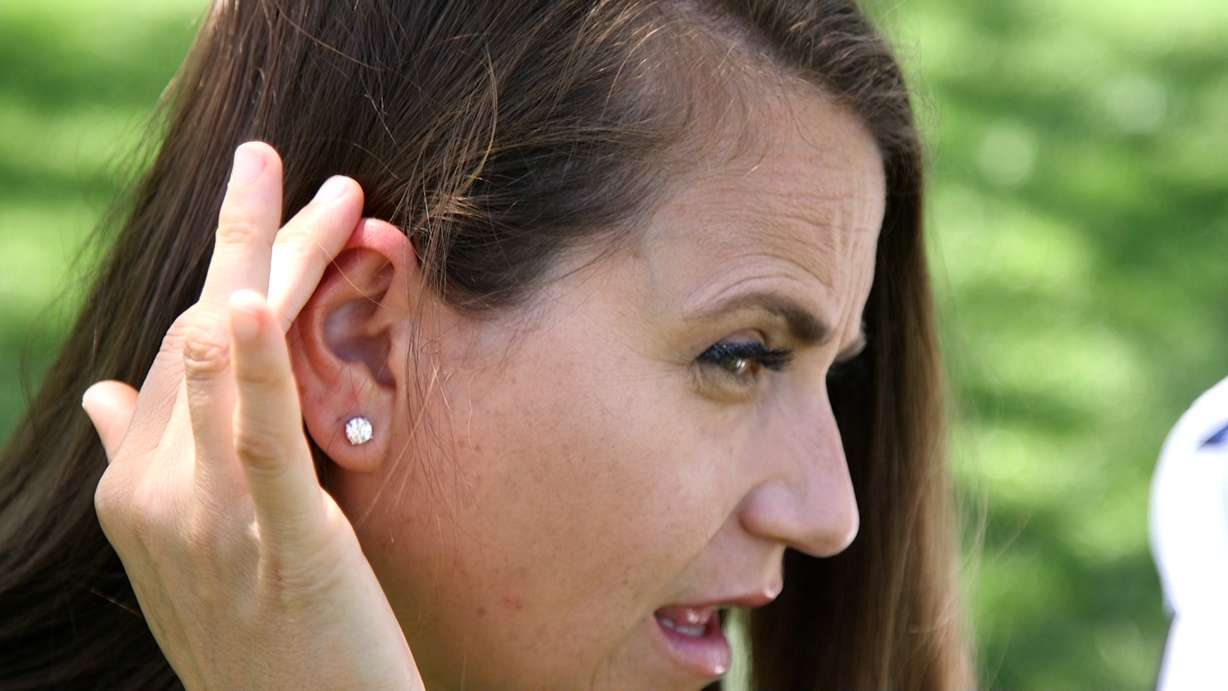
WEST BOUNTIFUL — Amanda Jorgensen remembers the feeling of confusion and fear when she learned, at age 25, she had melanoma.
"I was not even connecting the dots with what was going on. 'I have cancer? What?'" she remembers saying to the nurse on the phone. "I'm 25 years old, I can't."
At the time, Amanda was just weeks away from getting married, and the news changed her outlook on everything.
"I remember my fiancé at the time would call me and I would start crying," she said. "And I kept telling him: 'Don't marry me. I've got cancer, why would you want to marry someone who has cancer?'"
Now 37 years old, Amanda is a mother of three and runs a successful real estate business. The wedding 12 years ago went off as planned. And her health is good thanks to a quick response to that dark mole and excellent oncology care.
However, Utah has the unfortunate distinction of having the highest rate of melanoma in the nation – a rate more than double the national average.
Why is the melanoma rate so high in Utah?
While the high altitude and many residents with fair skin contribute to that higher rate, health officials believe Utahns' outdoor lifestyle also plays a role.
Why? It's related to the rays, according to Dr. Tawyna Bowles, medical director for Melanoma Services at Intermountain Health.

"In Utah, all of us are particularly higher risk even with a darker skin tone. We see Hispanic and Pacific Islander patients, for example, who have melanoma and high-risk cancers," she said, adding. "If you have a lot of itching or irritation in one area that isn't explained, that should be looked at. For skin cancer that occurs in hard-to-see places like the top of your head, the bottom of your foot, places that are difficult to see, have those areas examined. One thing is knowing a bit what your risk is. People that have multiple moles, who have very fair skin or have a personal history of skin cancer in their family."
Melanoma is the third-most common cancer among women aged 20-39 years and the second-most common cancer in men aged 20-39 years. In the U.S., melanoma is currently the fifth most common cancer in men and the sixth most common in women of all age groups.
Prevention: Tips to reduce your risk of skin cancer
There are ways to limit your risk of melanoma and to catch it early. That starts by making sun protection a daily habit, no matter the season and weather.
Establish an easy, daily sun protection regimen you can follow all year long: Apply sunscreen each morning and reapply every two hours. In addition, cover up with clothing, broad-brimmed hats and UV-blocking sunglasses.
Seek the shade, especially between 10 a.m. and 4 p.m., when the sun's rays are strongest.
Continue using sunscreen during the winter and on cloudy days. Both UVA and UVB rays play a role in the development of melanoma – and the rays can be just as powerful in winter or through clouds as they are on a sunny summer day.
Do not let your skin burn. On average, a person's risk for melanoma doubles if he or she has had more than five sunburns.

Check your skin. It is recommended that adults over the age of 18 see a dermatologist once a year for a full skin exam. Adults should also perform monthly self-exams, looking for new or changing moles or lesions that should be examined by a health care provider.
"The good news is that the risk factors for melanoma are well known," Bowles said. "So, if you have children and grandchildren, now's the time to use sun protection. Sunscreen is our main source of protection from the sun. If you're wearing sunscreen on a regular basis, you're blocking most of the dangerous rays from the sun."
For Amanda, sunscreen – SPF 50 on this day – is with her when she heads to a playground with her kids. "If we're going out, we try and find shady parks," but adds. "Just wear sunscreen. Like that song. Wear sunscreen."