Estimated read time: 1-2 minutes
This archived news story is available only for your personal, non-commercial use. Information in the story may be outdated or superseded by additional information. Reading or replaying the story in its archived form does not constitute a republication of the story.
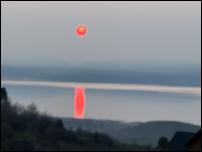
TORONTO, Ontario — During wildfire season Canadians may notice the sun appearing red in the sky.
Blood red sunrises and sunsets are a somewhat eerie side effect of the smoke that wafts for hundreds or even thousands of kilometres from the scene of a wildfire. The red tint can even last through the day if the smoke stays in the atmosphere.
Depending on the size and location of wildfires, grey skies caused by smoke particles can stretch countrywide.
Those same particles can also cause the sun to appear a deep, hazy red.
"What usually comes to mind are brilliant sunrises and sunsets, the sun looks so, so red and on fire almost," Dave Phillips, senior climatologist with Environment Canada told CTVNews.ca in an interview.
Why the sun looks red
When the sky is clear, all seven wavelengths of light that are visible to the human eye can reach the ground.
When the weather is dry and smoke is high in the atmosphere, Phillips says smoke particles block the shorter wavelengths of light from reaching the ground.
Blue and green colours are shorter wavelengths than red and orange, Phillips said, meaning people see the longer wavelengths of light that make it through the haze.
Read more headlines related to science and technology here "It's the other colours that make up the sky that are filtered out or faded out, are scattered elsewhere, and they don't come to the eye," Phillips said. "And what is left is the very red, longer wavelengths from a smoky sky from the sun that comes through."
Conditions can become so extreme, however, that some might not see the sun at all.
"Sometimes the smoke is so thick, that you don't even see the sun, it just becomes like a fog almost," Phillips said.
Why are Utah's skies hazy?
Blame the abnormally early fire season in Canada
If the skies look a little hazy in northern and eastern Utah this weekend, you can blame the wildfires that are currently ravaging Canada.