'%3e%3cpath%20d='M34.1406%205.85938C30.3906%202.10547%2025.3047%200%2020%200C14.6953%200%209.60938%202.10547%205.85938%205.85938C2.10938%209.61328%200%2014.6953%200%2020C0%2025.3047%202.10547%2030.3906%205.85938%2034.1406C9.61328%2037.8906%2014.6953%2040%2020%2040C25.3047%2040%2030.3906%2037.8945%2034.1406%2034.1406C37.8906%2030.3906%2040%2025.3047%2040%2020C40%2014.6953%2037.8945%209.60938%2034.1406%205.85938ZM37.0117%2023.543H31.1602V13.5391H27.6328V19.9414C28.1211%2020.6914%2028.3711%2021.582%2028.3711%2022.5625V22.625C28.3711%2023.668%2028.1172%2024.6055%2027.6328%2025.4297V26.6094H36.082C33.4883%2032.9375%2027.2891%2037.3789%2020.0039%2037.3789C10.3711%2037.3789%202.62109%2029.6289%202.62109%2020C2.62109%2010.3711%2010.3711%202.62109%2020%202.62109C29.6289%202.62109%2037.3789%2010.3711%2037.3789%2020C37.3789%2021.1484%2037.2617%2022.2656%2037.0508%2023.3477C37.0391%2023.4141%2037.0234%2023.4766%2037.0117%2023.543Z'%20fill='white'/%3e%3cpath%20d='M22.3086%2018.5352C20.4336%2018.125%2019.9531%2017.8398%2019.9766%2017.1836V17.1406C19.9766%2016.6992%2020.3477%2016.2148%2021.4023%2016.2148C22.582%2016.2148%2023.8867%2016.6797%2025.0781%2017.4766L26.8516%2015.0195C25.4453%2013.8906%2023.707%2013.3398%2021.5547%2013.3398C18.5195%2013.3398%2016.4375%2015%2016.4063%2017.4766V17.5352C16.3633%2020.2617%2018.5859%2020.9805%2021.293%2021.6016C23.0391%2021.9766%2023.5703%2022.3164%2023.5703%2022.9609L23.5469%2022.9766C23.5469%2023.3906%2023.2578%2023.7031%2022.7852%2023.8359C22.5742%2023.9062%2022.1289%2023.9727%2021.5156%2023.9727C20.7617%2023.9727%2019.7539%2023.8633%2018.6328%2023.4844C18.0898%2023.2891%2017.4727%2023.0039%2016.8047%2022.6133L20.1406%2026.625C20.2813%2026.6602%2021.0977%2026.8516%2021.7734%2026.8516C25.0039%2026.8516%2027.0859%2025.2461%2027.1094%2022.6328V22.5703C27.1602%2020.1133%2025.2148%2019.1719%2022.3086%2018.5352Z'%20fill='white'/%3e%3cpath%20d='M5.24219%2013.5664V26.6133H8.75391V23.7578L10.2969%2021.9531L14.2031%2026.6133H18.3867L12.3555%2019.5195L17.4023%2013.5664H13.4531L8.75391%2019.0586V13.5664H5.24219Z'%20fill='white'/%3e%3c/g%3e%3cdefs%3e%3cclipPath%20id='clip0_97_2430'%3e%3crect%20width='40'%20height='40'%20fill='white'/%3e%3c/clipPath%3e%3c/defs%3e%3c/svg%3e)





Estimated read time: 2-3 minutes
This archived news story is available only for your personal, non-commercial use. Information in the story may be outdated or superseded by additional information. Reading or replaying the story in its archived form does not constitute a republication of the story.
LAYTON — It's a very tough time for Utah farmers who are several weeks behind in the planting season because of all the snow. For consumers, this means many of the fresh products you see at farmers markets are going to be delayed.
"We feel lucky to get a tractor in the field after the spring we've had," said Tyson Roberts, who runs Roberts Family Farms in Layton.
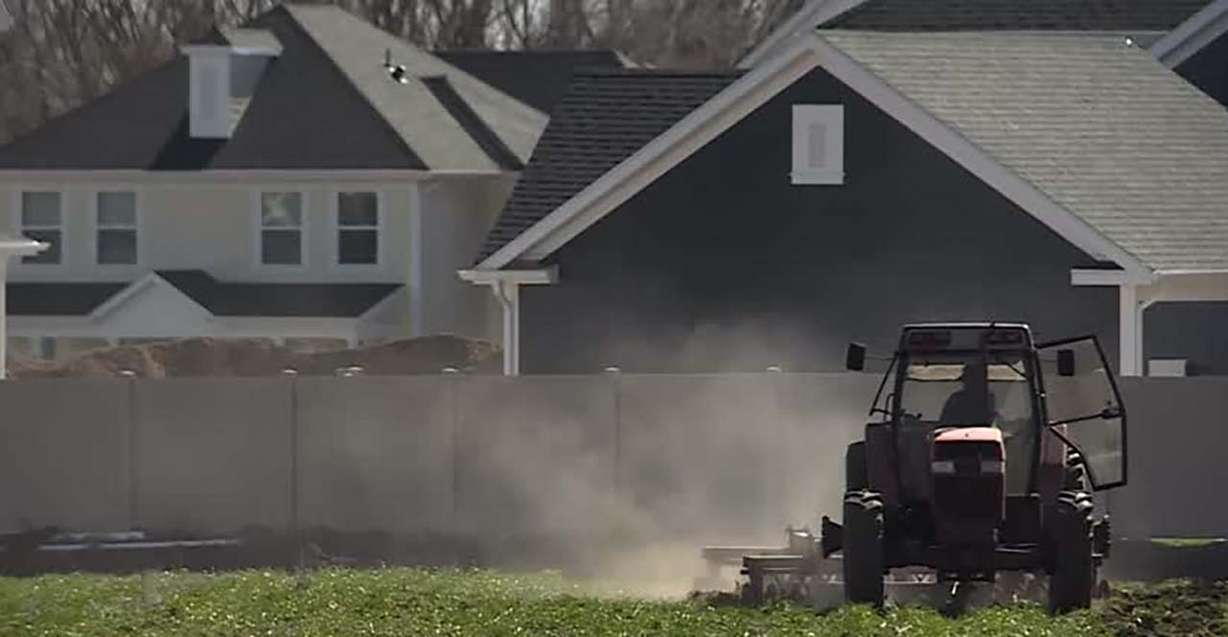
KSL-TV was there Monday as he finally got a chance to fire up the tractor and till the ground for the first time this season.
"Very anxious to get seeds into the ground," Roberts said.
Last year at this time, all of his onions had been planted for weeks. But this year, because of all the snow, they are way behind.
"We are about a month behind planting some crops right now," Roberts said. "A lot of people hoping for sweet corn on the Fourth of July, probably going to be a couple weeks later."
For this sixth generation farmer, whose family has run this land since 1848, that also means a delay in money.
"If harvest is late, paychecks are going to be late," he said. "A vegetable farm like mine, we make all of our money in about three months out of the year."
But, Roberts admits, last year was bone dry, and water is what they've been praying for ever since.
"It's tough to complain about getting what you ask for."
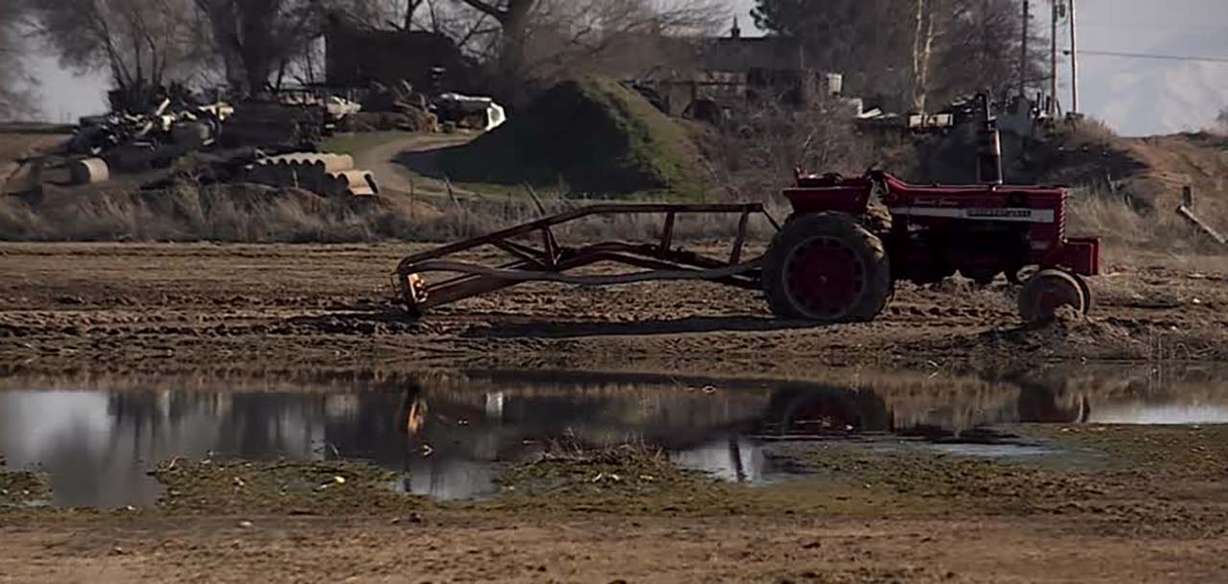
About 20 miles north of Roberts' is Ron Gibson — another sixth generation farmer who farms 2,000 acres of land and runs Green Acres Dairy in Ogden. He's also the president of the Utah Farm Bureau. All of his equipment is still idle. He's not able to fire up his tractors because his ground is still too wet.
"This is our fourth day of good weather. Just underneath here we just have mud balls," Gibson said to KSL-TV.
And to make matters worse, other areas of his fields are covered in about a foot of water in some places.
"It hits us bad when we lose 300 to 500 acres of land," Gibson said. "We have to have water to grow it, and we've been praying for that for so many years. But this year, we got just a little bit much."
And right next to his fields is the Weber River, which is already running very high, and the run off hasn't even gotten underway.
"We've got flooding risks, and we are all trying to figure out what fields we dare plant and what fields we don't dare plant," he said. "We do everything we can, but we can't control Mother Nature."
That's why farmers are so tough.
"If there is one thing about farmers, I think they are resilient, kind of have an optimistic mind," Roberts said.