

Estimated read time: 4-5 minutes
This archived news story is available only for your personal, non-commercial use. Information in the story may be outdated or superseded by additional information. Reading or replaying the story in its archived form does not constitute a republication of the story.
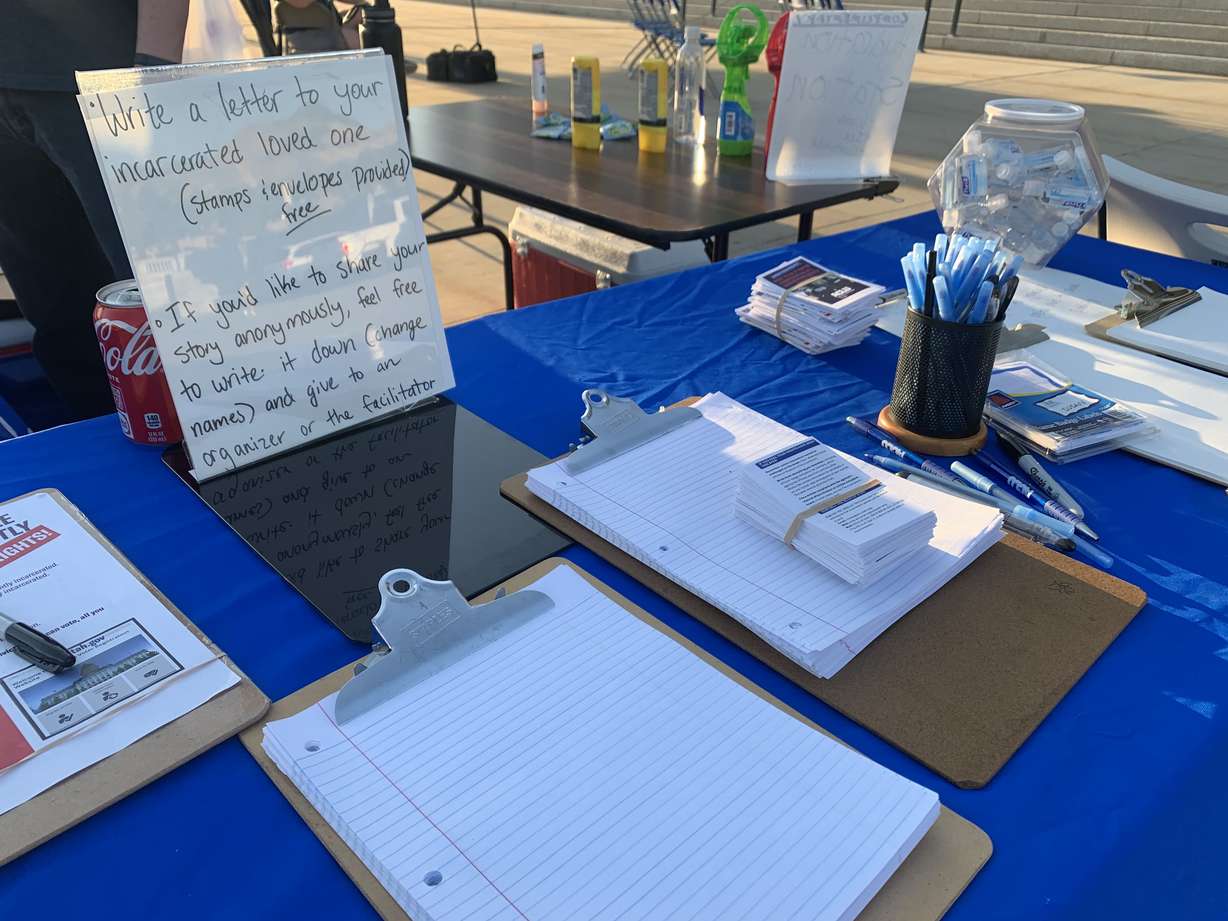
SALT LAKE CITY — Tears were shed, embraces freely given and electric candles flickered during the People Not Prisons vigil Tuesday night.
A mother said her son hasn't received proper medical care since being stabbed in prison. Another mother said her daughter was jailed during her college years for using methamphetamine; today, that still-imprisoned daughter has grandchildren. And a daughter said her father lost 10 pounds during his first week of incarceration.
And that was just the start. The stories came one after another during the vigil hosted Tuesday night at the Utah Capitol by the American Civil Liberties Union of Utah, the Disability Law Center and the Utah Prisoner Advocate Network.
A man said his best friend was killed by another inmate on the day he was scheduled for release. A formerly incarcerated woman said she's been free for a year and a half, has held a job that entire time, but is homeless because she can't pass a background check. A woman said her parole agent was compassionate during her battle with addiction, but her currently jailed boyfriend hasn't been as lucky.
Around 40 local leaders, media and community members with incarcerated loved ones gathered to share the experiences, give support and raise concerns over the treatment of Utah's inmates, particularly in light of the recent move from the old Draper prison to the new $1 billion,1.3 million-square-foot facility in Salt Lake City located on 170 acres north of I-80.
The new prison boasts more counselors, larger class sizes and shorter waiting lists for inmates who need to complete life skills or counseling courses. It also has a family history library, seven nondenominational chapels, music rooms, computer labs, gymnasiums, recreation yards and even barber shops. That's in addition to programs that teach inmates skills they can use to get a job when released, such as welding, auto mechanics and culinary arts.

The Horizonte School also has a program at the prison to help inmates obtain a GED. And the new prison complex has two infirmaries with more than triple the number of beds that the Draper facility had and rooms for dental procedures with more modern equipment.
But the new facility is understaffed, prison officials have noted. And in August, the inmate prescription management program faced a backlog of thousands.
Prison officials issued a statement Tuesday, saying, "the care of the incarcerated is a top priority and it is heartening to see Utah's community come together in support of our efforts to help incarcerated individuals be successful, including in the administration of appropriate health care services."
They noted the "severity of the crisis faced over the past few weeks in transitioning to a new medical records system."
"With each day, we continue to see a return to more normal operations and we are optimistic that we will continue to see operations improve," according to the statement.
Many of the concerns expressed Tuesday night centered around medical issues, such as prisoners not receiving necessary medications to control conditions like diabetes or heart disease. Others said their family members' requests for care have been ignored or inadequately addressed. And many emphasized the lack of humanity with which they feel their loved ones have been treated.
Community leaders also spoke out, including Pastor Shawn Clay of the New Beginnings Ministries, Chris Moon from the Utah Prisoner Advocate Network and Niki Venugopal from the ACLU of Utah.
Rae Duckworth, operating chairwoman of Black Lives Matter Utah Chapter, said in a state that promotes family, love and progress, there should be more care for the unhoused and the incarcerated.
"The system isn't broken. The system is doing exactly what it's supposed to do," she said. "It's going after us exactly how it's supposed to."
Money is what drives the system, she said, and urged everyone listening to call their legislators to say they don't want any more tax money going toward the prison.
"The system was designed to abuse your loved ones," she said.
And if anyone wants to take action — make phone calls, write emails, protest — she's happy to help.
"My name is Rae and I'm down," she said. "Let's pick a spot and let's do it."

Photos
Related stories
Most recent Utah stories
Related topics
 Kaitlyn Bancroft