Estimated read time: 6-7 minutes
This archived news story is available only for your personal, non-commercial use. Information in the story may be outdated or superseded by additional information. Reading or replaying the story in its archived form does not constitute a republication of the story.
SALT LAKE CITY — Each Tuesday of the college football season is the same for the Utah football team.
"Bloody Tuesday."
It's the day where the practices are longer, the intensity is turned up to 11 and there's no end to the misery. It's as the name describes: a day of pain.
"Bloody Tuesday is just one of those days of the week where we try to simulate it the most like the game — try to make it just super violent, super crazy," cornerback Clark Phillips III said. "It's the longest of the week, in terms of practice length, and it's a grinder, because we've got some live periods in there — it's Bloody Tuesday."
The practice is not meant to actually make people bleed, at least Phillips said "I hope not," but it's not a day to take lightly, either.
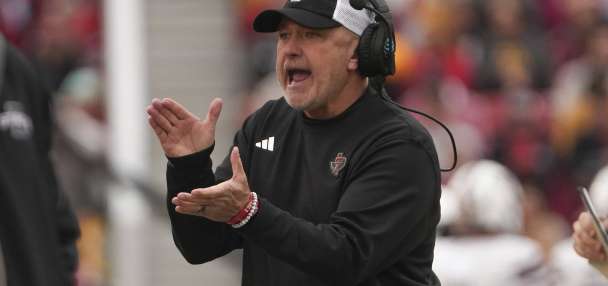
"Bloody Tuesday has been the moniker of this practice forever," cornerback coach Sharrieff Shah said. "Coach Whitt makes certain that everybody feels it — from the warmup, from the time that we come out and don't stretch but you're running wind sprints, to the live tackling sessions, to the repeated long special teams to extended periods.
"Oh yeah, you feel it — you feel exactly what Bloody Tuesday feels like."
On the Tuesday after Utah's loss to Florida, the Bloody Tuesday moniker lived up to its name after the defense was classified as "soft," according to head coach Kyle Whittingham. As a result, a lot of work was needed to be done to get the players to understand their deficiencies in an attempt to get better.
For Whittingham, a subpar performance on defense is arguably the worst offense his team could commit (outside of turnovers), especially when that performance came in a game where Utah could have come out on top. Not on that stage, not with an experienced team, not under Whittingham's tenure as a seasoned defensive-minded coach.
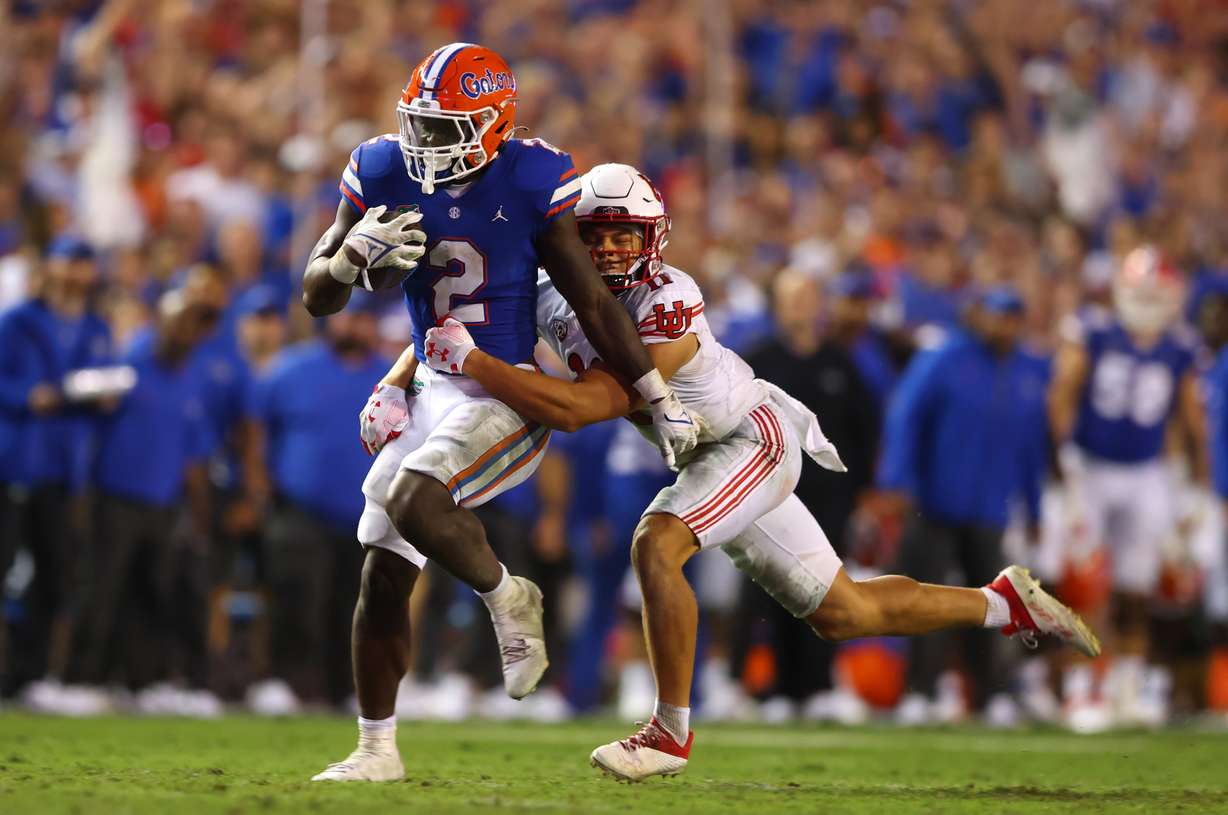
"If you watch the tape, our run defense was just abysmal," Whittingham said. "I mean, we gave up maybe 300 yards rushing, didn't gap control well, didn't take on blocks well, didn't do anything real — didn't tackle well. I mean, there's nothing we did that had any redeeming value in the run defense."
So Bloody Tuesday became even more difficult — as it usually does after a big loss, but even more so after a winnable game against Florida.
"The vibe is much more of a concerted effort for physicality," Shah said. "People are chippy. It's bad attitudes, and I love it; I love it. I love the violence, I love people on edge, that extra level of physicality, because that's what was missing on Saturday. So that's good. You want these practices to, again, begin to mimic some of the things that you hope will show up on the Saturday that's coming.
"You come in, you correct those things and you get ready for the next opponent, because the next opponent could care less about how close you were to Florida. They are ready to come in here and try to kick you in the face. And so you just come back and you just work."
Whittingham had no problem listing off all the issues the defense had Saturday — "far too soft in the run game, missed too many tackles, not good enough in the red zone" — and most of that came from the front seven. For a Whittingham-led team with veteran experience, that's an unusual occurrence.
It's not that Utah's front seven is immune to mistakes or issues, but more that it happens less frequently than other areas of his teams. But on Saturday, it was a constant theme as Florida quarterback Anthony Richardson and a deep running back room gave Utah fits in the run game.
In short, Whittingham chose the word "sloppy."
"We've just got to get better across the board in the front seven; the front seven was just not what we're used to," Whittingham said. "Sloppy is a word I keep going back to because that's what it was: sloppy technique wise, sloppy fundamentally, sloppy tackling, sloppy fits. We just were not in the right places at the right time, and when we were there — I think we missed 27 tackles was the count, which is way high for us."
Veteran linebacker Mohamoud Diabate said the team may have had some "first-game jitters" and "over excitement" that took away from the focus of what the defense was supposed to do, but the overall issue was that the defense needed to "diagnose" the plays better.
"Just having better eyes, realizing what's happening, diagnosing the play, and not just running full speed trying to hit somebody," Diabate said. "Having better diagnosing skills to realize and slow down and see what's coming, so we can play it correctly."
So while Bloody Tuesday was a "grinder," according to Phillips, it was a necessary step to get the team back to where it needs to be — at least to get their attention that there's still a lot to work to do before Utah can be satisfied with the product put out on the field on a weekly basis.
If anything, there's now actual game film to help the players work through the problems seen on the field. It's a hands-on learning experience to know that what was on the field Saturday did not live up to anybody's standards in the football program. But it's also a reminder that one loss won't impact the remainder of the season as long as the work is put in to correct the problems.
"I really like this team," Whittingham said. "I think this team's got a bunch of wins this year, and we'll see how far we can take it. But one game early in the season is not going to derail that, as long as the leadership stays strong and everyone stays focused, which I don't see any reason why that wouldn't happen."
"All my faith lies with this team," Phillips added. "I tell you, we've been through everything, and there wasn't no doubt in my mind when we was down by a little bit, a lot last season and the first week this season, I had no doubt. We feel like we can come back from anything because we've been through everything."
To that, Bloody Tuesday is about growth.
"After you walk off the field, if you've committed yourself to this practice that you feel good," Shah said. "You felt like, 'OK, I can begin to exorcise some of the demons that plague me on Saturday,' and begin to get ready to at least put a absolutely wonderful performance on film on Saturday. But it takes this level of work and grinding in order to get the results that you want on Saturday."