'%3e%3cpath%20d='M34.1406%205.85938C30.3906%202.10547%2025.3047%200%2020%200C14.6953%200%209.60938%202.10547%205.85938%205.85938C2.10938%209.61328%200%2014.6953%200%2020C0%2025.3047%202.10547%2030.3906%205.85938%2034.1406C9.61328%2037.8906%2014.6953%2040%2020%2040C25.3047%2040%2030.3906%2037.8945%2034.1406%2034.1406C37.8906%2030.3906%2040%2025.3047%2040%2020C40%2014.6953%2037.8945%209.60938%2034.1406%205.85938ZM37.0117%2023.543H31.1602V13.5391H27.6328V19.9414C28.1211%2020.6914%2028.3711%2021.582%2028.3711%2022.5625V22.625C28.3711%2023.668%2028.1172%2024.6055%2027.6328%2025.4297V26.6094H36.082C33.4883%2032.9375%2027.2891%2037.3789%2020.0039%2037.3789C10.3711%2037.3789%202.62109%2029.6289%202.62109%2020C2.62109%2010.3711%2010.3711%202.62109%2020%202.62109C29.6289%202.62109%2037.3789%2010.3711%2037.3789%2020C37.3789%2021.1484%2037.2617%2022.2656%2037.0508%2023.3477C37.0391%2023.4141%2037.0234%2023.4766%2037.0117%2023.543Z'%20fill='white'/%3e%3cpath%20d='M22.3086%2018.5352C20.4336%2018.125%2019.9531%2017.8398%2019.9766%2017.1836V17.1406C19.9766%2016.6992%2020.3477%2016.2148%2021.4023%2016.2148C22.582%2016.2148%2023.8867%2016.6797%2025.0781%2017.4766L26.8516%2015.0195C25.4453%2013.8906%2023.707%2013.3398%2021.5547%2013.3398C18.5195%2013.3398%2016.4375%2015%2016.4063%2017.4766V17.5352C16.3633%2020.2617%2018.5859%2020.9805%2021.293%2021.6016C23.0391%2021.9766%2023.5703%2022.3164%2023.5703%2022.9609L23.5469%2022.9766C23.5469%2023.3906%2023.2578%2023.7031%2022.7852%2023.8359C22.5742%2023.9062%2022.1289%2023.9727%2021.5156%2023.9727C20.7617%2023.9727%2019.7539%2023.8633%2018.6328%2023.4844C18.0898%2023.2891%2017.4727%2023.0039%2016.8047%2022.6133L20.1406%2026.625C20.2813%2026.6602%2021.0977%2026.8516%2021.7734%2026.8516C25.0039%2026.8516%2027.0859%2025.2461%2027.1094%2022.6328V22.5703C27.1602%2020.1133%2025.2148%2019.1719%2022.3086%2018.5352Z'%20fill='white'/%3e%3cpath%20d='M5.24219%2013.5664V26.6133H8.75391V23.7578L10.2969%2021.9531L14.2031%2026.6133H18.3867L12.3555%2019.5195L17.4023%2013.5664H13.4531L8.75391%2019.0586V13.5664H5.24219Z'%20fill='white'/%3e%3c/g%3e%3cdefs%3e%3cclipPath%20id='clip0_97_2430'%3e%3crect%20width='40'%20height='40'%20fill='white'/%3e%3c/clipPath%3e%3c/defs%3e%3c/svg%3e)




Estimated read time: 4-5 minutes
This archived news story is available only for your personal, non-commercial use. Information in the story may be outdated or superseded by additional information. Reading or replaying the story in its archived form does not constitute a republication of the story.
SALT LAKE CITY — Scott Smid's legacy was one that began in the 1930s with the bound copy of his grandfather's master's thesis in social work.
Smid has witnessed involvement in social work and health care, beginning with his grandfather and continuing through generations. He recalled hanging on his father's pant leg as he watched his father and 30 men complete service work and raise money for children's charities.
"I don't think that good social workers are, sort of, created; they're born to do it," said Smid. "That's how I grew up."
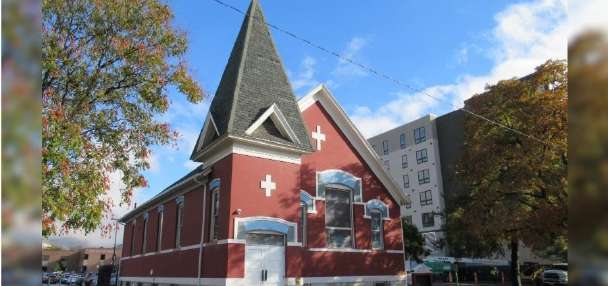
Smid is the director of substance use recovery at the Dommu Ghani Recovery Clinic, at 660 S. 200 East, in Salt Lake City, that opens to the public on Thursday. The clinic is the result of extensive planning by Sacred Circle Healthcare, a health division of the Confederated Tribes of the Goshute Reservation. The clinic was envisioned by a team within Sacred Circle along with the tribal council and now operates through the tribal perspective.
Sacred Circle is dedicated to underserved communities and offers a variety of services in several locations. The opening of the Dommu Ghani Recovery Clinic is an expansion into specialty care and will work to provide addiction recovery services centered on both traditional and Western practices.
Dommu Ghani means "all of us, in this/our house" in Goshute. It's a phrase that explains the center's mission.
"Our mission is to make sure that we open our doors and give the best care to our underserved populations in the area — knowing that not all of our underserved folks have the opportunity to get quality care and get treated in the way that we believe they need to be treated. That's what we're here to do," said Lorena Horse, executive officer of Sacred Circle.
The focus on underserved populations comes from a historical understanding and Native American values.
"The Native community and the Native culture wants to embrace those cultures, really, because there's so much similarity in the way that the Native community has been historically treated," said Smid.
The population served by Sacred Circle Healthcare and now the Dommu Ghani Clinic is diverse. The diversity of the population was a point of consideration when hiring staff members at the clinic who speak a variety of languages.
"It's really important to us making sure that — because our population that we serve is so diverse, we want people to come in and be able to feel comfortable, and speak with people that speak their language, and see faces that are just like this," Horse said.
The familiarity and understanding between staff and the population served also allow for the expansion of other services. The center is focused on holistic approaches and includes traditional medicine for its Native population, but it also provides access to counseling, physical therapy, dietitians and primary care doctors.
The recovery center also features a computer lab, living room and other amenities. For Native American participants, the center has a Talking Circle room modeled after ceremonial spaces.
"To have a space within our clinic that is specifically for our traditional and ceremonial healing, and bringing that into our addiction recovery services is just a blessing for us. For years, for hundreds of years we were — as Indigenous people — told that we couldn't do those things, or traditional healing ways were invalidated," Horse said. "We've known that it is what is going to help us get back to our families, if we're using, and it's going to help us get back to a wholeness."
To Horse, addiction recovery is an extension of Native American values of protecting and caring for family.
"I think it comes down to healing communities. I've seen it not just in my family; I've seen it in my friends, I've seen it in my communities," said Horse.
"I was fortunate that my dad, he made a change for us. He made that decision to want to make a change for us, and I feel like I'm responsible to continue that change — not just in my family, but it's my responsibility for our community. It's a tribal thing that when we do something we do it for our community," she added.
The Dommu Ghani Recovery Clinic will be open to the public starting May 12. For more information regarding the clinic's Substance Use Recovery Program, visit Sacred Circle's website.