
Estimated read time: 2-3 minutes
This archived news story is available only for your personal, non-commercial use. Information in the story may be outdated or superseded by additional information. Reading or replaying the story in its archived form does not constitute a republication of the story.
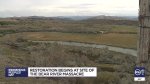
FRANKLIN COUNTY, Idaho — A major project is getting underway to restore the site of the Bear River Massacre to what it once was.
The long-term goal for the Northwestern Band of the Shoshone Nation is not only to help people better understand what happened here, but what this land meant to them, even before the massacre.
It was farmland for about 160 years, but before that, it was the site of something horrible.
"After the Bear River Massacre, there were a lot of people that were just left on the ground and just died there, and their bones and bodies are still there," said Brad Parry, vice chair of the Northwestern Band of the Shoshone Nation.
Parry explained it's not just land, it's history, that was not well recorded at the time.
Some 400 men, women and children were killed.
"It's a sad story, so now that we own it, we want to restore the land to all those members who would have seen it before they died," said Parry.
It's why work started in early October to clear the dozens of invasive Russian Olive trees, with the help of some $1.7 million in donations and grants, so far.
"It's important to the tribe because it's a way to tell our story. It's a way to tell people we're still here, this is how we would have lived, but most importantly, it's to honor those that have fallen there," said Parry.
A bluff up above will become home to an interpretive center, where people can read about and look over the site below.
For decades, the massacre was commemorated at a state monument to the east, but soon, those moments will be held here.
"To have it there on the actual site means everything in the world to the tribe," said Parry.
The Northwestern Band of Shoshone has already raised about $2.5 million for the interpretive center.
They're looking to raise about another $6 million for the center and about three to four million to continue to help restore the land here.
Anyone who wants to donate can do so at their website.