'%3e%3cpath%20d='M34.1406%205.85938C30.3906%202.10547%2025.3047%200%2020%200C14.6953%200%209.60938%202.10547%205.85938%205.85938C2.10938%209.61328%200%2014.6953%200%2020C0%2025.3047%202.10547%2030.3906%205.85938%2034.1406C9.61328%2037.8906%2014.6953%2040%2020%2040C25.3047%2040%2030.3906%2037.8945%2034.1406%2034.1406C37.8906%2030.3906%2040%2025.3047%2040%2020C40%2014.6953%2037.8945%209.60938%2034.1406%205.85938ZM37.0117%2023.543H31.1602V13.5391H27.6328V19.9414C28.1211%2020.6914%2028.3711%2021.582%2028.3711%2022.5625V22.625C28.3711%2023.668%2028.1172%2024.6055%2027.6328%2025.4297V26.6094H36.082C33.4883%2032.9375%2027.2891%2037.3789%2020.0039%2037.3789C10.3711%2037.3789%202.62109%2029.6289%202.62109%2020C2.62109%2010.3711%2010.3711%202.62109%2020%202.62109C29.6289%202.62109%2037.3789%2010.3711%2037.3789%2020C37.3789%2021.1484%2037.2617%2022.2656%2037.0508%2023.3477C37.0391%2023.4141%2037.0234%2023.4766%2037.0117%2023.543Z'%20fill='white'/%3e%3cpath%20d='M22.3086%2018.5352C20.4336%2018.125%2019.9531%2017.8398%2019.9766%2017.1836V17.1406C19.9766%2016.6992%2020.3477%2016.2148%2021.4023%2016.2148C22.582%2016.2148%2023.8867%2016.6797%2025.0781%2017.4766L26.8516%2015.0195C25.4453%2013.8906%2023.707%2013.3398%2021.5547%2013.3398C18.5195%2013.3398%2016.4375%2015%2016.4063%2017.4766V17.5352C16.3633%2020.2617%2018.5859%2020.9805%2021.293%2021.6016C23.0391%2021.9766%2023.5703%2022.3164%2023.5703%2022.9609L23.5469%2022.9766C23.5469%2023.3906%2023.2578%2023.7031%2022.7852%2023.8359C22.5742%2023.9062%2022.1289%2023.9727%2021.5156%2023.9727C20.7617%2023.9727%2019.7539%2023.8633%2018.6328%2023.4844C18.0898%2023.2891%2017.4727%2023.0039%2016.8047%2022.6133L20.1406%2026.625C20.2813%2026.6602%2021.0977%2026.8516%2021.7734%2026.8516C25.0039%2026.8516%2027.0859%2025.2461%2027.1094%2022.6328V22.5703C27.1602%2020.1133%2025.2148%2019.1719%2022.3086%2018.5352Z'%20fill='white'/%3e%3cpath%20d='M5.24219%2013.5664V26.6133H8.75391V23.7578L10.2969%2021.9531L14.2031%2026.6133H18.3867L12.3555%2019.5195L17.4023%2013.5664H13.4531L8.75391%2019.0586V13.5664H5.24219Z'%20fill='white'/%3e%3c/g%3e%3cdefs%3e%3cclipPath%20id='clip0_97_2430'%3e%3crect%20width='40'%20height='40'%20fill='white'/%3e%3c/clipPath%3e%3c/defs%3e%3c/svg%3e)




Estimated read time: 6-7 minutes
This archived news story is available only for your personal, non-commercial use. Information in the story may be outdated or superseded by additional information. Reading or replaying the story in its archived form does not constitute a republication of the story.
FARMINGTON — Amid a legal battle between Davis County and the American Civil Liberties Union of Utah over the standards of Utah jail practices — the Utah Sheriff's Association posed a question.
Do we do the base minimum requirements of the Constitution and the laws, or do we go above and beyond and do more than what is required by the standard?
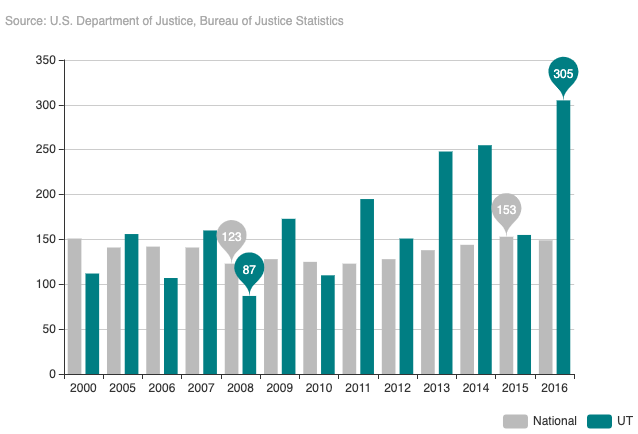
The question came while Utah's average death rate among inmate populations in its county jails continued to surpass the national average. According to data by the Utah Commission on Criminal and Juvenile Justice from 2013 to 2019, the leading cause of death in Utah's county jails was suicide, at 53%. In that same time frame, 7 of the 11 deaths reported at Davis County Jail were suicides.
With the second most common cause of death at jails being illness, 20%, the Utah commission stated in its annual report, "it becomes clear that suicide, as a preventable cause of death, still has a long way to improvement."
"We understand that being incarcerated is a punishment for crime, but at the same time, a democratic society would — from our perspective — have ample opportunities for people to be treated with respect and have opportunities to sort of try to improve their situations," said John Mejia, legal director with the ACLU of Utah.
Davis County Sheriff Kelly Sparks said his office has made "a philosophical change" and implemented a "higher standard."
Since the Utah Jail Standards release in 2018, the Utah Department of Corrections has developed independent standards that Davis County now uses. In conjunction with those standards, the Davis County Jail has developed internal protocols and committees, Sparks said.
First among its changes was the creation of the Life Safety Committee in 2019. The committee — comprised of correctional staff, social workers, medical providers and researchers — conducted a review of incidents that occurred within Davis County Jail and identified alternative policies and procedures focused on the welfare and protection of both inmates and staff.
Sparks said they've made a number of changes as a result of that review. Those changes include:
- Each inmate brought in for booking receives screening from a nurse, and different screening tools are used to improve identification of at-risk individuals.
- Two counselors from Davis Behavioral Health have been added to the staff.
- Staff is trained in crisis intervention and mental health first-aid.
- The addition of a new medical wing that's in the process of being built.
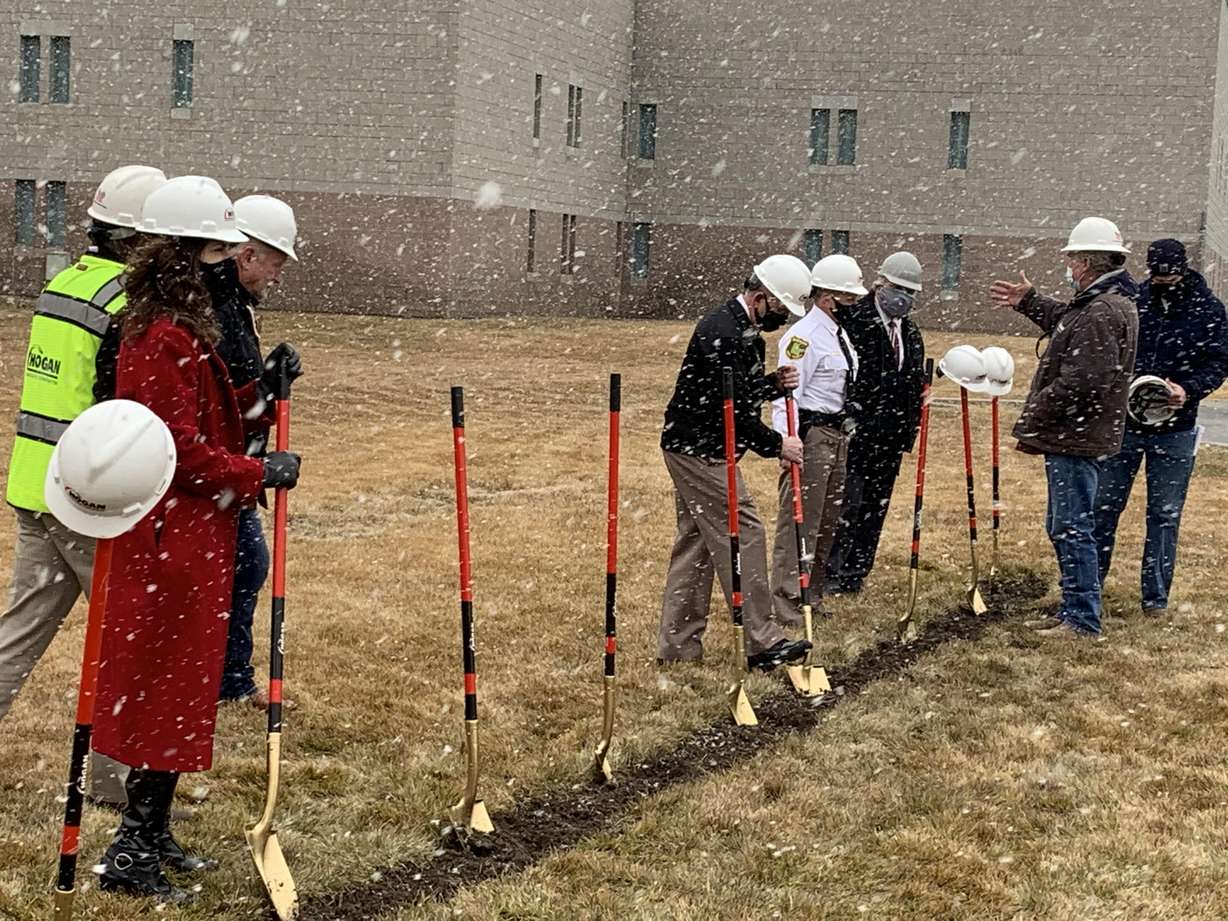
"We've really made kind of a philosophical change in the provision of medical services here at Davis County," Sparks said. "Previously, we had really kind of two separate systems: mental health and medical health. We've hired a director to kind of combine both of those so that they're working in unison and improving.
"A lot of folks end up in jail because their behavior has some nexus to drug abuse or mental health issues," he said.
So, have the changes helped?
A study conducted by the sheriff's office for 2019 and 2020 indicates evidence of improvement. In that two-year period, Sparks said staff successfully intervened in 62 suicide attempts. Data showed that there were no suicides in 2019 and two deaths by suicide in 2020.
"I think we've been very successful in our efforts at reducing the number of suicide attempts and reducing the number of ... suicides. We will never be satisfied until we get that number at zero," Sparks said. "We will continue to work this problem, will continue to do everything that we can to reduce that level of risk."
The number of inmates at risk of death by suicide, Sparks believes, has increased along with Utah's high suicide rate. From 2017 to 2019, the average rate for suicide in Utah was 660 suicides per year; the state had the fifth-highest age-adjusted suicide rate in the U.S., according to a Utah health indicator report.
The best suicide prevention is that prevention that we have before a suicide attempt ever occurs just in making sure that we take care of the basic needs of the inmate.
–Sheriff Kelly Sparks
"If the suicide ideation is higher in the community, naturally, it's going to be higher in the percentage of that community that's reflected inside a county jail," Sparks said. "The most susceptible time for an individual, as far as suicide ideation goes, is the one to two weeks they're initially in jail.
"It's a huge change somebody goes from having all the freedom that we normally experience in our life to having that stripped away and taken away."
Molly Prince, a licensed therapist and a founder of the Utah Prisoner Advocate Network echoed Sparks's assessment, saying, "There are a lot of layers of mental health issues that are affected by being incarcerated."
"When people are trying to make changes in their lives, they really do need a support system," she said. "There's a hopelessness. There's the profound loss of so many things, not just freedom, but relationships and identity."
Those feelings of loss and hopelessness were amplified during the COVID-19 pandemic, Sparks said. The cost of keeping the COVID-19 transmission rates low across detention facilities came at the price of isolation for individuals in their first weeks of jail, a particularly vulnerable time. Counselors and staff within the jail noticed increased conversations surrounding suicidal ideation. To combat feelings of isolation, Davis County purchased electronic tables for all the inmates to connect them with support systems and family members.
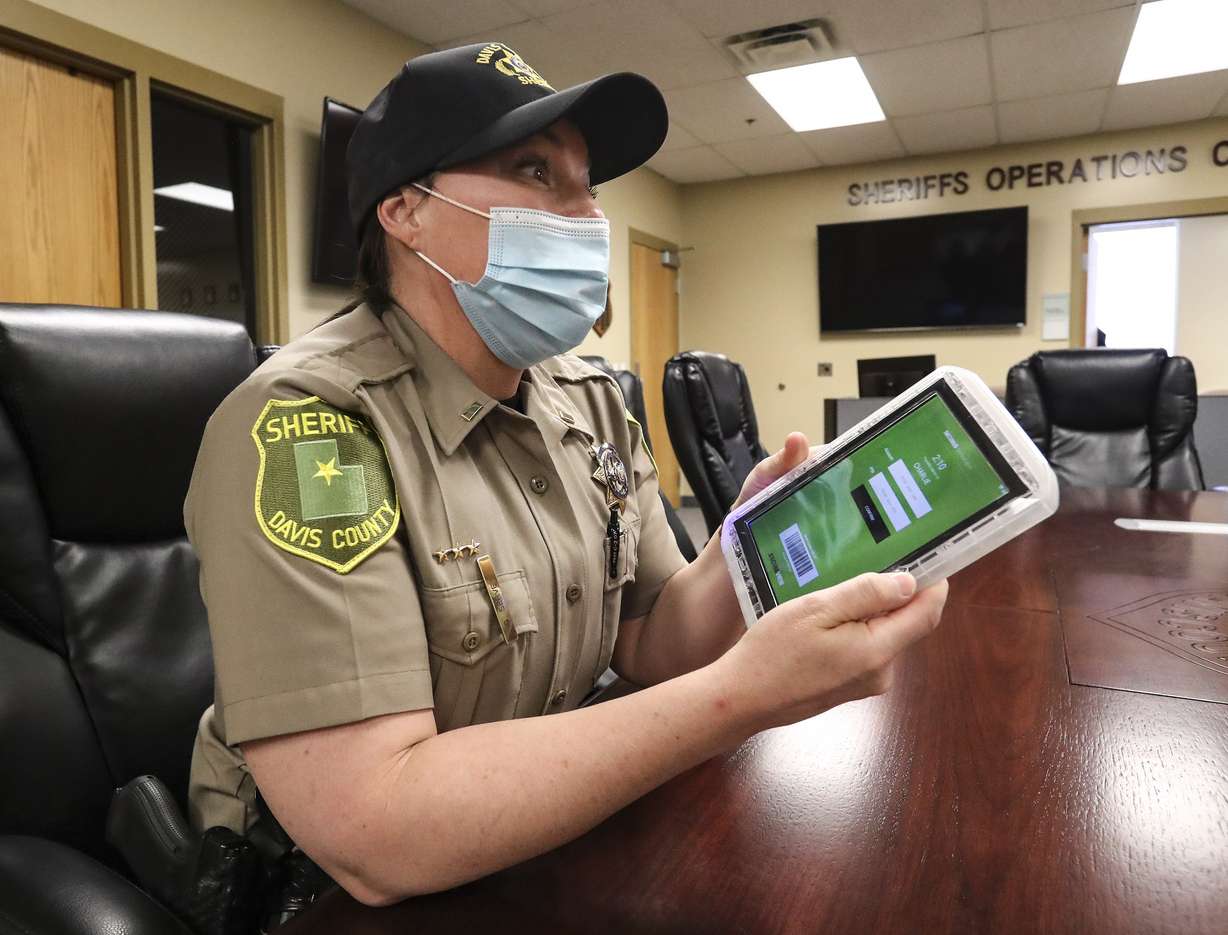
"The best suicide prevention is that prevention that we have before a suicide attempt ever occurs, just in making sure that we take care of the basic needs of the inmates," Sparks said.
On Jan. 7, the Davis County Sheriff's Office reported that a man who had been in the facility's custody for four months had died by suicide. Two more attempts were reported by the sheriff's office this year, with one being an attempt by an 18-year-old on Jan. 27, and a suicide pact between two individuals on June 11. Staff members were able to successfully intervene on both counts.
Sparks said that any attempt has a significant toll on staff, especially those like Sparks who have felt the devastation of losing someone to suicide.
"It's something that affects a lot of people," he said. "Our staff take it very seriously and are very proactive in trying to give the best care that they can to folks who are experiencing suicidal thoughts while they're here."
"We're pretty anxious to try and make a difference in these people's lives," the sheriff added. "Our goal is to make them better when they leave the jail than when they came into the jail."
Resources for Suicide Prevention
If you or someone you know is struggling with thoughts of suicide, call the suicide prevention hotline at 1-800-273-TALK.
Crisis Hotlines
- Utah County Crisis Line: 801-691-5433
- Salt Lake County/UNI Crisis Line: 801-587-3000
- Wasatch Mental Health Crisis Line: 801-373-7393
- National Suicide Prevention Lifeline: 1-800-273-TALK (8255)
- Trevor Project Hotline for LGBTQ teens: 1-866-488-7386
Online resources
- NAMI Utah: namiut.org
- Utah Chapter-American Foundation for Suicide Prevention: afsputah.com
- Suicide Prevention Lifeline: www.suicidepreventionlifeline.org