'%3e%3cpath%20d='M34.1406%205.85938C30.3906%202.10547%2025.3047%200%2020%200C14.6953%200%209.60938%202.10547%205.85938%205.85938C2.10938%209.61328%200%2014.6953%200%2020C0%2025.3047%202.10547%2030.3906%205.85938%2034.1406C9.61328%2037.8906%2014.6953%2040%2020%2040C25.3047%2040%2030.3906%2037.8945%2034.1406%2034.1406C37.8906%2030.3906%2040%2025.3047%2040%2020C40%2014.6953%2037.8945%209.60938%2034.1406%205.85938ZM37.0117%2023.543H31.1602V13.5391H27.6328V19.9414C28.1211%2020.6914%2028.3711%2021.582%2028.3711%2022.5625V22.625C28.3711%2023.668%2028.1172%2024.6055%2027.6328%2025.4297V26.6094H36.082C33.4883%2032.9375%2027.2891%2037.3789%2020.0039%2037.3789C10.3711%2037.3789%202.62109%2029.6289%202.62109%2020C2.62109%2010.3711%2010.3711%202.62109%2020%202.62109C29.6289%202.62109%2037.3789%2010.3711%2037.3789%2020C37.3789%2021.1484%2037.2617%2022.2656%2037.0508%2023.3477C37.0391%2023.4141%2037.0234%2023.4766%2037.0117%2023.543Z'%20fill='white'/%3e%3cpath%20d='M22.3086%2018.5352C20.4336%2018.125%2019.9531%2017.8398%2019.9766%2017.1836V17.1406C19.9766%2016.6992%2020.3477%2016.2148%2021.4023%2016.2148C22.582%2016.2148%2023.8867%2016.6797%2025.0781%2017.4766L26.8516%2015.0195C25.4453%2013.8906%2023.707%2013.3398%2021.5547%2013.3398C18.5195%2013.3398%2016.4375%2015%2016.4063%2017.4766V17.5352C16.3633%2020.2617%2018.5859%2020.9805%2021.293%2021.6016C23.0391%2021.9766%2023.5703%2022.3164%2023.5703%2022.9609L23.5469%2022.9766C23.5469%2023.3906%2023.2578%2023.7031%2022.7852%2023.8359C22.5742%2023.9062%2022.1289%2023.9727%2021.5156%2023.9727C20.7617%2023.9727%2019.7539%2023.8633%2018.6328%2023.4844C18.0898%2023.2891%2017.4727%2023.0039%2016.8047%2022.6133L20.1406%2026.625C20.2813%2026.6602%2021.0977%2026.8516%2021.7734%2026.8516C25.0039%2026.8516%2027.0859%2025.2461%2027.1094%2022.6328V22.5703C27.1602%2020.1133%2025.2148%2019.1719%2022.3086%2018.5352Z'%20fill='white'/%3e%3cpath%20d='M5.24219%2013.5664V26.6133H8.75391V23.7578L10.2969%2021.9531L14.2031%2026.6133H18.3867L12.3555%2019.5195L17.4023%2013.5664H13.4531L8.75391%2019.0586V13.5664H5.24219Z'%20fill='white'/%3e%3c/g%3e%3cdefs%3e%3cclipPath%20id='clip0_97_2430'%3e%3crect%20width='40'%20height='40'%20fill='white'/%3e%3c/clipPath%3e%3c/defs%3e%3c/svg%3e)


Estimated read time: 7-8 minutes
This archived news story is available only for your personal, non-commercial use. Information in the story may be outdated or superseded by additional information. Reading or replaying the story in its archived form does not constitute a republication of the story.
SALT LAKE CITY — It’s deja vu all over again.
As COVID-19 cases begin to rise in Utah again, reversing a downward trend that lasted into mid-August, a leading health care expert said something needs to change quickly or it’s likely another uptick in COVID-19-related hospitalizations will begin again in the next few weeks.
His warning came between Wednesday's state health department report of 747 new cases and Thursday's report of a new daily record of 911 cases — and with Utah reporting its highest seven-day rolling averages for test percentage increases. The state reported a seven-day rolling average of 11.9% through Sept. 11, which is Utah’s highest percentage to date. The seven-day rolling average of cases, 661 per day, is the highest since its previous peak, which was reported on July 12.
"We’re not doing great," said Dr. Eddie Stenehjem, an Intermountain Healthcare infectious disease physician, during a virtual question and answer discussion Thursday morning. "We’re definitively trending up. We’re now reaching total daily case counts that are rivaling our peak that we had in July."
The largest difference between July and now is the demographics, which are changing once again. The data shows younger individuals, especially 15- to 24-year-olds, are driving up new cases, and that Utah County is at the center of new cases — although it’s rising everywhere, especially along the Wasatch Front.
While younger individuals are statistically less likely to end up in the hospital, Stenehjem said that younger individuals still can be hospitalized, pointing toward those with pre-existing conditions who are most at risk; and there is the risk that younger individuals getting sick with the novel coronavirus will spread it to older individuals who are statistically more likely to end up at the hospital or dying.
COVID-19 hasn’t been a major concern for Utah hospitals in weeks. Hospitals experienced a welcomed dip in the number of COVID-19 patients since a rise that peaked in June, July and August. As of Thursday, there were 120 people currently hospitalized due to the coronavirus, according to the Utah Department of Health. That number has remained below 200 since Aug. 11 — a week before the state started to report rising case counts again.
It’s also been documented in Utah that hospitalization upticks come a few weeks after case upticks, which is why medical experts have expressed concern.
"What we’re worried about is what does that transmission look like from the 15- to 24-year-olds to parents and grandparents who are much more likely to get critically ill with COVID-19, end up at the hospital, and potentially die? And so, we’re at an inflection point here," Stenehjem said. "We’re starting to get some sense that’s already happening."
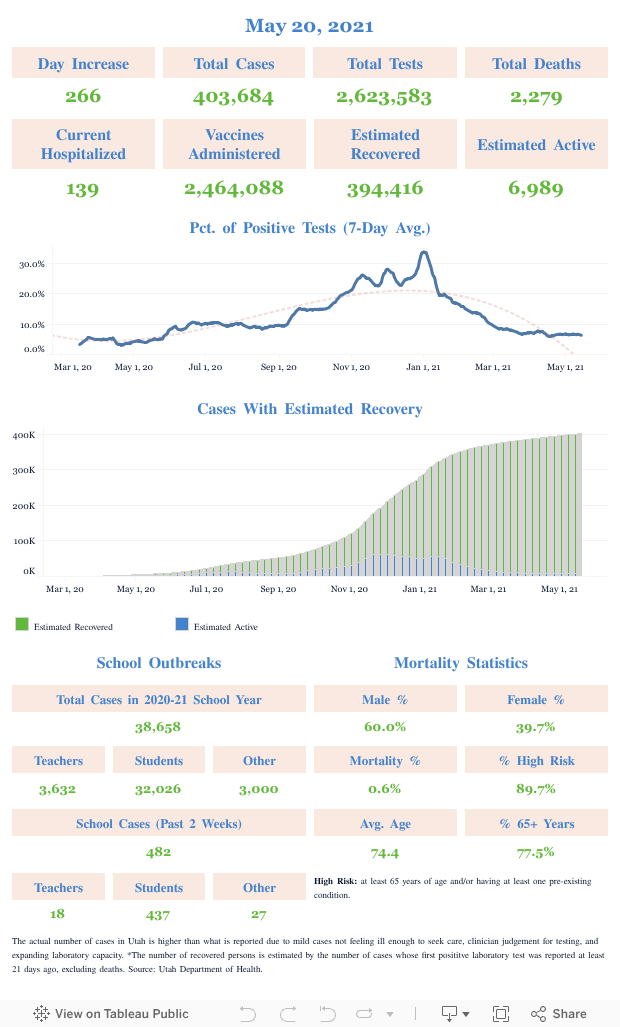
Hours later, Dr. Angela Dunn, the state’s epidemiologist, confirmed that state health officials now see noticeable increases within all age ranges after the spike was driven by 15- to 24-year-olds. Within the 1,658 cases reported Wednesday and Thursday, nearly 40% were attributed to 15- to 24-year-olds; but close to 50% came from the next age groups, 25 to 44 and 45 to 64, combined.
"What we've learned from the summer peak, which was started in the young and the healthy, is that COVID-19 then spreads to more vulnerable populations, and it led to a peak in hospitalizations and deaths," Dunn said. "We need to take immediate action to prevent unnecessary illnesses and deaths in this state."
Based on COVID-19 incubation periods and the timeline between new cases and new hospitalizations, Stenehjem estimated a likely rise in hospitalizations from a crossover to older populations by the end of September into early October.
How people are getting infected is changing, which might also be different about Utah's rise in cases this time. The growing positive test percentage and other data likely points to a growth in community transmission, Stenehjem said.
The state’s Unified Response scoreboard data shows there was an increase of community spread in August. The figure went from 17.1% on Aug. 1 to 20.2% on Aug. 30, which is when the data was last updated. An "unknown" cause rose from 12.1% to 13.5% Consequently, the percentage from known contact transmission dropped from 70.8% to 66.3% — below Utah’s listed goal of 75%, which was last achieved June 7.
The Utah Department of Health recently removed transmission data from its website with a message stating that it is working to improve the data to "better reflect people with multiple exposures and current data collection methods." It’s unclear when the new data will be made available again.
"(With) percent positive, you have to think about your dominator — being tested — as well as the number of positives, so it can either be a reflection of either increase of positives — an increase of your case count — or a decrease in testing," Stenehjem explained. "We haven’t seen a significant decrease in testing, so it’s most likely that it’s an increase in community transmission."
Utah’s decline in cases happened in mid-July to mid-August, which health officials attributed greatly to face-covering policies, especially in Salt Lake County. To date, mask mandates were enacted in Salt Lake, Summit and Grand counties, as well as Logan, Provo and Springdale communities. They’re also mandated at K-12 schools but, overall, aren’t regulated for most of the state.
When asked why cases are going up despite mask mandate, Stenehjem shrugged, arguing it’s clear people either aren’t wearing them or aren't wearing them properly. He added that he believes younger individuals have "social forces stacked against them," in that it can be difficult for K-12 and college-aged students to follow safety protocols, especially if their peers aren’t and if they undercut activities that are popular with the 15- to 24-year range — like parties.
Schools are another factor, especially since many new cases involve high school or college-aged Utahns. One example is Riverton High School, which reported 17 cases recently; Jordan School District officials voted to close the school Thursday and Friday for deep cleaning during an emergency meeting Wednesday night.
There’s also rising cases reported at universities, where large parties involving people not following COVID-19 safety protocol have been documented on social media.
While not all cases are tied to parties, university cases are going up. For example, BYU reported Wednesday that it had 402 active COVID-19 cases on campus, with a seven-day rolling average of 58 new cases per day. Utah Valley University reported on Monday 58 new student cases over a seven-day span, which was a 152% increase from the previous week. Five employees also tested positive at UVU over the past week. The University of Utah reported 110 cases from Sept. 9 through Tuesday.
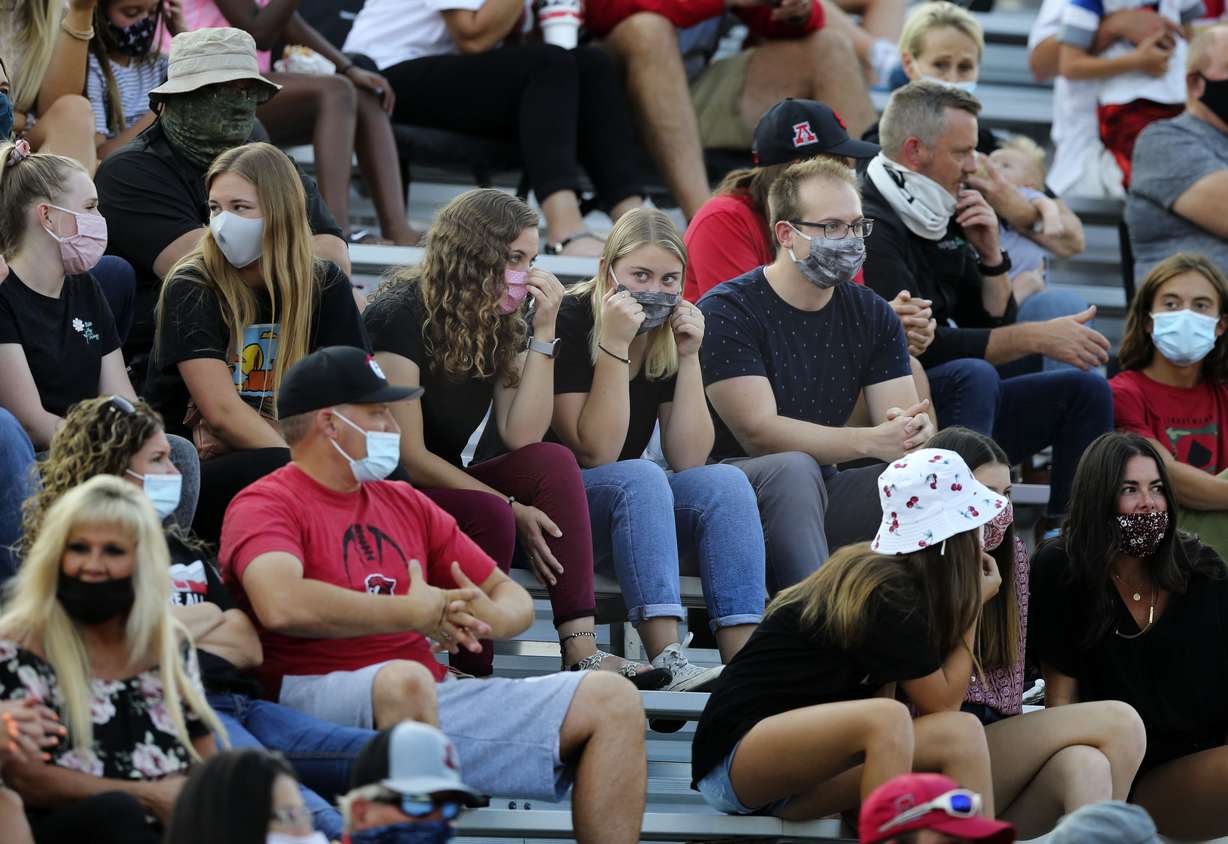
The number of school-related outbreaks, which are defined as two or more cases in a setting outside of a home within a two-week span, are increasing. The state has reported 63 total school outbreaks resulting in 371 cases and 11 hospitalizations. Thirteen of those outbreaks and 147 outbreak cases were reported this week alone, which is 40% of all school outbreak cases to date.
There’s a spike in 1- to 14-year-old cases since schools returned to session. It’s not at the same level of 15- to 24-year-old range, which is why Stenehjem is hopeful that school safety procedures can work and why he believes extracurricular activities are likely mixing into the rise of 15- to 24-year-old cases.
As the numbers continue to rise at record rates, Stenehjem critiqued inaction by those not following safety guidelines, as well as school district and local government leaders who haven’t rearranged protocols to adjust to the COVID-19 case trends spotted in recent weeks. He urged parents to not send their children to school if they have any symptoms, and instead have them tested. That’s the same for adults heading out in public.
"If we don’t do something, we can’t expect a different result," he said. "We can’t just hope that this gets better. I would say if we’re not going to follow those very reasonable guidelines put forth by the state health department, then what are you going to do? What are you going to do to change the current pattern? You’ve got to do something because doing nothing, you’re going to get the same result."