Estimated read time: 6-7 minutes
This archived news story is available only for your personal, non-commercial use. Information in the story may be outdated or superseded by additional information. Reading or replaying the story in its archived form does not constitute a republication of the story.
SALT LAKE CITY — As a young child, Rabbi Avremi Zippel would await Hanukkah with delighted anticipation.
In Judaism, observance of religious practices begins with Jewish adulthood, or upon the completion of the bar or bat mitzvah. But Hanukkah is for the whole family, no matter the age.
“I had my own menorah, and I was a big boy, and I was doing it all by myself, just like my father was doing it and all the adults in the room,” Rabbi Zippel said. “So for me, Hanukkah always had a very special place in my heart because that was the holiday that I was able to participate in.”
But while Rabbi Zippel still awaits the holiday with that same excitement, it means something more to him now.
KSL.com sat down with the Salt Lake-based religious leader to learn a little more about Hanukkah (or Chanukah) and what it signifies for the Jewish community:
When does Hanukkah begin and end?
In 2019, Hanukkah will begin at nightfall on Sunday, Dec. 22. It will last for eight full days until nightfall on Monday, Dec. 30.
The holiday will always begin on the 25th day of the month of Kislev on the Hebrew calendar. The month of Kislev corresponds with the months of November and December.
How do you celebrate Hanukkah?
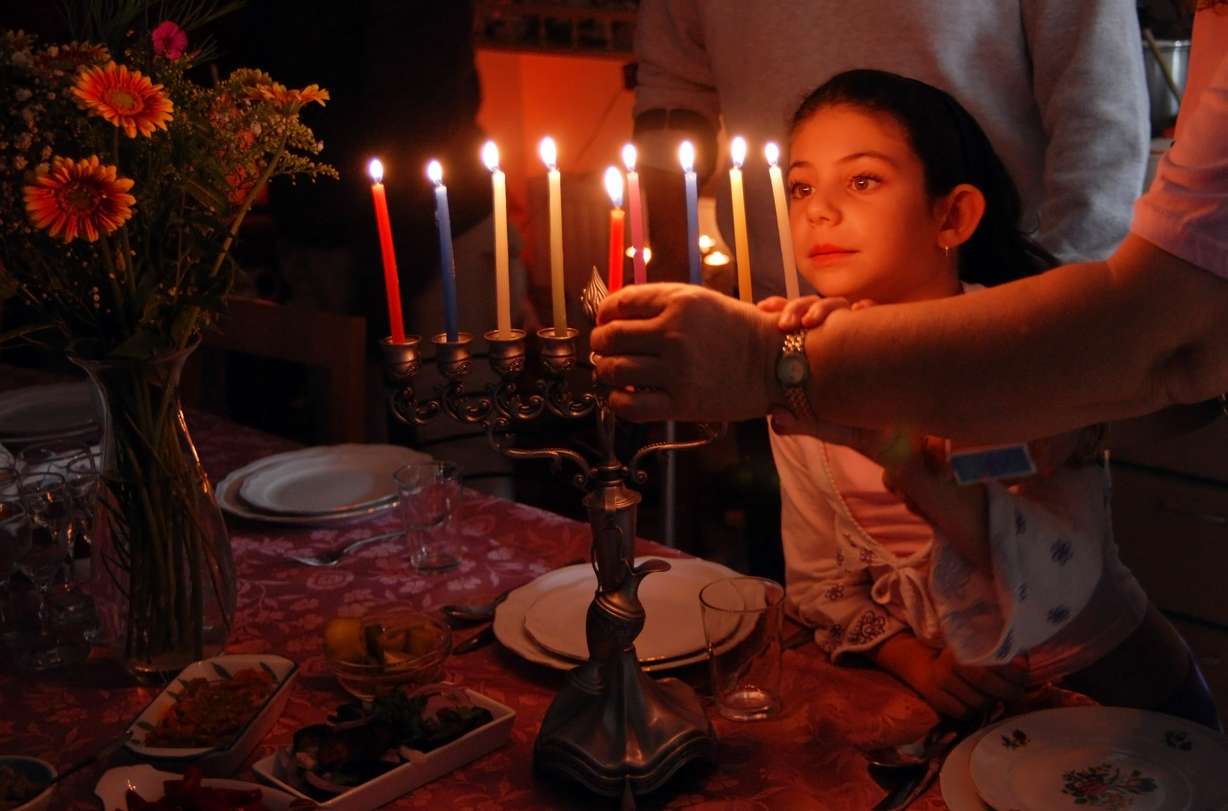
While people around the world personally observe Judaism in different ways, Hanukkah is pretty straightforward, Rabbi Zippel said. The central observance of Hanukkah is the kindling of the menorah, which Jews “of all stripes” do the exact same way, he explained.
After nightfall each day, a candle is lit. On the first evening of Hanukkah, the shammash — or server candle in the center of the menorah — is lit along with one of the eight candles on the side. Each night, another candle is lit with the server candle.
And it doesn’t matter how many people are celebrating together, the observance is the same, the rabbi said.
“We recite a blessing. We thank God for performing miracles for our forefathers in those days at this time, and we light the menorah,” he explained.
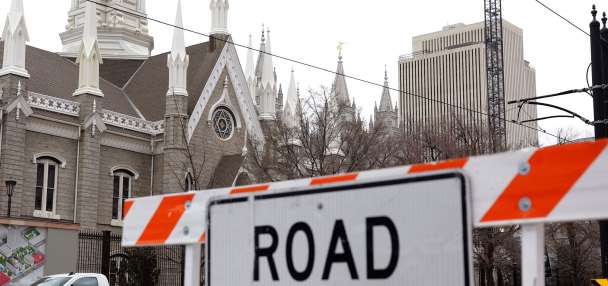
Hanukkah is also about outreach. On the first night, Rabbi Zippel will light the menorah with Gov. Gary Herbert and other dignitaries on Capitol Hill. Each night after, a menorah will be lit at Abravanel Hall Plaza. And on the fifth day, they’ll light the menorah with thousands at the Vivint Smart Home Arena during halftime at a Jazz game.
What does the lighting of the menorah symbolize?
For Rabbi Zippel, the lighting of the menorah is rich with significance.
“There are so many beautiful themes at play. There’s the idea that all it takes to light up the darkness is just one small flame. There’s the idea of increasing in light every single night,” he said.
“The candle is so significant and so unique in our tradition because, when one candle lights another, it doesn’t detract from the giver. So whereas everything else in life is set up in a way that, if I give you something, by definition means I have less, a candle shows us that we can give to another and it does not detract from the giver, but it actually makes the giver stronger.”
What are some Hanukkah traditions?
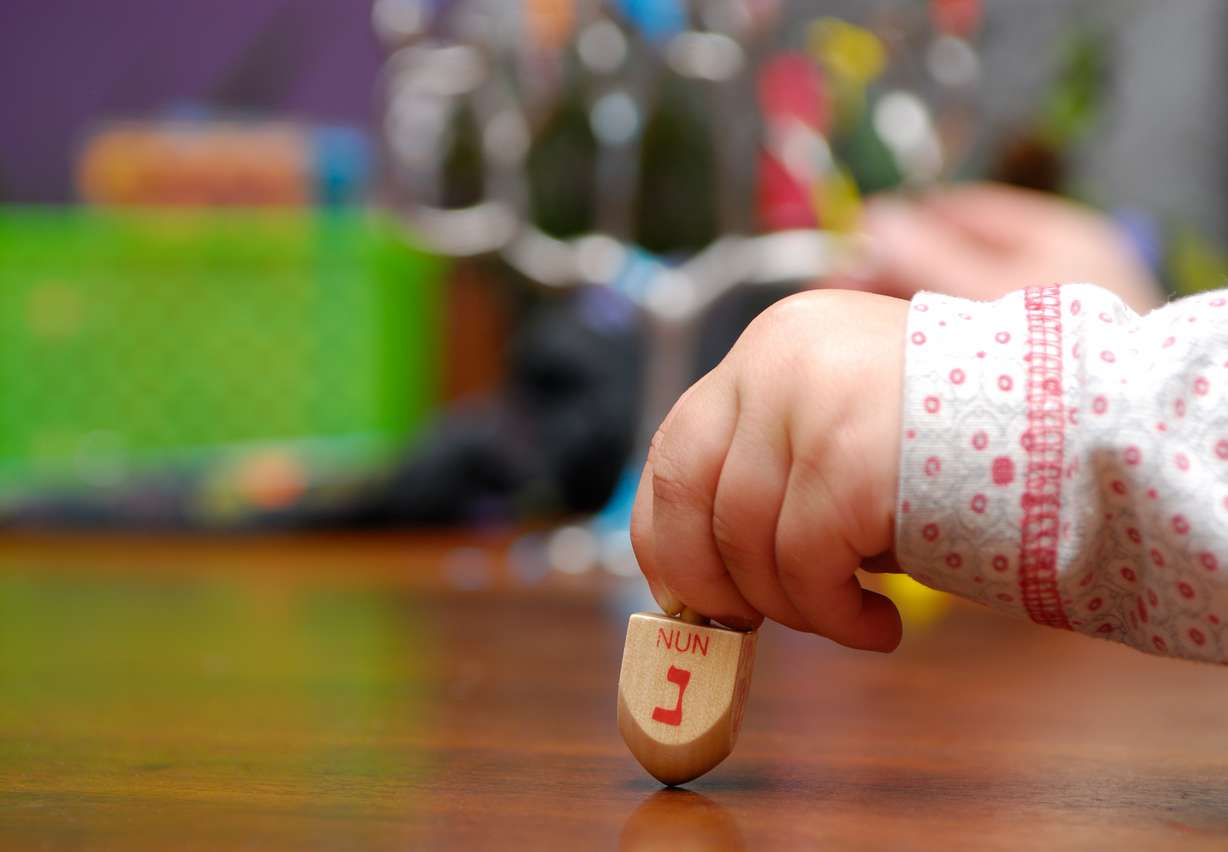
Spinning the four-sided top known as a dreidel is a tradition born from Jewish children in the ancient times of Greek persecution, Rabbi Zippel said. Jews were banned to practice or study their religion, so when the children studied in secret and soldiers barged in, they’d pretend to be playing with tops, he explained.
“There’s (also) a lot of food. Hanukkah is a very fat-friendly holiday. Everything is deep-fried in oil. There’s the potato pancakes (latke) and the jelly donuts (sufganiyot) and all that. It’s a time to be with family. It’s a time to celebrate with those who are near and dear to you and to celebrate with your community. It’s a really beautiful time of year,” he said.
Gift-giving isn't necessarily a part of Hanukkah, but it has crept into the traditions honored by many Jews, especially because of its timely proximity to Christmas, Rabbi Zippel explained. The amount of gifts given just depends on how much Amazon shopping you want to do, he laughed.
What is the history of Hanukkah?
A little over 2,000 years ago, the Jewish people were living peaceably in the Holy Land when the Syrian Greek army came and conquered the area.
“So much of our history as Jewish people is replete with instances of conquering forces that wanted to kill us. … We’ve been through so much persecution where it was threat of physical violence,” Rabbi Zippel said. “What’s unique about the story of Hanukkah is that (the Syrian Greeks) didn’t want to harm them, it was spiritual persecution.”
The Greeks banned Judaism and set up decrees prohibiting the Jewish people from studying the Torah, worshipping in their temples, or practicing their religion in any way. They also defiled the Jews’ temple, putting a pig on the altar and smashing the vessels of oil the Jews would use to light the lamps in the temple.
But a small group of soldiers called the Maccabees were able to chase the Greeks out and reconquer the Holy Land. And while the Maccabees’ conquering of an army much larger than their own was a miracle in itself, the miracle that still inspires Hanukkah’s symbolism today occurred in the temple.
The Jewish people wanted to light the lamps in the temple and found a candelabra, but they had just one vessel of oil left — only enough to keep the candelabra burning for one day.
But one day passed, then another and another. The oil lasted for eight days until the Jewish people were able to procure more oil.
What do people often misunderstand about Hanukkah?
"I think that there is kind of this refrain that Hanukkah was the Jews response to Xmas," the rabbi said. "You know, that we kind of invented this thing to not make ourselves feel bad."
But Hanukkah is not a minor holiday, he emphasized.
"Its significance runs deep in Jewish culture and it's, I believe, one of the most meaningful holidays that we have on the Jewish calendar."
What does Hanukkah mean to you?
“The literal translation of Hanukkah is rededication,” Rabbi Zippel mused. “It’s an annual opportunity … for everyone to rededicate themselves to those ideals of increasing light in the world. And I think that is not specific to the Jewish community. I think that’s something that everyone can aspire to. To bring more light to the world.”