'%3e%3cpath%20d='M34.1406%205.85938C30.3906%202.10547%2025.3047%200%2020%200C14.6953%200%209.60938%202.10547%205.85938%205.85938C2.10938%209.61328%200%2014.6953%200%2020C0%2025.3047%202.10547%2030.3906%205.85938%2034.1406C9.61328%2037.8906%2014.6953%2040%2020%2040C25.3047%2040%2030.3906%2037.8945%2034.1406%2034.1406C37.8906%2030.3906%2040%2025.3047%2040%2020C40%2014.6953%2037.8945%209.60938%2034.1406%205.85938ZM37.0117%2023.543H31.1602V13.5391H27.6328V19.9414C28.1211%2020.6914%2028.3711%2021.582%2028.3711%2022.5625V22.625C28.3711%2023.668%2028.1172%2024.6055%2027.6328%2025.4297V26.6094H36.082C33.4883%2032.9375%2027.2891%2037.3789%2020.0039%2037.3789C10.3711%2037.3789%202.62109%2029.6289%202.62109%2020C2.62109%2010.3711%2010.3711%202.62109%2020%202.62109C29.6289%202.62109%2037.3789%2010.3711%2037.3789%2020C37.3789%2021.1484%2037.2617%2022.2656%2037.0508%2023.3477C37.0391%2023.4141%2037.0234%2023.4766%2037.0117%2023.543Z'%20fill='white'/%3e%3cpath%20d='M22.3086%2018.5352C20.4336%2018.125%2019.9531%2017.8398%2019.9766%2017.1836V17.1406C19.9766%2016.6992%2020.3477%2016.2148%2021.4023%2016.2148C22.582%2016.2148%2023.8867%2016.6797%2025.0781%2017.4766L26.8516%2015.0195C25.4453%2013.8906%2023.707%2013.3398%2021.5547%2013.3398C18.5195%2013.3398%2016.4375%2015%2016.4063%2017.4766V17.5352C16.3633%2020.2617%2018.5859%2020.9805%2021.293%2021.6016C23.0391%2021.9766%2023.5703%2022.3164%2023.5703%2022.9609L23.5469%2022.9766C23.5469%2023.3906%2023.2578%2023.7031%2022.7852%2023.8359C22.5742%2023.9062%2022.1289%2023.9727%2021.5156%2023.9727C20.7617%2023.9727%2019.7539%2023.8633%2018.6328%2023.4844C18.0898%2023.2891%2017.4727%2023.0039%2016.8047%2022.6133L20.1406%2026.625C20.2813%2026.6602%2021.0977%2026.8516%2021.7734%2026.8516C25.0039%2026.8516%2027.0859%2025.2461%2027.1094%2022.6328V22.5703C27.1602%2020.1133%2025.2148%2019.1719%2022.3086%2018.5352Z'%20fill='white'/%3e%3cpath%20d='M5.24219%2013.5664V26.6133H8.75391V23.7578L10.2969%2021.9531L14.2031%2026.6133H18.3867L12.3555%2019.5195L17.4023%2013.5664H13.4531L8.75391%2019.0586V13.5664H5.24219Z'%20fill='white'/%3e%3c/g%3e%3cdefs%3e%3cclipPath%20id='clip0_97_2430'%3e%3crect%20width='40'%20height='40'%20fill='white'/%3e%3c/clipPath%3e%3c/defs%3e%3c/svg%3e)


Estimated read time: 3-4 minutes
This archived news story is available only for your personal, non-commercial use. Information in the story may be outdated or superseded by additional information. Reading or replaying the story in its archived form does not constitute a republication of the story.
SALT LAKE CITY — Record-breaking wildfires raged through Utah in 2018, leaving sizable burn scars and impacts on habitats.
In the wake of these damages, the Utah Division of Wildlife Resources is working hard to ensure these burn scars heal properly and to educate the public about how to prevent wildfires.
“There are major concerns for erosion, especially for communities and fisheries near steep slopes that burned in these fires,” the Division of Wildlife Resources’ habitat restoration biologist Robby Edgel said in a news release.
Burned soil can be as water-repellant as pavement, according to the National Weather Service. As a result, minimal rainfall easily leads to flash flooding. The National Weather Service also identified debris flows as a common problem resulting from areas with burn scars. These occur when flooding water over a burn scar picks up debris (like rocks, sand, mud, etc.) and takes it with it. These flows can result in damage to homes, bridges, roads and more.
“(Mudslides) are always a concern,” Daniel Eddington, habitat conservation coordinator at the Division of Wildlife Resources, told KSL.com. “There’s no way to tell what will happen.”
Eddington said that, for the most part, the amount of flooding and debris flow will be dependent on how quickly and heavily water flows as a result of snowmelt this spring.
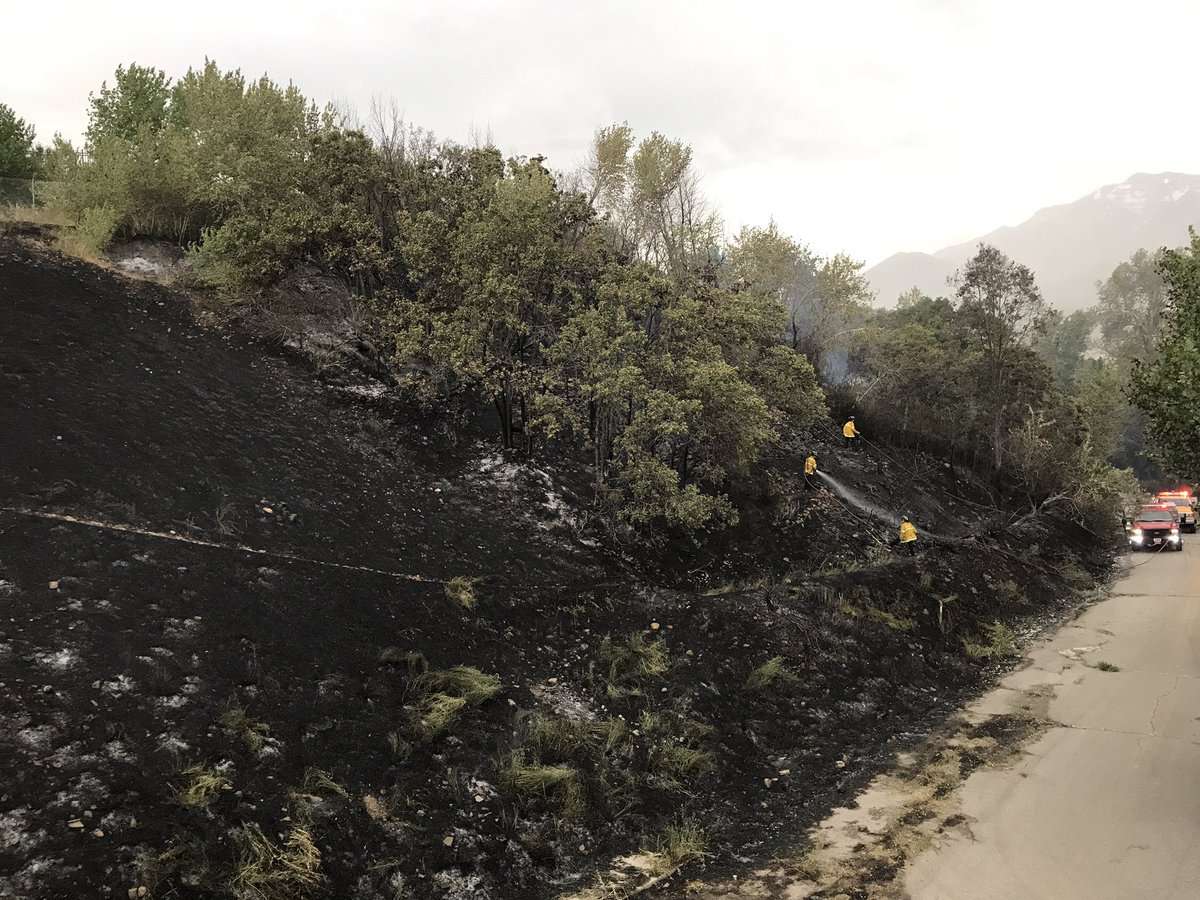
“If we have heavy spring flows that come down real quick, we can have some problems,” he added. “Even the monsoons we get later in the year can still cause problems because a lot of times the plants haven't been established yet.”
Habitat biologists at the Utah Division of Wildlife Resources have indicated that Pole Creek/Bald Mountain, Dollar Ridge and Goose Creek experienced the biggest fires and as a result are the most at risk for erosion from spring runoff.
“In Utah, we are fortunate to have a program called the Utah Watershed Initiative,” Eddington said. “That helps us coordinate a lot of the fire rehabilitation efforts across federal, state and private lands. Through that effort, we were able to seed almost 85,000 acres on about 17 different fires throughout the state.”
The Division of Wildlife Resources has also been instituting erosion control in sensitive areas. Despite these efforts, it may not be enough to prevent erosion and flooding in 2019. Most of the seeds which had been planted in 2018 after wildfires haven’t grown enough to actually have an impact on erosion and flooding yet, Edgel said.
High elevation fires tend to recover more quickly, according to Eddington. “Sometimes the fires have good impacts and some have negative impacts. A lot of our ecosystems have adapted to fire and they adjust accordingly,” he explained.
Lower elevations prevent greater challenges, especially in areas with sagebrush. Such plants, according to the Division of Wildlife Resources, take a longer time to grow and thus are a lot slower to heal.
Eventually, the structure in the soil will take hold once more and flash floods will occur significantly less. In the meantime, the National Weather Service suggests, “If you can look uphill from where you are and see a burnt-out area, you are at risk."

Related links
Related stories
Most recent Outdoors stories
Related topics
 Cara MacDonald