
Estimated read time: 4-5 minutes
This archived news story is available only for your personal, non-commercial use. Information in the story may be outdated or superseded by additional information. Reading or replaying the story in its archived form does not constitute a republication of the story.
SALT LAKE CITY — Utahns know President Henry B. Eyring as a leader in The Church of Jesus Christ of Latter-day Saints. They likely don’t realize he’s also a prolific artist.
A collection of his watercolors is now on display and the focus is on remembering in what is being called A Visual Journal: The Artwork of Henry B. Eyring. The exhibit opens Friday and will run through Jan. 21 at the Church History Museum in Salt Lake City
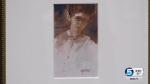
President Eyring took KSL on a personal tour of the exhibition earlier in the week. We walked by the portraits to a painting of baseball players.
“This is childhood for me," he said. "I was a little boy in New Jersey and actually went once to the ballpark. One time, and Joe DiMaggio hit one out into centerfield. The one time I was there!”
The paintings are deeply personal moments in his life, he said, and they're often moments of experiences he's captured with his wife.
“Always times where I was somewhere with Kathy, not that I did it on scene, but I tried to do it from photographs later to capture time," he said.
Despite the gallery that now showcases his work, President Eyring does not consider himself an artist. It's something he picked up later in life while visiting Hawaii on vacation with his family.
“I hurt my back surfing, and so I had no way I could keep surfing. I had to do something, so what I did is I went into town and got some watercolors," he said. "I did my first watercolors sitting in the van while they were at the sandy beach.”
The exhibition of his art also includes his sketchbooks — some are journals with drawings and some are watercolors that he did as thank you notes during his church assignments.
“When I was going to stake conferences, I would always take onto the plane my watercolor set. And then on the way back, I would try to do a scene for the people that I had stayed with in their home. And then I sent it as a ‘thank you’ card.
"But there are a whole bunch of them that we had asked, ‘can we borrow it back?’ (for the show) — thank you notes that I sent," he added. "And so that’s the only time that I really carried a set with me.”

The Church History Museum curator Laura Hurtado looked through a thousand watercolors to create the exhibition and found a recurring theme.
“The seven themes in the show were themes that we saw, so we tried to make sense of the thousand or so by creating categories within," she said. "I talked to him, because I felt like in the process of remembering, what you gain from that is a gratitude for those moments. And I posed that question to him, I said, ‘It feels so grateful, that gratitude is the theme and he said, ‘Oh, no, no, it’s much deeper than that. It’s love.’”
We walked up to another area in the gallery and President Eyring became emotional as he saw one of his works of his family. He shared tender moments of nostalgia with us, especially about his wife.
“And there’s sweet Kathy," he said, pointing. "It’s not a great painting, but boy it gets me, you know, because it’s the way they really looked.”
President Eyring said he loves the transparency of watercolors and the light that comes through the brush strokes and the image.
“Light is a big part of why; it’s the feelings you get almost always about light and watercolor. What you do is transparent, and therefore, if you put some dark near it, it brings in white light and pops out," he said. "And you can do something with watercolor. These paintings are not a message so much as a memory. They are a way to take me or the people I love back to a time that was a sweet time.”
A time like one of a sailing vessel, carrying his great-grandfather and his sister to America and a new faith.
“I went to the trouble of getting from history the exact rigging of a boat that my great-grandfather and his sister, as orphans, sailed out of Bremerhaven to the United States — not knowing why they felt the need to come to America," he said. "Of course, it was because they found the church, but I painted this for a family home evening one night.
"I painted it so there is a little break in the clouds and the two of those little orphans are on the deck. And the lesson I taught is the Lord is watching over you no matter how lonely you may feel.”
President Eyring believes in the importance of looking back and preserving those memories. He said with memories, the joy returns.