
Estimated read time: 3-4 minutes
This archived news story is available only for your personal, non-commercial use. Information in the story may be outdated or superseded by additional information. Reading or replaying the story in its archived form does not constitute a republication of the story.
SALT LAKE CITY — As Father’s Day approaches, one father of five is sharing his story as a prostate cancer survivor to encourage other men to get screened.
When Philip Stone got screened he discovered the Huntsman Cancer Institute has a life-saving machine that can make a difference when prostate cancer is detected early.
Prostate cancer is the most common cancer and the leading cause of cancer death among men, according to the National Cancer Institute.
“I was horrified because I watched my father in my 20s suffer terribly,” said Stone, who was diagnosed with prostate cancer at age 49. “To watch him, this big strong man — my hero — be taken away by this cancer really affected me.”
Stone’s father was diagnosed with prostate cancer at age 58. The cancer killed him five years later. That compelled Stone to get screened early for prostate cancer.
“To find out what I could do to know if I had it,” he said.
Stone’s cancer was diagnosed using a simple blood test measuring the prostate-specific antigen, or PSA.
“You don’t have to be afraid of that,” he said. “What you need to be afraid of is getting the cancer in a way that they can’t treat it.”
A machine, called a linear accelerator, saved his life and eradicated his cancer with stereotactic body radiotherapy treatment four and a half years ago.
Huntsman Cancer Institute granted KSL rare permission to go into the vault to watch the machine do its job. It’s built right into the side of the mountain deep inside the cancer hospital, encased in 6 to 8 feet of concrete.
“It’s kind of a game changer for us,” said Dr. Jonathan Tward, the radiation oncologist at HCI who treated Stone. “It’s an extremely convenient and effective treatment.”
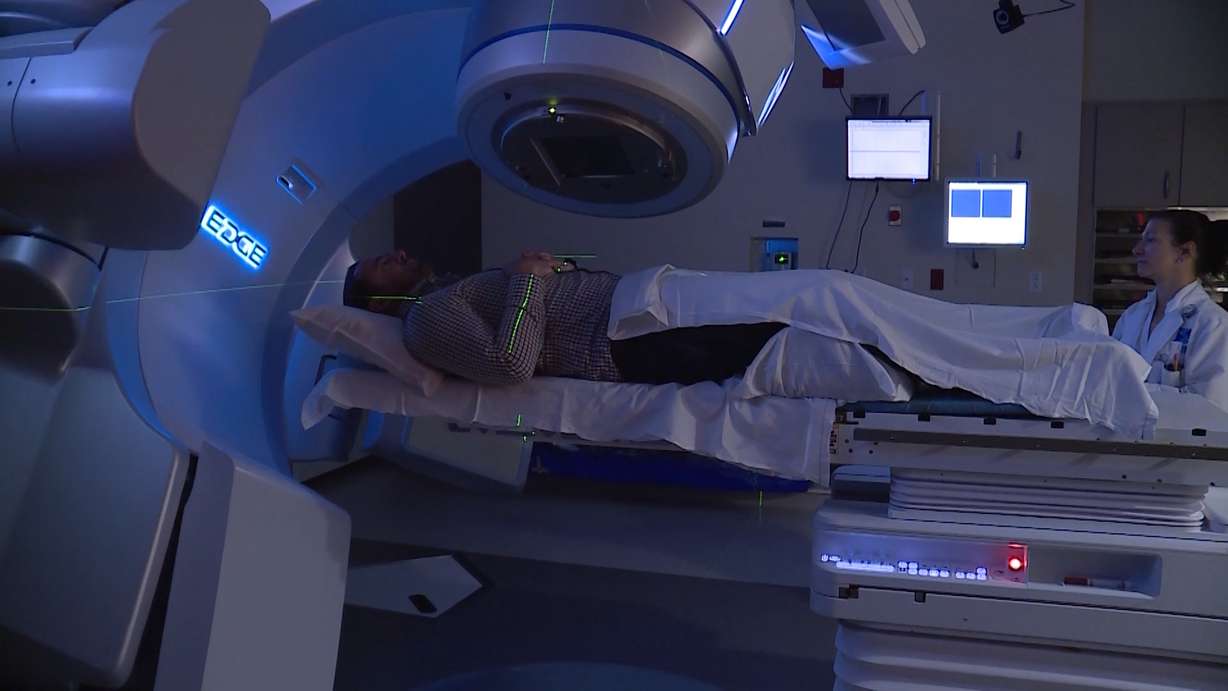
The machine is about the size of an MRI scanner. The patient lies on a table as the laser apparatus circles the patient delivering targeted, high doses of radiation over five days, instead of smaller daily doses over two months.
“He was done with all of his therapy,” said Tward. “It is so easily curable for the vast majority of men if detected early. It seems a little silly to avoid the doctor visit.
Stone continued to work with minimal life disruption. He had no complications with urinary or bowel function or sexual intimacy, which are common side effects of prostate cancer.
“I’m doing great, and I’m very, very grateful,” said Stone.
Related story:
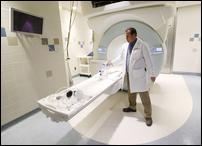
New technology gives doctors a better look at prostate cancer
New technology at the Huntsman Cancer Institute is providing new hope for a diagnosis for men undergoing repeated prostate biopsies.Tward said it’s too early to say he’s cured, but there was some cautiously optimistic news for Stone on Friday.
“It’s looking really, really, really improbable that you’ll ever have a recurrence of your prostate cancer,” Tward told him.
That was incredible news for a man who watched his father die of prostate cancer and feared the same fate for himself, his brothers and his sons. This Father’s Day, he is urging everyone to encourage the dads they love to get their prostate cancer screening.
“If you have a problem, get it taken care of because the treatments that you can get now are amazing,” said Stone. “Do this for your family.”