Estimated read time: 4-5 minutes
This archived news story is available only for your personal, non-commercial use. Information in the story may be outdated or superseded by additional information. Reading or replaying the story in its archived form does not constitute a republication of the story.
SALT LAKE CITY — A Utah mom's quest to ensure every child is screened for a rare genetic disorder was dealt a setback Thursday when a national committee voted against recommending it for further review.
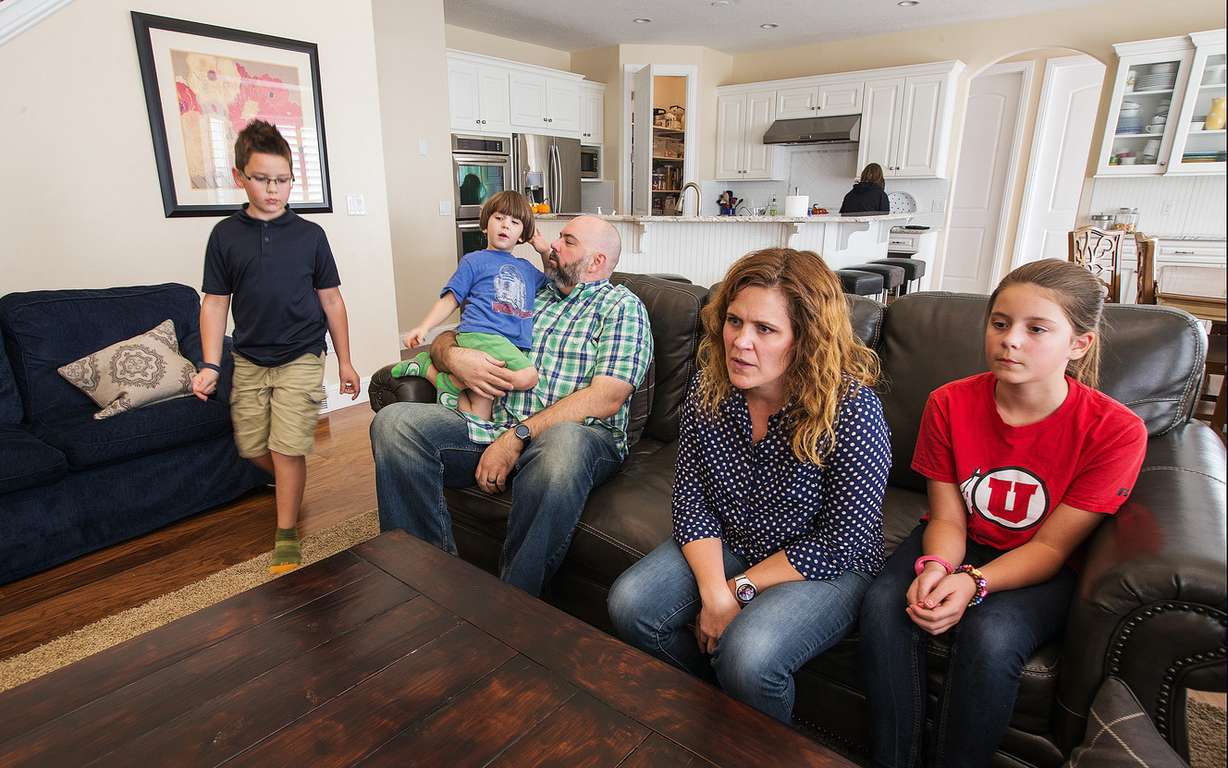
Heidi Wallis, of Bluffdale, has two children with GAMT deficiency. Left undiagnosed and untreated, the rare disorder can cause lifelong mental and physical disabilities in children.
But if treated within the first year of life, a child with GAMT deficiency can essentially thwart the onset of the disease, as discovered by University of Utah Health Care medical genetics chief Nicola Longo and ARUP Laboratories biochemical genetics director Marzia Pasquali.
Over 10 years of treating children with GAMT, Pasquali and Longo perfected an oral treatment and a cheap blood test for the disorder that was added to Utah's newborn screening panel in 2015.
Their goal is to get GAMT added to the U.S. Health and Human Services' recommended newborn screening panel list, which most states use as the basis for their newborn screening programs.
They made their case for the second time Thursday after getting voted down earlier this year.
On Thursday, the national committee that oversees the U.S. Health and Human Services' recommended newborn screening panel list voted again not to add GAMT.
It had failed to satisfy one key requirement: At least one newborn has to be successfully identified through a state or local screening program before the committee will recommend the disorder be screened nationwide.
"We do recognize this is a severe condition," said committee chairman and RTI International early childhood development fellow Dr. Joseph Bocchini. "We do recognize that patients are affected. We do recognize that the outcome can be improved by treatment. But we haven’t proven that the current test that’s being evaluated can identify a patient for early treatment — and that’s the key thing."
Screening pilot programs in Utah, British Columbia and Australia have sampled over 1 million babies for GAMT. Not one has been identified with the deficiency.
That has less to do with the sensitivity of the screening tests and more to do with the rarity of the disease, experts said on Thursday.
The cost of adding the screening is low — about 25 cents per sample, according to Pasquali's estimates. She and Longo estimate the incidence of the disease to be about 1 in 120,000 people.
Much discussion also centered around a recently unearthed case of an Austrian child who was flagged by a newborn screening program as having a likelihood of having GAMT.
But that child was sent home after a urine test contradicted the blood test, according to researchers. The child was later found to indeed have the genetic mutation that causes GAMT deficiency and to have suffered neurological damage due to the delay.
Some said the case should count as a "true positive" despite the fact that clinicians missed the diagnosis.
Dr. Dietrich Matern, chairman of laboratory genetics at Mayo Clinic, said the screening correctly raised a red flag on the child and that the error was in follow-up.
"I don't think this kid would fall through the cracks again," he said.
But other members of the committee argued the screening failed the child and did not satisfy the requirement of a “true positive.”
"The bar should be fairly high because we're trying to compel public health programs to screen for it," said Kellie Kelm, an official with the Food and Drug Administration.
The committee ultimately voted 9-5 not to approve GAMT for the national recommendation list until an existing newborn screening program can demonstrate that it has found one newborn with the deficiency.
However, Bocchini said, that is "with the understanding that we want to move as quickly as possible" once that happens.
Wallis, who presented to the committee on Thursday, called the decision "disappointing" and "frustrating."
"This is real," Wallis said. "It's not just numbers."
Wallis said screening for the disorder should be a no-brainer when compared to the cost of taking care of a child with an intellectual disability for the rest of his or her life.
"It's financially smart for us to screen, but most especially it's morally right," she said.
Wallis said she will likely work with Pasquali and Longo to try to get other states to add GAMT to their newborn screening panels.
"If we can get California or Texas or New York to screen, their birth rate is so much higher I feel like we wouldn't be waiting as long,” she said.
The committee, which meets every three months, does not have the final say on the Recommended Uniform Screening Panel.
After recommending a disorder, the application goes to an evidence review board, which has up to nine months to make a decision. After that, the secretary of Health and Human Services, Sylvia Burwell, must approve the decision.