'%3e%3cpath%20d='M34.1406%205.85938C30.3906%202.10547%2025.3047%200%2020%200C14.6953%200%209.60938%202.10547%205.85938%205.85938C2.10938%209.61328%200%2014.6953%200%2020C0%2025.3047%202.10547%2030.3906%205.85938%2034.1406C9.61328%2037.8906%2014.6953%2040%2020%2040C25.3047%2040%2030.3906%2037.8945%2034.1406%2034.1406C37.8906%2030.3906%2040%2025.3047%2040%2020C40%2014.6953%2037.8945%209.60938%2034.1406%205.85938ZM37.0117%2023.543H31.1602V13.5391H27.6328V19.9414C28.1211%2020.6914%2028.3711%2021.582%2028.3711%2022.5625V22.625C28.3711%2023.668%2028.1172%2024.6055%2027.6328%2025.4297V26.6094H36.082C33.4883%2032.9375%2027.2891%2037.3789%2020.0039%2037.3789C10.3711%2037.3789%202.62109%2029.6289%202.62109%2020C2.62109%2010.3711%2010.3711%202.62109%2020%202.62109C29.6289%202.62109%2037.3789%2010.3711%2037.3789%2020C37.3789%2021.1484%2037.2617%2022.2656%2037.0508%2023.3477C37.0391%2023.4141%2037.0234%2023.4766%2037.0117%2023.543Z'%20fill='white'/%3e%3cpath%20d='M22.3086%2018.5352C20.4336%2018.125%2019.9531%2017.8398%2019.9766%2017.1836V17.1406C19.9766%2016.6992%2020.3477%2016.2148%2021.4023%2016.2148C22.582%2016.2148%2023.8867%2016.6797%2025.0781%2017.4766L26.8516%2015.0195C25.4453%2013.8906%2023.707%2013.3398%2021.5547%2013.3398C18.5195%2013.3398%2016.4375%2015%2016.4063%2017.4766V17.5352C16.3633%2020.2617%2018.5859%2020.9805%2021.293%2021.6016C23.0391%2021.9766%2023.5703%2022.3164%2023.5703%2022.9609L23.5469%2022.9766C23.5469%2023.3906%2023.2578%2023.7031%2022.7852%2023.8359C22.5742%2023.9062%2022.1289%2023.9727%2021.5156%2023.9727C20.7617%2023.9727%2019.7539%2023.8633%2018.6328%2023.4844C18.0898%2023.2891%2017.4727%2023.0039%2016.8047%2022.6133L20.1406%2026.625C20.2813%2026.6602%2021.0977%2026.8516%2021.7734%2026.8516C25.0039%2026.8516%2027.0859%2025.2461%2027.1094%2022.6328V22.5703C27.1602%2020.1133%2025.2148%2019.1719%2022.3086%2018.5352Z'%20fill='white'/%3e%3cpath%20d='M5.24219%2013.5664V26.6133H8.75391V23.7578L10.2969%2021.9531L14.2031%2026.6133H18.3867L12.3555%2019.5195L17.4023%2013.5664H13.4531L8.75391%2019.0586V13.5664H5.24219Z'%20fill='white'/%3e%3c/g%3e%3cdefs%3e%3cclipPath%20id='clip0_97_2430'%3e%3crect%20width='40'%20height='40'%20fill='white'/%3e%3c/clipPath%3e%3c/defs%3e%3c/svg%3e)


Estimated read time: 3-4 minutes
This archived news story is available only for your personal, non-commercial use. Information in the story may be outdated or superseded by additional information. Reading or replaying the story in its archived form does not constitute a republication of the story.
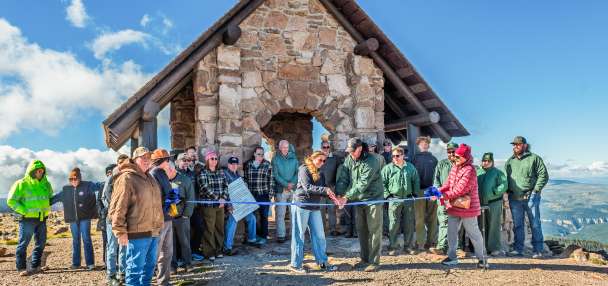
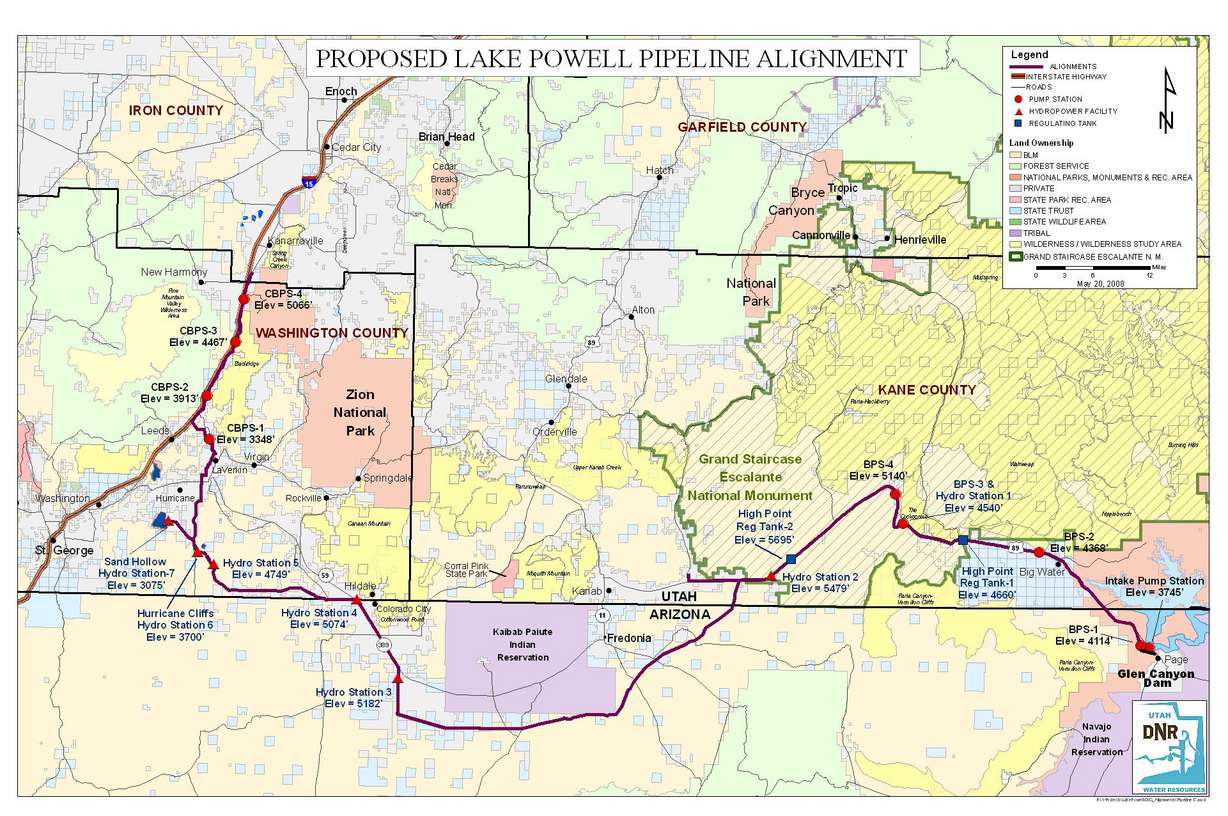
SALT LAKE CITY — Top officials with the Federal Energy Regulatory Commission will be in southern Utah Tuesday and Wednesday to tour the 139-mile route of the proposed Lake Powell Pipeline.
The site visit, which is a public tour open to anyone interested, is designed to give the project reviewers with the regulatory agency a close up look at the pipeline's proposed alignment, the terrain it crosses and a closer examination of its planned hydropower components.
Five representatives from the Utah Division of Water Resources will be on the tour — including executive director Eric Millis — as well as representatives of the state's engineering consultant on the pipeline, Colorado-based MWH Global.
Critics of the project, including representatives from Utah Rivers Council, are scheduled to go on the tour, which includes a stop at the planned site for the water intake pump station at the Glen Canyon National Dam, which would begin the conveyance of water for future supplies to Washington County.
Celeste Miller, a spokeswoman with the federal agency, said site visits are routine and a way to get a sense of the land and a visual of what particular hydropower projects are being proposed for consideration.
"This is something we do often. It allows individuals who have an interest in the site the opportunity to view it, as well as FERC and others to get a sense of the lay of the land," she said.
The tour follows Utah's submission of its licensing application to the agency earlier this year and is a precursor to a lengthy environmental review that will look at potential impacts involving the pipeline.
"It's always good to get an actual lay of the land," said Joshua Palmer, a spokesman with the Utah Division of Water Resources. "There are certain things you can't get from a piece of paper; you have to walk it."
Although state water officials will be on the tour, Palmer stressed it is FERC's tour and it is not designed to promote the "benefits" of the pipeline.
"Our consultant will be there to answer questions, but we have made it very clear for project proponents that this is not a marketing tour. I anticipate it will be a very technical tour to explain design and alignment," he said.
Palmer said it will give FERC project supervisors the ability to ask questions from an actual location along the route, rather than from issues that arise from looking at a lengthy document.
"You are really looking at the alignment and looking at it from an environmental perspective, an energy perspective and potential impacts and benefits," he said. "I think it really enriches the process."
The proposed $1 billion Lake Powell Pipeline has several hydropower components — with the capability of generating 300 megawatts of power — and would siphon 82,249 acre-feet of water from Lake Powell for Washington County and 4,000 acre-feet for Kane County.
The total diversion represents 6 percent of Utah's share of Colorado River water that is "untapped" and delivered to Lake Powell via the Green River and then the Colorado River.
FERC needs to first complete its environmental review of the pipeline and then issue a record of decision, which is not expected for two years or more.
In 2006, Utah lawmakers passed the Lake Powell Pipeline Development Act, authorizing the state water resources agency to begin planning for the project to shore up future water supplies for fast growing Washington County.
Despite ardent critics such as Utah Rivers Council and Citizens for Dixie's Future — groups that argue the project is a financial, unnecessary boondoggle — Utah lawmakers passed a measure this last legislative session establishing an account for future water projects.
The implementation of that funding mechanism for projects that would include the Lake Powell Pipeline will be discussed Tuesday by members of the State Water Development Commission.