Estimated read time: 3-4 minutes
This archived news story is available only for your personal, non-commercial use. Information in the story may be outdated or superseded by additional information. Reading or replaying the story in its archived form does not constitute a republication of the story.
SALT LAKE CITY — In 2003 Harry Miller was convicted of a crime he did not commit.
Three years previously, a woman was robbed at knifepoint in Salt Lake City. She reported to police that the robber was between 18-21 years old. Miller, a 47-year-old man who lived in Louisiana, was identified by the victim.
In addition to his age and not being in Utah at the time, Miller had recently suffered a stroke and needed frequent care. Despite this, a jury convicted Miller solely on the mistaken eyewitness identification. He spent four years in prison before the district attorney dismissed all charges.
Wrongful convictions are rare, but they do happen and unfortunately stories like Miller’s are sometimes caused by what the public trusts: science.
“Unvalidated or improper science is the number one cause that the innocence community is working on,” said Marla Kennedy, Executive Director of the Rocky Mountain Innocence Center.
The Rocky Mountain Innocence Center is a nonprofit organization working to correct and prevent wrongful convictions of innocent people in Utah, Nevada, and Wyoming. They took on Harry Miller’s case and worked to get Utah to declare that Miller was “factually innocent” which allowed compensation for his time in prison.
Improper science includes eyewitness misidentification, fiber analysis and bite marks.
“There is no such thing as bite mark science,” Kennedy said.
Despite evidence to the contrary, improper science still persists in the courts, and the larger culture.
“Seventy-two percent of all DNA exonerations in the United States occurred by using faulty eyewitness identification testimony,” Kennedy said.
Another misconception is DNA testing.
“DNA testing keeps evolving over time. When it first came out you needed large samples of DNA to test, but now you just need minuscule amounts,” Kennedy said.
Despite progress in DNA testing, in 90% of cases, there’s no DNA to test. Non-DNA tests can take decades, and lots of work to prove.
Related:
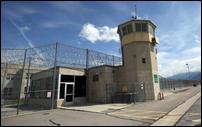
Is convicted killer innocent? Group says DNA may prove it
Adrian Gordon has been in prison since 2002 after a judge convicted him of murdering a man behind a Salt Lake 7-Eleven store.Utah is ahead of the country in this area. It’s one of only four states that have a non-DNA statute that can allow cases without DNA evidence to get back into court. Despite this, it’s a lot of work. The statute is narrow and compensation for wrongful convictions caps out at 15 years. That means in cases like the wrongfully convicted Debra Brown, who served 17 years, no compensation is received for those extra years behind bars.
Another barrier is the underlying, and unspoken, issue that people do not want to believe that there are innocent people in prison.
“We all want the same thing; no one wants an innocent person in prison," Kennedy said. "We just want people to agree that someone made a mistake and we fix it together.”
The Rocky Mountain Innocence Center is the only organization that does post-innocence convictions, and they cover more square miles than any innocence project in the nation. Their work is done with two paid staff members in an office where most of the furniture is donated.
In addition to their work in the courts, they work on education and outreach to the community so there is greater awareness of the improper science that can convict innocent people. As DNA testing improves, and more awareness of improper science reaches the larger community, Kennedy said “there are cases coming out of the woodwork.”
If you want to know more about the Rocky Mountain Innocence Center see their website here. You can also follow them on Facebook.
Carrie Rogers-Whitehead is a senior librarian at Salt Lake County Library. In addition, she is an instructor at Salt Lake Community College and CEO and co-founder of Digital Respons-Ability. Carrie can be reached at carrie@respons-ability.net