'%3e%3cpath%20d='M34.1406%205.85938C30.3906%202.10547%2025.3047%200%2020%200C14.6953%200%209.60938%202.10547%205.85938%205.85938C2.10938%209.61328%200%2014.6953%200%2020C0%2025.3047%202.10547%2030.3906%205.85938%2034.1406C9.61328%2037.8906%2014.6953%2040%2020%2040C25.3047%2040%2030.3906%2037.8945%2034.1406%2034.1406C37.8906%2030.3906%2040%2025.3047%2040%2020C40%2014.6953%2037.8945%209.60938%2034.1406%205.85938ZM37.0117%2023.543H31.1602V13.5391H27.6328V19.9414C28.1211%2020.6914%2028.3711%2021.582%2028.3711%2022.5625V22.625C28.3711%2023.668%2028.1172%2024.6055%2027.6328%2025.4297V26.6094H36.082C33.4883%2032.9375%2027.2891%2037.3789%2020.0039%2037.3789C10.3711%2037.3789%202.62109%2029.6289%202.62109%2020C2.62109%2010.3711%2010.3711%202.62109%2020%202.62109C29.6289%202.62109%2037.3789%2010.3711%2037.3789%2020C37.3789%2021.1484%2037.2617%2022.2656%2037.0508%2023.3477C37.0391%2023.4141%2037.0234%2023.4766%2037.0117%2023.543Z'%20fill='white'/%3e%3cpath%20d='M22.3086%2018.5352C20.4336%2018.125%2019.9531%2017.8398%2019.9766%2017.1836V17.1406C19.9766%2016.6992%2020.3477%2016.2148%2021.4023%2016.2148C22.582%2016.2148%2023.8867%2016.6797%2025.0781%2017.4766L26.8516%2015.0195C25.4453%2013.8906%2023.707%2013.3398%2021.5547%2013.3398C18.5195%2013.3398%2016.4375%2015%2016.4063%2017.4766V17.5352C16.3633%2020.2617%2018.5859%2020.9805%2021.293%2021.6016C23.0391%2021.9766%2023.5703%2022.3164%2023.5703%2022.9609L23.5469%2022.9766C23.5469%2023.3906%2023.2578%2023.7031%2022.7852%2023.8359C22.5742%2023.9062%2022.1289%2023.9727%2021.5156%2023.9727C20.7617%2023.9727%2019.7539%2023.8633%2018.6328%2023.4844C18.0898%2023.2891%2017.4727%2023.0039%2016.8047%2022.6133L20.1406%2026.625C20.2813%2026.6602%2021.0977%2026.8516%2021.7734%2026.8516C25.0039%2026.8516%2027.0859%2025.2461%2027.1094%2022.6328V22.5703C27.1602%2020.1133%2025.2148%2019.1719%2022.3086%2018.5352Z'%20fill='white'/%3e%3cpath%20d='M5.24219%2013.5664V26.6133H8.75391V23.7578L10.2969%2021.9531L14.2031%2026.6133H18.3867L12.3555%2019.5195L17.4023%2013.5664H13.4531L8.75391%2019.0586V13.5664H5.24219Z'%20fill='white'/%3e%3c/g%3e%3cdefs%3e%3cclipPath%20id='clip0_97_2430'%3e%3crect%20width='40'%20height='40'%20fill='white'/%3e%3c/clipPath%3e%3c/defs%3e%3c/svg%3e)


Estimated read time: 4-5 minutes
This archived news story is available only for your personal, non-commercial use. Information in the story may be outdated or superseded by additional information. Reading or replaying the story in its archived form does not constitute a republication of the story.
PROVO — Carcasses decaying on the side of the road. Thousands of dollars in vehicle damage. Destroyed garden beds. Potential dangers to pets and children.
While some may enjoy the occasional intracity sighting of Utah's most common hooved wildlife, the urban mule deer has become a top public safety concern of Provo leaders.
Each year, about 150 deer are killed on Provo roads, causing an average of $3,000 in vehicle damage per accident, and hundreds of complaints have been submitted to the city from east-side residents fed up with deer ravaging their yards.
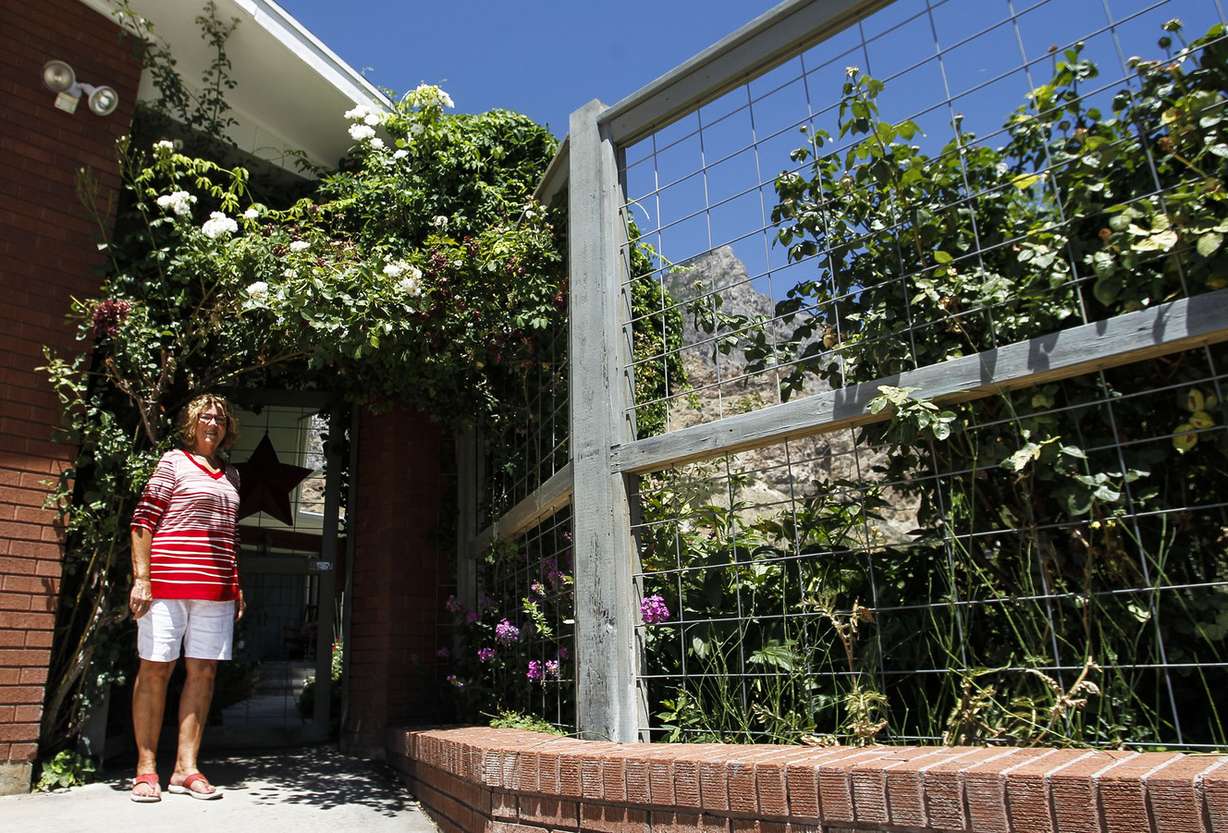
Take longtime resident Patsy Darby, who waged a 15-year war with the deer raiding her vegetable garden — trying nets to repellent sprays — before she finally invested thousands of dollars to build a 8 ½-foot fence.
"I decided enough was enough," she said. "They would eat absolutely everything."
Plus, Darby said she worries for young children in her neighborhood since she's seen bucks chase after dogs. Just last winter, she watched a herd of nearly 20 deer walk past her house.
"They can be alarming. When you see 18 deer walking down the street in front of your house, that's really out of context for a neighborhood," she said. "They're not afraid of anybody. They grew up here; they're around people all the time … and I've seen aggression a couple of times."
And as the deer population has grown over recent years — currently at 500 or so within city limits — city leaders have been wondering how to get the problem under control.
Last June, the council passed an ordinance outlawing feeding the deer. About a year ago, the council also requested a certificate of registration from the Division of Wildlife Resources to get permission to start a mitigation plan.
Since then the certificate has been approved, allowing the city to either kill or relocate up to 100 deer per year for three years.
Now Provo just needs to decide how.
Should they be hunted by specially trained archers and harvested to feed the needy? Or should they be trapped and relocated, the more costly and challenging option on the table?
To help find the answer, Provo leaders are hosting an open house at 6 p.m. Tuesday at Timpview High School, 3570 Timpview Dr., where residents are invited to learn about the city's options and give input on how to proceed.
"It's a very prominent problem," said City Council Chairwoman Kim Santiago. "And it won't go away if we don't do something about it."
It's the urban-born deer, those that have grown within city limits and learned to live off neighborhood vegetation, that are the problem — not those that visit from the mountains, Brian Cook, coordinator of the urban deer management program in multiple cities including Highland, Mapleton and Herriman, said at a City Council meeting this week.
"When these deer are born in the city, they're here to stay, and so we need to find a solution for removing for public safety," Santiago said.
Highland started its own program — lethal removal by certified hunters — in 2013. Its deer-versus-car accident rate dropped from 74 in 2012 to 41 in 2013, then down to six in 2015, Cook said.
"There's a pretty substantial reduction in public safety (concerns) and garden and vegetation loss," he said.
Cook added that nonlethal relocation — requiring traps, transportation and an on-site DWR official — would come at a "pretty heavy expense" compared to lethal removal, which would be carried out by three certified hunters who would be required to hunt the deer discreetly, out of the public eye.
Relocated animals also face a survival rate of no more than 30 percent, Cook noted, since the transition to wilderness can be taxing on the city-grown deer.
Additionally, if the city chooses lethal harvesting, the venison could be donated to local shelters, but Cook said that could also cost the city in processing and packaging fees, roughly $85 per animal.
To Santiago, harvesting the venison would be more beneficial to the community than letting the animals become road kill.
"Instead of 150 deer dying from being hit by cars, we would take out 100 deer and be able to use the meat to give to families in need," she said.
The program could cost between $10,000 and $20,000, depending on which strategy the city chooses, according to city staff.
After Tuesday's open house, the council will hold a public hearing July 19 at 5:30 p.m. and decide that night on a program.