
Estimated read time: 2-3 minutes
This archived news story is available only for your personal, non-commercial use. Information in the story may be outdated or superseded by additional information. Reading or replaying the story in its archived form does not constitute a republication of the story.
SALT LAKE CITY — Seven-year-old Phillip loves animals and playing soccer. He doesn't love the frequent X-rays he needs — until now.
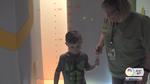
He crosses his fingers for luck and steps inside the EOS, which is orange and white and rumbles like a "rocket ship," some kids say. The new machine emits 50 to 90 percent less radiation, depending on the type of scan, and is much safer than traditional X-rays. It also takes 3-D images, and two pictures at once.
That's good news for kids like Phillip who need frequent scans.
"He was on my lap. His leg got caught on the slide, and we kept going," said JoAnna Lee, Phillip's mother, who lives in Logan.
Phillip was 2 when the accident happened. The fracture affected his growth plate. His leg grew out at a 45 degree angle. Doctors put in a plate and screws to temporarily stop growth on one side and straighten it out. He's had 15 X-rays so far, and will need many more.
"Who knows?" Lee shrugged and laughed. "He's so active. He broke his arm last summer and this leg issue — we'll need to monitor that through his growing years."
The new machine is less intimidating to kids, doctors say. Children think it's fun with its bright colors. Physicians like it because they can take a scan of a child standing upright in a weight-baring position, which reveals a lot about their natural posture.
"Sometimes when you take a picture of someone laying down, if they have any other problems, you don't get the full picture that way because you don't have gravity added into it," said Dr. Kristen Carroll, orthopedic surgeon at Shriners Hospitals for Children — Salt Lake City.
She said EOS spares kids with orthopedic problems the cumulative effect of radiation, while allowing her to keep a close watch on their growth and progress.
Carroll sits with the Lees examining X-rays taken over years, beginning with the day of the fracture. She compared the most recent scan taken after surgery with the one her staff took only moments before.
"It's stayed about the same and what's making me happy is it's becoming more symmetric," she said.
EOS is huge breakthrough, she said, for patients and relief for worried parents.
"I just want the best for my son," Lee said. "I want him to have the best care possible. This is just another small miracle, but huge for many, many children who can benefit."
It's Nobel Prize-winning technology that's also passing the test with kids.
The hospital doesn't charge more for EOS images, and insurance usually covers it. Shriners provides care without regard for a patient's ability to pay.