
Estimated read time: 2-3 minutes
This archived news story is available only for your personal, non-commercial use. Information in the story may be outdated or superseded by additional information. Reading or replaying the story in its archived form does not constitute a republication of the story.
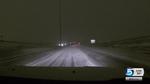
SALT LAKE CITY — Driving through a rainstorm or snowstorm can be difficult, especially when the double yellow line or the white dashes are hard to see.
On I-215's west side Wednesday morning, it was difficult for motorists to consistently see the lane markers.
"The biggest challenge is everything that goes into the deterioration of those markings," said John Gleason, spokesman for the Utah Department of Transportation.
UDOT stripes more than 7,000 miles of road every year.
"Our crews will be out there every night (in the spring) painting as many miles of roadway as they can in a nighttime," said Vic Saunders, UDOT Region 1 spokesman.
To make the stripes visible, UDOT embeds round glass beads in the striping paint.
"The first gun on the truck paints the stripe down," Saunders explained. "Following right behind it is a gun on the truck that lays the beads on top of the stripe."
The beads reflect the light back to the drivers' eyes.
"If we just painted without the reflective beads, you wouldn't really see anything," Gleason said. "It's the beads that are reflecting back."
But the reflectivity in the winter is reduced by the accumulation of salt and dirt on the road, in addition to the snow and rain. UDOT relies on spring rains to wash away the salt and dirt.
"There are a lot of different factors that break down these markings and make them less effective, and we're committed to always looking for the latest and greatest technology," Gleason said.
The beads have been a proven technology that's been around for a long time, according to Saunders, although they keep working with different colors and shapes.
UDOT is considering a new approach that will last longer: grooving in the markings. Road crews put the paint down in grooves they carve into the road. Glass beads in the paint makes the stripes visible, especially at night.
"This is more resistant to the wear and tear of everyday traffic that goes by, or plow blades that go by and scrape off the markings," Gleason said.
Utah is divided into six striping districts. Each district has a full-time crew that stripes continuously during the warm months, when the temperature is a minimum of 50 degrees Fahrenheit. Each district's goal is to paint every road, every year.
"Painting is something that you just can't do and forget about it," Saunders said. "You've got to be doing it over and over again."
UDOT urges all everyone to slow down when they encounter striping sections that are hard to see.
"It's so important when we do have these weather conditions for people to slow down and make sure they can see where they're going," Gleason said. Email: jboal@deseretnews.com