Estimated read time: 2-3 minutes
This archived news story is available only for your personal, non-commercial use. Information in the story may be outdated or superseded by additional information. Reading or replaying the story in its archived form does not constitute a republication of the story.
Ed Yeates reportingThe donor pool on human eyes is going to get bigger. For the first time, a landmark study reports corneal transplants can be used from donors as old as 75 and perhaps even older. That compares to the previous age limit of 65.
Many eye surgeons have believed a cornea removed from an older donor was not a good bet for a transplant. With 65 as their cutoff point, that left an enormous pool untapped, but not anymore.

Lily St. John had corneal transplants in both eyes. Dr. Mark Mifflin did the left eye in 2007 and the right eye a year later. Both look good. She says, "I can thread a needle, and I can read. I can read sometimes without glasses."
On her second transplant, Lily joined a University of Utah study funded by the National Eye Institute and the National Institutes of Health. Like others in this nationwide study, recipients got corneas either from donors 12 to 65 years of age, or those 66 to 75.
Lily doesn't yet know what she got in her left eye. But for others, the double mask study has been lifted. The results are significant. Dr. Mark Mifflin, of the Moran Eye Center, said, "It's the first real scientific study showing that older tissue, at least in this case, was just as successful as tissue from younger donors."
In fact, the success rate is the same, 86 percent, no matter whether the donor was 12 or 75 years old.
At the Utah Lions Eye Bank, inside the Moran Eye Center, is an inventory board of current donors. Still don't believe an older eye is not as good, or better, than a younger eye? The cell count on two of the 45-year-old donors is actually less than the cell count on two of the 75-year-old donors.
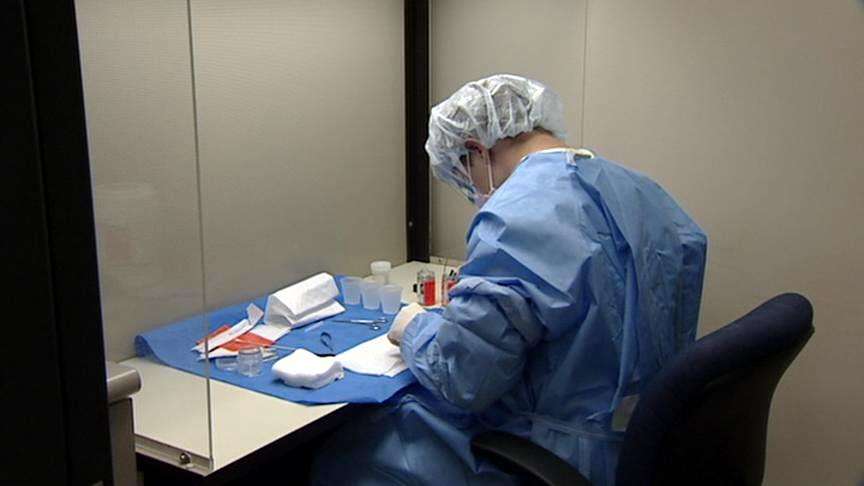
Though all these eyes are good, the higher the cell count, the better the tissue. Age is not a deterrent. One reason is the continual replacement of cells in the cornea. Mifflin said, "A very huge reserve of an over-supply of the important endothelial cells, which line the inner layer. So for most people, there's actually more than we need throughout our lifetime."
U.S. surgeons performed 33,000 corneal transplants in 2006. That jumped to 39,000 last year and continues growing.
The National Eye Institute hopes raising the donor age level will help meet this increasing demand.
E-mail: eyeates@ksl.com