'%3e%3cpath%20d='M34.1406%205.85938C30.3906%202.10547%2025.3047%200%2020%200C14.6953%200%209.60938%202.10547%205.85938%205.85938C2.10938%209.61328%200%2014.6953%200%2020C0%2025.3047%202.10547%2030.3906%205.85938%2034.1406C9.61328%2037.8906%2014.6953%2040%2020%2040C25.3047%2040%2030.3906%2037.8945%2034.1406%2034.1406C37.8906%2030.3906%2040%2025.3047%2040%2020C40%2014.6953%2037.8945%209.60938%2034.1406%205.85938ZM37.0117%2023.543H31.1602V13.5391H27.6328V19.9414C28.1211%2020.6914%2028.3711%2021.582%2028.3711%2022.5625V22.625C28.3711%2023.668%2028.1172%2024.6055%2027.6328%2025.4297V26.6094H36.082C33.4883%2032.9375%2027.2891%2037.3789%2020.0039%2037.3789C10.3711%2037.3789%202.62109%2029.6289%202.62109%2020C2.62109%2010.3711%2010.3711%202.62109%2020%202.62109C29.6289%202.62109%2037.3789%2010.3711%2037.3789%2020C37.3789%2021.1484%2037.2617%2022.2656%2037.0508%2023.3477C37.0391%2023.4141%2037.0234%2023.4766%2037.0117%2023.543Z'%20fill='white'/%3e%3cpath%20d='M22.3086%2018.5352C20.4336%2018.125%2019.9531%2017.8398%2019.9766%2017.1836V17.1406C19.9766%2016.6992%2020.3477%2016.2148%2021.4023%2016.2148C22.582%2016.2148%2023.8867%2016.6797%2025.0781%2017.4766L26.8516%2015.0195C25.4453%2013.8906%2023.707%2013.3398%2021.5547%2013.3398C18.5195%2013.3398%2016.4375%2015%2016.4063%2017.4766V17.5352C16.3633%2020.2617%2018.5859%2020.9805%2021.293%2021.6016C23.0391%2021.9766%2023.5703%2022.3164%2023.5703%2022.9609L23.5469%2022.9766C23.5469%2023.3906%2023.2578%2023.7031%2022.7852%2023.8359C22.5742%2023.9062%2022.1289%2023.9727%2021.5156%2023.9727C20.7617%2023.9727%2019.7539%2023.8633%2018.6328%2023.4844C18.0898%2023.2891%2017.4727%2023.0039%2016.8047%2022.6133L20.1406%2026.625C20.2813%2026.6602%2021.0977%2026.8516%2021.7734%2026.8516C25.0039%2026.8516%2027.0859%2025.2461%2027.1094%2022.6328V22.5703C27.1602%2020.1133%2025.2148%2019.1719%2022.3086%2018.5352Z'%20fill='white'/%3e%3cpath%20d='M5.24219%2013.5664V26.6133H8.75391V23.7578L10.2969%2021.9531L14.2031%2026.6133H18.3867L12.3555%2019.5195L17.4023%2013.5664H13.4531L8.75391%2019.0586V13.5664H5.24219Z'%20fill='white'/%3e%3c/g%3e%3cdefs%3e%3cclipPath%20id='clip0_97_2430'%3e%3crect%20width='40'%20height='40'%20fill='white'/%3e%3c/clipPath%3e%3c/defs%3e%3c/svg%3e)


Estimated read time: 5-6 minutes
This archived news story is available only for your personal, non-commercial use. Information in the story may be outdated or superseded by additional information. Reading or replaying the story in its archived form does not constitute a republication of the story.
SALT LAKE CITY — Coaches are addicted to three different things — late nights, early mornings and systems.
It doesn’t matter the sport, doesn’t matter the location, doesn’t matter the level — coaches have an addiction to working all hours of the day while simultaneously committing them and everything they do to a singular focus that is all-encompassing.
Now, every sport has a system that coaches will do anything to hold to. In football, the most notable system is the West Coast offense, and baseball has numerous theories on how to play the game. Yet, systems permeate through sports and can either make or break a coach.
Despite the last 35 years or so of college football success, the state of Utah has long been a basketball state, and coaches in Utah have long been obsessed with their systems. When looking at names, Jerry Sloan is probably the most synonymous with maintaining a strict adherence to a system that produced a run of success that landed Sloan in the Hall of Fame and the Jazz in two NBA Finals appearances with 19 total playoff appearances under the hard-driving Sloan.

Utah State’s Stew Morrill could also be accused of being a system coach, and a successful system it has been in Logan. Morrill has led the Aggies to eight NCAA tournament berths while compiling eight regular-season conference titles. Morrill’s star pupil, Randy Rahe, runs an offensive and defensive system that is very similar to his former boss and has led Weber State to one NCAA tournament berth while never winning less than 10 conference games a year in the Big Sky during the eight years he’s coached in Ogden.
If you want reliability and consistency, a system coach is the best possible hire for a team to make. System coaches are dedicated to their style of play, find players who fit in that style, and then develop said players into key contributors on winning teams. Sloan was famous for this as he continually developed strong point guards and even stronger post players throughout his tenure coaching the Jazz. Morrill has found player after player who fits his system, turning players such as Gary Wilkerson or Jaycee Carroll into bona-fide stars.
Coaches who strictly adhere to a system are often empowered by that commitment to a style of play. At the same time, coaches who strictly adhere to a system are held back because they resist and sometimes refuse to acknowledge weaknesses in their system. It is certainly a Catch-22.
For instance, coaches are often criticized for how they handle end of game situations. For example, current Jazz coach Ty Corbin was criticized for how he handled the end of the Jazz-Nets game Wednesday as he said he adjusted his game plan to what he thought Brooklyn would do in the situation.
System coaches never adjust their system based upon what they think another coach might do. Instead, they work in practice on perfecting how their team plans and plan on other teams having breakdowns in execution, and then using the system to take advantage of shortcomings.
On the same token that system coaches can take advantage of teams making mistakes, other coaches are able to take advantage of system coaches. One of the biggest criticisms of Sloan in his NBA coaching career was his lack of ability to change defenses and to defend the corner-three. Teams notice consistent trends, and NBA coaches knew they could get corner threes against the Jazz during Sloan’s tenure.
One of the benefits of having a system coach is fans can depend on a team beating opponents that are inferior, in either talent or coaching, and can predict successful playoff appearances from that (Sloan, Morrill, Rahe). However, when those same system teams run into other programs that are equal in talent and coaching ability, they struggle to execute the system because other teams know how to exploit the weaknesses (Sloan, Morrill, Rahe).
Sloan’s record in the NBA regular season in Utah was a stellar 1,127-683, yet his record in the playoffs was only 98-104. Injuries and talent-level aside, Sloan’s resistance to change propelled the Jazz into numerous promising situations, only to end with disappointing situations. Breaks can run against teams in the NBA playoffs, but Sloan’s eight first-round losses point to situations where teams with loosely equal talent exploited weaknesses in his system.
The same point works when describing Morrill. In his time at Utah State, Morrill’s record in conference before this season was 175-55, yet his NCAA tournament record is just 1-8. His record against conference opponents is superior as his recruiting and coaching ability has vastly outranked his peers, yet when teams with roughly the same talent level play against the Aggies in the NCAA tournament, they only have a marquee win over Ohio State back in 2001 to turn to.
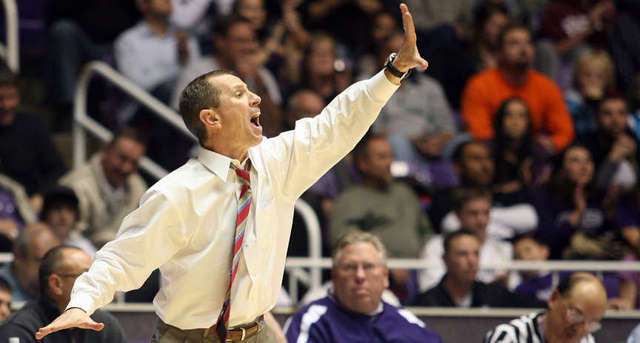
Rahe has had a smaller sample size than either Sloan or Morrill, but the same fundamentals could apply to him. His system has produced one of the greatest eras ever for Weber State basketball, with a 95-26 record in the Big Sky in his first seven seasons. However, his teams have been predictable against the best teams in the conference tournament, and teams with equal ability (Montana) have taken advantage of his adherence to the system.
Compare the previous three coaches to a coach like Rick Majerus. While at Utah, Majerus certainly had fundamental styles of play that he frequently incorporated, yet he wasn’t afraid to switch to a new offensive attack to confuse opponents or an exotic defense, as he famously did when the Utes upset top-seeded Arizona on their way to the Final Four in 1998.
Now, it’s hard to argue against good system coaches when they compile wins, regular season titles and limited postseason success. However, coaches who almost refuse to deviate from their system create a glass ceiling that can hold them back. Whether or not a fan base can live with the ceiling decides whether or not a coach can survive there.