Estimated read time: 3-4 minutes
This archived news story is available only for your personal, non-commercial use. Information in the story may be outdated or superseded by additional information. Reading or replaying the story in its archived form does not constitute a republication of the story.
SALT LAKE CITY — The solar eclipse has come and gone, but another solar extravaganza is about to happen. On Tuesday June 5, you can go outside and see the extremely rare transit of Venus.
If you do, you'll be sharing in a spectacle that triggered the first great international science effort and changed humankind's view of the cosmos.
The transit of Venus won't be quite that thrilling as the recent Ring of Fire, unless you're interested in the history of science. It was the transit of Venus that allowed people, for the first time, to grasp just what a tiny speck the Earth is in the universe.
If you've seen Ben Gauthier standing around on sidewalks lately, you might have thought he was preaching the end of the world. Really, it was nothing quite that dramatic. He's selling leftover eclipse glasses for next Tuesday's solar event.
It ends just after sunset, at approximately 9 p.m.
"Some people are really fascinated by it and other people aren't," said Gauthier, a Fairview resident.
NASA Ambassador Patrick Wiggins is eager to see that little dot. It's actually a full-size planet, Venus, crossing the face of the Sun for several hours.
"You'll be able to see this little bitty (dot). It's not going to be spectacular, but you'll see this little dot," he said. But when the Sun sets, it's gone. For a very long time it turns out.
Seth Jarvis of Clark Planetarium says a Transit of Venus is exceedingly rare. The next one is 105 years from now. Four transits ago, in 1769, it triggered one of the great turning points of intellectual history.
"Prior to this, no one really understood the size of the solar system," Jarvis said. Scientists of that day realized the Transit of Venus could solve that great mystery. They knew if precise measurements were made from all over the globe, basic trigonometry could reveal the scale of the heavens.
"It has been referred to as the apollo program of the 18th century," Jarvis said.
They sent expeditions to every corner of Europe and to many other parts of the globe. "It was the biggest, most massive, international scientific cooperative effort ever seen before," he said.
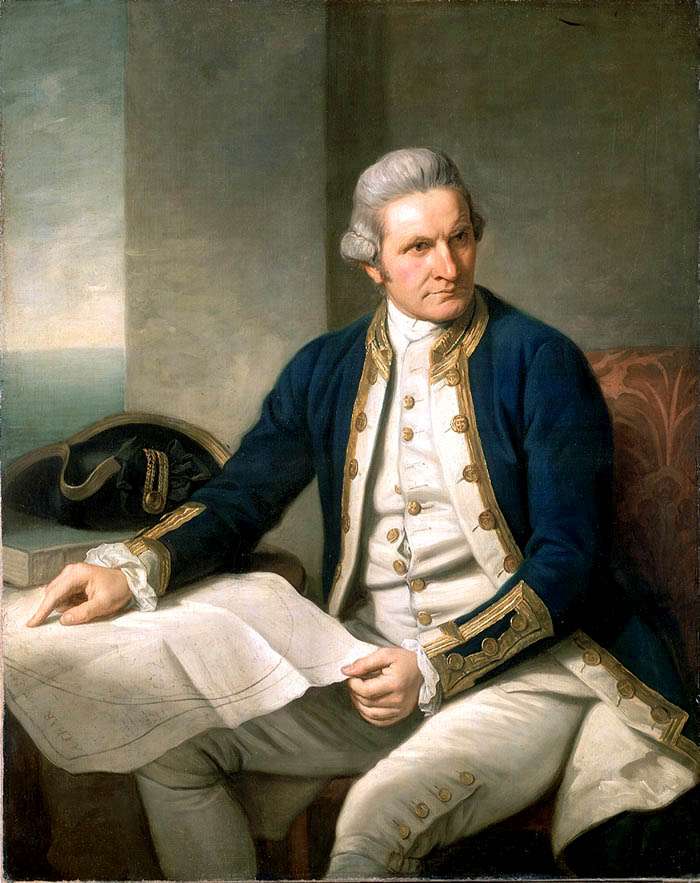
It also made Captain Cook famous. He was sent on his legendary voyage to the South Seas specifically to observe the transit of Venus from Tahiti. He was gone three years.
Wiggins once visited Venus Point in Tahiti where Cook set up his observatory. "And now today, what do we do? We can beam a radar signal off of Venus. And tell us exactly how far it is," Wiggins said,
Today we know Earth is 93 million miles from the Sun. In 1769, the answer they came up with was 60 million, ten times farther than anyone thought.
"They got it in the ball park, and people are now rocked back on their heels and going, ‘Holy cow! Space is big!'" Jarvis said.
That's why a lot of people won't miss their only chance to see a Transit of Venus. "It is history, history kind of in the re-making, and I want to be part of that," Wiggins said.
If you go out to watch next Tuesday you'll need the standard safety equipment for your eyes. Science organizations are once again setting up viewing locations up and down the Wasatch front with experts and scopes.