'%3e%3cpath%20d='M34.1406%205.85938C30.3906%202.10547%2025.3047%200%2020%200C14.6953%200%209.60938%202.10547%205.85938%205.85938C2.10938%209.61328%200%2014.6953%200%2020C0%2025.3047%202.10547%2030.3906%205.85938%2034.1406C9.61328%2037.8906%2014.6953%2040%2020%2040C25.3047%2040%2030.3906%2037.8945%2034.1406%2034.1406C37.8906%2030.3906%2040%2025.3047%2040%2020C40%2014.6953%2037.8945%209.60938%2034.1406%205.85938ZM37.0117%2023.543H31.1602V13.5391H27.6328V19.9414C28.1211%2020.6914%2028.3711%2021.582%2028.3711%2022.5625V22.625C28.3711%2023.668%2028.1172%2024.6055%2027.6328%2025.4297V26.6094H36.082C33.4883%2032.9375%2027.2891%2037.3789%2020.0039%2037.3789C10.3711%2037.3789%202.62109%2029.6289%202.62109%2020C2.62109%2010.3711%2010.3711%202.62109%2020%202.62109C29.6289%202.62109%2037.3789%2010.3711%2037.3789%2020C37.3789%2021.1484%2037.2617%2022.2656%2037.0508%2023.3477C37.0391%2023.4141%2037.0234%2023.4766%2037.0117%2023.543Z'%20fill='white'/%3e%3cpath%20d='M22.3086%2018.5352C20.4336%2018.125%2019.9531%2017.8398%2019.9766%2017.1836V17.1406C19.9766%2016.6992%2020.3477%2016.2148%2021.4023%2016.2148C22.582%2016.2148%2023.8867%2016.6797%2025.0781%2017.4766L26.8516%2015.0195C25.4453%2013.8906%2023.707%2013.3398%2021.5547%2013.3398C18.5195%2013.3398%2016.4375%2015%2016.4063%2017.4766V17.5352C16.3633%2020.2617%2018.5859%2020.9805%2021.293%2021.6016C23.0391%2021.9766%2023.5703%2022.3164%2023.5703%2022.9609L23.5469%2022.9766C23.5469%2023.3906%2023.2578%2023.7031%2022.7852%2023.8359C22.5742%2023.9062%2022.1289%2023.9727%2021.5156%2023.9727C20.7617%2023.9727%2019.7539%2023.8633%2018.6328%2023.4844C18.0898%2023.2891%2017.4727%2023.0039%2016.8047%2022.6133L20.1406%2026.625C20.2813%2026.6602%2021.0977%2026.8516%2021.7734%2026.8516C25.0039%2026.8516%2027.0859%2025.2461%2027.1094%2022.6328V22.5703C27.1602%2020.1133%2025.2148%2019.1719%2022.3086%2018.5352Z'%20fill='white'/%3e%3cpath%20d='M5.24219%2013.5664V26.6133H8.75391V23.7578L10.2969%2021.9531L14.2031%2026.6133H18.3867L12.3555%2019.5195L17.4023%2013.5664H13.4531L8.75391%2019.0586V13.5664H5.24219Z'%20fill='white'/%3e%3c/g%3e%3cdefs%3e%3cclipPath%20id='clip0_97_2430'%3e%3crect%20width='40'%20height='40'%20fill='white'/%3e%3c/clipPath%3e%3c/defs%3e%3c/svg%3e)


Estimated read time: 3-4 minutes
This archived news story is available only for your personal, non-commercial use. Information in the story may be outdated or superseded by additional information. Reading or replaying the story in its archived form does not constitute a republication of the story.
SALT LAKE CITY — An estimated 25.8 million Americans suffer from diabetes, and 7 million of them don’t even know they have the disease. With roughly 215,000 of diabetes sufferers under the age of 20, it’s important that parents understand what to look for if they suspect their child might have diabetes.
The most common form of diabetes in children is type 1 diabetes, formerly known as juvenile diabetes. It is estimated that 90 to 95 percent of children under age 16 with diabetes have type I diabetes.
Related:
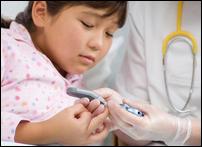
When your child is diagnosed with type 1 diabetes
Having a child who has been diagnosed with Type 1 diabetes can be overwhelming. There are many things to know in order to successfully manage this disease and help your child live as normal a life as possible.The cause of diabetes is the inability of the pancreas to produce insulin of any type, as noted in the article “Diabetes in Children” on NetDoctor.co.uk. “Type 1 diabetes is classified as an autoimmune disease,” the article states, “meaning a condition in which the body's immune system ‘attacks’ one of the body's own tissues or organs.”
The disease is very hard to manage in children and adolescents due to their metabolism and activity. If body sugar levels are not within 100-150 points constantly, body organs, vessels and the brain cannot develop or function properly.
Many teenagers and young adults with type I diabetes really have a problem when it comes to alcohol consumption. Alcoholic beverages are very high in carbohydrates and sugar; and because of alcohol’s effects on the brain, many people with diabetes do not realize they are in trouble with high sugars. Extremely high sugar levels will cause coma and death.
Symptoms of diabetes, which tend to show themselves over a few days or weeks, include:
- tiredness
- weight loss
- frequent urination
- thirst
- stomach pains; nausea, vomiting and diarrhea
- headaches
- vision changes
- unexplained behavior problems
Most children are hospitalized upon diagnosis because of the symptoms and treatments necessary for them to get better.
Ask Nurse Suzy

Do you have a question for Nurse Suzy, or maybe a topic you'd like her opinion on? Email her at <a href="mailto:nursesuzyksl@gmail.com">nursesuzyksl@gmail.com</a>.
To stabilize the disease, most children will need insulin treatments. The authors of “Diabetes in Children” note the following:
- Most children with diabetes now use frequent daily dosage regimes of fast-acting insulin during the day and slow-acting insulin at night.
- Very small children normally don't need an injection at night, but will need one as they grow older.
- Increasing numbers of older children use continuous insulin pumps.
Parents can help by having an understanding of a diabetic diet, ensuring their children have regular exercise, and making sure they have great medical care on a regular basis.
One final note: It is my opinon that parents should not try and regulate their child’s diabetes by herbal remedies. The consequence to experimenting with alternative treatments is often death.
Suzanne Carlile, "Nurse Suzy," has been a nurse since 1982. Her main focus is critical care and nursing education. She holds a master's degree in nursing, is a Certified Emergency Nurse, and a member of NNSDO Intermountain West Chapter.