Estimated read time: 4-5 minutes
This archived news story is available only for your personal, non-commercial use. Information in the story may be outdated or superseded by additional information. Reading or replaying the story in its archived form does not constitute a republication of the story.
SALT LAKE CITY -- While Benjamin Franklin's adage "An ounce of prevention is worth a pound of cure" is often repeated, it's not always enforced in our workplace safety policies. The most notable is a policy mandating seatbelt use and diligent reinforcement of the practice.
One of the leading causes of workplace injuries and fatalities is automobile accidents. In 2011, 40 percent of fatalities of workers insured by Worker Compensation Fund occurred in auto accidents. Many of the workers killed in those accidents were not wearing seatbelts.
A vehicle crash with non-fatal disabling injuries costs an employer $68,100, while a fatal crash costs $1,290,400. -NHTSA
Seatbelt policies not only save lives, they can also minimize injuries and protect your company against financial losses. According to a report compiled by the National Highway Transportation Safety Administration, a vehicle crash with non-fatal disabling injuries costs an employer $68,100, while a fatal crash costs $1,290,400. In addition, a report from the Network of Employers for Traffic Safety shows that for every million miles of company travel, a safety program can save $50,000.
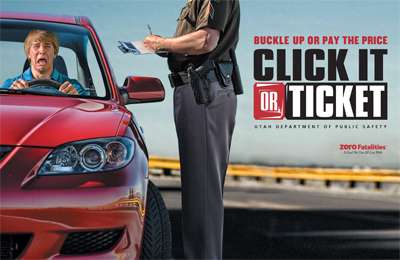
Click-it-or-Ticket billboards and the Zero Fatalities television commercials are helpful and often tear- producing reminders to wear a seatbelt while driving, but employers can help keep their workers safe by reinforcing the message.
In Utah, we have a number of businesses that have established seatbelt policies and made them an integral part of their culture. Recently, the Utah Safety Council awarded six businesses with the Occupant Protection Award based on a seatbelt usage rate of 95 percent or higher.
Aspen Logistics obtained a 100 percent usage rate. Chuck Warriner from Aspen attributes their success to a mandatory seatbelt policy with a good deal of follow-up.
"It's a requirement for our entire company, but we also occasionally perform audits where we watch employees leave and enter the parking lot to remind our employees to buckle up. We also reinforce that message in our daily shift meetings and monthly safety meetings."
Intermountain Healthcare Courier Service achieved a 100% usage in their Dixie office and 97 percent in their Murray office.
"Our success is because we make it mandatory to wear a seatbelt, and second, we do unannounced observations. Those two things have helped us get to where we are today. We also make it part of the evaluation process," said Paul Newman with Intermountain Healthcare Courier Service. "In this world we live in with so much litigation, it's really ensured that our employees are safe and also protects our company."
Other winners include Cottonwood Improvement District with a 95 percent usage rate, Discover Financial Services in Lake Park obtained a 98 percent usage rate, JT3 obtained 100 percent compliance, and Rio Tinto Kennecott Utah Copper had 9 9 percent in the Bingham Canyon Mine. Earning this award required dedication to the health and safety of their employees. It also requires a strict seatbelt policy. Safety experts recommend developing a seatbelt policy that includes training and awareness, enforcement, eva luation — and even employee incentives.
Create Seatbelt Usage Rules
Establish the details of your policy. Make sure it requires employees (both drivers and passengers) to buckle up 100 percent of the time. This policy should apply regardless of how big or small the vehicle or how quick the trip.
Make Training Mandatory
Even though your employees probably know how to properly fasten seatbelts, don't leave it to chance. Train all employees on proper techniques for cars, pickups and any other vehicles your company operates. This training lets you make sure all employees understand what's expected of them.
Raise Internal Awareness
Create an annual or semi-annual awareness campaign. There are plenty of organizations that offer free materials on seatbelt campaigns. This is one of the easiest, cheapest and most convenient ways to support your seatbelt policy.
Enforcement
Be vigilant in enforcing your seatbelt policy. Let employees know that violating the policy carries the same consequences as violating any other company safety rule. Always take progressive disciplinary action for unbuckled drivers.
Evaluation
Create a baseline for comparison of current seatbelt use. Then regularly evaluate your company's progress toward a 100% buckled-up goal.
Incentives
Rewards can also work toward promoting safe behavior. Why not use them to improve seatbelt use? Offer tokens toward prizes or even larger cash rewards.
For more information and assistance in implementing a traffic safety program in your workplace, you can contact the Network of Employers for Traffic Safety (NETS), the National Highway Traffic Safety Administration (NHTSA), the Occupational Safety and Health Administration (OSHA) or the National Institute for Occupational Safety and Health (NIOSH).