'%3e%3cpath%20d='M34.1406%205.85938C30.3906%202.10547%2025.3047%200%2020%200C14.6953%200%209.60938%202.10547%205.85938%205.85938C2.10938%209.61328%200%2014.6953%200%2020C0%2025.3047%202.10547%2030.3906%205.85938%2034.1406C9.61328%2037.8906%2014.6953%2040%2020%2040C25.3047%2040%2030.3906%2037.8945%2034.1406%2034.1406C37.8906%2030.3906%2040%2025.3047%2040%2020C40%2014.6953%2037.8945%209.60938%2034.1406%205.85938ZM37.0117%2023.543H31.1602V13.5391H27.6328V19.9414C28.1211%2020.6914%2028.3711%2021.582%2028.3711%2022.5625V22.625C28.3711%2023.668%2028.1172%2024.6055%2027.6328%2025.4297V26.6094H36.082C33.4883%2032.9375%2027.2891%2037.3789%2020.0039%2037.3789C10.3711%2037.3789%202.62109%2029.6289%202.62109%2020C2.62109%2010.3711%2010.3711%202.62109%2020%202.62109C29.6289%202.62109%2037.3789%2010.3711%2037.3789%2020C37.3789%2021.1484%2037.2617%2022.2656%2037.0508%2023.3477C37.0391%2023.4141%2037.0234%2023.4766%2037.0117%2023.543Z'%20fill='white'/%3e%3cpath%20d='M22.3086%2018.5352C20.4336%2018.125%2019.9531%2017.8398%2019.9766%2017.1836V17.1406C19.9766%2016.6992%2020.3477%2016.2148%2021.4023%2016.2148C22.582%2016.2148%2023.8867%2016.6797%2025.0781%2017.4766L26.8516%2015.0195C25.4453%2013.8906%2023.707%2013.3398%2021.5547%2013.3398C18.5195%2013.3398%2016.4375%2015%2016.4063%2017.4766V17.5352C16.3633%2020.2617%2018.5859%2020.9805%2021.293%2021.6016C23.0391%2021.9766%2023.5703%2022.3164%2023.5703%2022.9609L23.5469%2022.9766C23.5469%2023.3906%2023.2578%2023.7031%2022.7852%2023.8359C22.5742%2023.9062%2022.1289%2023.9727%2021.5156%2023.9727C20.7617%2023.9727%2019.7539%2023.8633%2018.6328%2023.4844C18.0898%2023.2891%2017.4727%2023.0039%2016.8047%2022.6133L20.1406%2026.625C20.2813%2026.6602%2021.0977%2026.8516%2021.7734%2026.8516C25.0039%2026.8516%2027.0859%2025.2461%2027.1094%2022.6328V22.5703C27.1602%2020.1133%2025.2148%2019.1719%2022.3086%2018.5352Z'%20fill='white'/%3e%3cpath%20d='M5.24219%2013.5664V26.6133H8.75391V23.7578L10.2969%2021.9531L14.2031%2026.6133H18.3867L12.3555%2019.5195L17.4023%2013.5664H13.4531L8.75391%2019.0586V13.5664H5.24219Z'%20fill='white'/%3e%3c/g%3e%3cdefs%3e%3cclipPath%20id='clip0_97_2430'%3e%3crect%20width='40'%20height='40'%20fill='white'/%3e%3c/clipPath%3e%3c/defs%3e%3c/svg%3e)


Estimated read time: 5-6 minutes
This archived news story is available only for your personal, non-commercial use. Information in the story may be outdated or superseded by additional information. Reading or replaying the story in its archived form does not constitute a republication of the story.
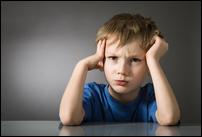
SALT LAKE CITY — It's been said ADHD is the most underdiagnosed and overdiagnosed disease. The difficulty lies in determining the difference between normal childhood behaviors and a disorder that requires medication.
The facts about ADHD
Attention Deficit Hyperactivity Disorder (ADHD) occurs in an average of 6 percent to 9 percent of school-age children. It is more common in boys than in girls. Unlike diseases like diabetes, there is no laboratory test to diagnose ADHD. More and more evidence suggests the condition is biological and brain-based.
Attention Deficit Hyperactivity Disorder (ADHD) occurs in an average of 6 percent to 9 percent of school-age children. It is more common in boys than in girls.
Often children with ADHD are misdiagnosed if they have learning disabilities and do not know how to express the true problem. Additional tests may be conducted to determine if a child has a learning disability rather than behavior problems.
Disabilities may include hearing and vision impairments, which may lead to interference with school achievement. Furthermore, Dr. Michael Reiff, author of "ADHD: A Complete and Authoritative Guide", says anxiety and depression often show similar symptoms of ADHD.
External ailments may cause a child to have ADHD symptoms: a low red blood cell count or anemia will cause low energy and poor concentration, and thyroid disease can affect energy and attention. Small amounts of lead in a child's system can also cause similar signs of ADHD, and seizures can affect brain function and result in unusual behavior.
These are all good reasons why a pediatrician may want to wait to medicate my child. The problem could be something that is being overlooked.
Related:
Mommy Medicine: Seeking help for a child's behavioral issues
Nurse Suzy is here help clarify some of the health issues that are important to you and your family. This week's question deals with children's behavior and knowing when to seek professional help.The disorder was known as attention deficit disorder (ADD) until 1994 when it was renamed attention deficit hyperactivity disorder by the American Psychiatric Association (APA). The APA has established the symptoms and criteria for diagnosing ADHD. The criterion are divided into three basic types based on major symptoms: ADHD, predominately inattentive type; ADHD, predominantly hyperactive-impulsive type; and ADHD, combined type.
Sharon Faelten, author of "Mom's Medicine: How to Protect Your Kids, Husband and Parents Against 100 Health Conditions and Medical Emergencies", explains the typical process for diagnosing a child with ADHD using certain criteria: First, an interview with the child is conducted and a medical history is obtained. Then the child is given a physical exam and evaluated using a behavioral rating scale checklist.
According to FamilyDoctor.org, a website run by the American Academy of Family Physicians, a child with ADHD will have six or more of the following symptoms:
- Difficulty following instructions
- Appears not to listen
- Doesn’t pay close attention to work or play activities at school and at home
- Forgets things
- Is easily distracted or fidgety
- Runs or climbs inappropriately
- Can't play quietly
- Blurts out answers
- Interrupts people
- Can’t stay in his/her seat
- Talks too much
- Is always on the go
- Has trouble waiting his/her turn
Tips on helping your child manage his/her ADHD
At my son's 18-month checkup, the pediatrician expressed concern over his symptoms of ADHD. For example, Jesse is easily distracted by minor stimuli like someone walking by or the front door opening. He often makes careless mistakes, doesn’t pay attention to details and seems to mentally drift off.
Jesse's hardest task is playing well with others; he often makes impulsive gestures as he walks past someone by hitting or pinching them. He is hyperactive, fidgets and doesn’t take turns during play time.
Jesse moves at the speed of light; never running out of energy, he plays at full force all day long — but what 2-year-old doesn’t?
When I asked the physician what measures should be taken or what medication he would be placed on, he responded with "none," while handing me some reading material.
You as a parent play a key role in developing a routine for the child's energy. Use the energy instead of fighting it off as a stepping stone for a structured daily routine.
“If the condition becomes a handicap in school or social settings, then medication will be prescribed,” he said.
Although my son showed symptoms of ADHD, it has not caused any life-threatening problems. Learning to focus is a great prescription; some days he needs it more than others.
If your child is showing symptoms of ADHD, know that you as a parent play a key role in developing a routine for the child's energy. Use the energy instead of fighting it off as a stepping stone for a structured daily routine. For example, if the child has difficultly sleeping, go outside for a bike ride. This will leave little room for an outburst or untamed behavior. Making this a daily routine will eventually turn into therapy for the child.
Refocusing also needs to be exercised at the dinner table. Eating as a family once a day is recommended by the Utah Women Infant and Child (WIC) program, forming a path that will produce a well-balanced diet for the child's future.
Work on eliminating certain items that may be triggers for scattered energy. For instance, processed sugar from ketchup may produce a flare-up in a child's personality. The recently revised USDA food pyramid now makes it easier for children to follow and learn guidelines on optimal health.
Every child is different. It is finding that bridge and using it as a stepping stool as well as not being a doormat that creates solutions for managing symptoms of ADHD.
Leia Rasmussen is a New York native who moved west the summer before attending the University of Utah. Captured by Utah's beauty, she chose to remain in the state and raise a family. After the birth of her second son, she returned to college and graduated as a Certified Medical Assistant.