Estimated read time: 3-4 minutes
This archived news story is available only for your personal, non-commercial use. Information in the story may be outdated or superseded by additional information. Reading or replaying the story in its archived form does not constitute a republication of the story.
SOUTH JORDAN, Ut. — As I have driven to the freeway, the road takes me above the Jordan River. I recently observed the river at cresting stage.
My mind is drawn back to the flood of 1983. The snow season in the mountains extended into June that year. The water run off from snow melt, created by a sudden rise of temperature, caused the canyon creeks and rivers to fill and rage down onto the valley floor. Valley creeks and streambeds were full to overflowing.
What was amazing to me in all this was how we were working like a "well-oiled machine."
This particular day was drizzly, with another surge of rain predicted. The water table had risen, sending water into basements, pastures and across roads throughout the state.
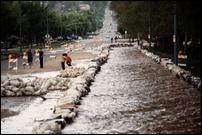
Driving on the freeway past Salt Lake City, I remember looking down and seeing each side of the roads lined with walls of sandbags. With daylight, glistening water coursed down the street. State Street was a diversionary route for the water run off to travel, keeping the flooding under better control.
It was a day earlier that our church meetings had been canceled. Everyone’s hands were needed at the appointed place in the town we lived to fill sandbags, or help load them on the openbed trucks. People who ran businesses with heavy equipment were asked by local leaders and engineers to dredge the overfilled streams and creeks free more water to run, keeping the water under control and diverting floods. Many worked during this week throughout the nights and others on rotated shifts.
From the Archives:
Meeting at my appointed place, where sand was dumped into huge piles, I saw people shoveling the sand into the burlap bags. Some were opening the bags, while others fed the shovel loads of sand into them.
Still others hefted the loaded bags, putting them one by one on the flatbed trucks. This was done with a synchronized rhythm. Before long, all the space on the truck beds was full of bags. Then off went the trucks, down the road to various locations where other hands built sandbag walls, one level upon another. The walls were strategically built on the banks of either side of the creek or stream. When the water rose, it was contained above the ground level by those sandbags.
What was amazing to me in all this was how we were working like a “well-oiled machine.” Safety was first and foremost, with everyone careful to look out for the other person. Secondly, we all knew our place and went to work.
In about two weeks, the water level peaked and was down to just below the ground line but still raging. Many hours of hard work, teamwork and prayers eventually brought the water levels down. Indeed, it took inspiration sought from the Lord. Then it took perspiration by getting everyone to help each other, filling bags and building walls. Finally, it took dedication to monitor the water levels while dredging the creeks — and doing all of it around the clock for several days.
I look back on it now and remember the unity of everyone in the community working together to help each other. We were prepared for this.
Genealogy graduate Russell Bangerter is president of his family history research company, Ancestral Connections, Inc. He is a well-known professional expert genealogical researcher, author and speaker.