
Estimated read time: 2-3 minutes
This archived news story is available only for your personal, non-commercial use. Information in the story may be outdated or superseded by additional information. Reading or replaying the story in its archived form does not constitute a republication of the story.
SALT LAKE CITY -- Assassination plots, the threat of a dirty bomb, a lone suicide bomber: all faces of terrorism that must be dealt with at the highest levels of government. When a terrorist strikes, our government must be prepared.
They are put in positions of power and they have to make decisions just like a real administration would.
–Katee Tyler
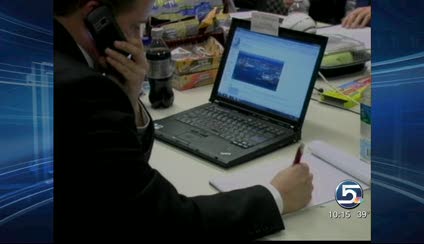
Terrorism expert and University of Utah law professor Amos Guiora is teaching students to strike back. For some, his simulation gives them a few hours to transport themselves into the aftermath of a terrorist attack, serving at the highest levels of our government. They are the decision makers.
"They are put in positions of power and they have to make decisions just like a real administration would," explained Katee Tyler, student director of the simulation.
Students played the parts of the president of the United States and the U.S. Attorney General. Salt Lake County Sheriff Jim Winder, however, played himself.
"This has been going on for four or five years now, and it's one of those that has gotten larger each year," Tyler said.
Guiora leads the students into this sense of mass chaos, but he's not the only one. He's got a production team of more than 60 people to help stage the attack, making it real.
"There is an emphasis in the law school about, not only thinking about things internationally, but having an emphasis on training students to go out in the world," Tyler said.
That world is a fractured one, fraught with uncertainty. In a real way, this opportunity to react is a test of character.
"This made me think about my morals," Tyler said. "This made me think about how I would react in this situation, and it wasn't what I expected."
This year's simulation at the University of Utah's law school is scheduled for April 1. Guiora says in these types of simulations the emphasis is on counterterrorism, responding to large-scale strikes.
In dealing with something like the assassination plot in Arizona it's difficult to manage those situations because minimizing the power of a lone wolf -- as he called them -- is almost impossible. If you have a terrorist, for instance, you know there's a network behind the strike.
In Lougher's case, if he indeed acted alone -- and all indications say he did -- there's much else to go after.
E-mail: lprichard@ksl.com