'%3e%3cpath%20d='M34.1406%205.85938C30.3906%202.10547%2025.3047%200%2020%200C14.6953%200%209.60938%202.10547%205.85938%205.85938C2.10938%209.61328%200%2014.6953%200%2020C0%2025.3047%202.10547%2030.3906%205.85938%2034.1406C9.61328%2037.8906%2014.6953%2040%2020%2040C25.3047%2040%2030.3906%2037.8945%2034.1406%2034.1406C37.8906%2030.3906%2040%2025.3047%2040%2020C40%2014.6953%2037.8945%209.60938%2034.1406%205.85938ZM37.0117%2023.543H31.1602V13.5391H27.6328V19.9414C28.1211%2020.6914%2028.3711%2021.582%2028.3711%2022.5625V22.625C28.3711%2023.668%2028.1172%2024.6055%2027.6328%2025.4297V26.6094H36.082C33.4883%2032.9375%2027.2891%2037.3789%2020.0039%2037.3789C10.3711%2037.3789%202.62109%2029.6289%202.62109%2020C2.62109%2010.3711%2010.3711%202.62109%2020%202.62109C29.6289%202.62109%2037.3789%2010.3711%2037.3789%2020C37.3789%2021.1484%2037.2617%2022.2656%2037.0508%2023.3477C37.0391%2023.4141%2037.0234%2023.4766%2037.0117%2023.543Z'%20fill='white'/%3e%3cpath%20d='M22.3086%2018.5352C20.4336%2018.125%2019.9531%2017.8398%2019.9766%2017.1836V17.1406C19.9766%2016.6992%2020.3477%2016.2148%2021.4023%2016.2148C22.582%2016.2148%2023.8867%2016.6797%2025.0781%2017.4766L26.8516%2015.0195C25.4453%2013.8906%2023.707%2013.3398%2021.5547%2013.3398C18.5195%2013.3398%2016.4375%2015%2016.4063%2017.4766V17.5352C16.3633%2020.2617%2018.5859%2020.9805%2021.293%2021.6016C23.0391%2021.9766%2023.5703%2022.3164%2023.5703%2022.9609L23.5469%2022.9766C23.5469%2023.3906%2023.2578%2023.7031%2022.7852%2023.8359C22.5742%2023.9062%2022.1289%2023.9727%2021.5156%2023.9727C20.7617%2023.9727%2019.7539%2023.8633%2018.6328%2023.4844C18.0898%2023.2891%2017.4727%2023.0039%2016.8047%2022.6133L20.1406%2026.625C20.2813%2026.6602%2021.0977%2026.8516%2021.7734%2026.8516C25.0039%2026.8516%2027.0859%2025.2461%2027.1094%2022.6328V22.5703C27.1602%2020.1133%2025.2148%2019.1719%2022.3086%2018.5352Z'%20fill='white'/%3e%3cpath%20d='M5.24219%2013.5664V26.6133H8.75391V23.7578L10.2969%2021.9531L14.2031%2026.6133H18.3867L12.3555%2019.5195L17.4023%2013.5664H13.4531L8.75391%2019.0586V13.5664H5.24219Z'%20fill='white'/%3e%3c/g%3e%3cdefs%3e%3cclipPath%20id='clip0_97_2430'%3e%3crect%20width='40'%20height='40'%20fill='white'/%3e%3c/clipPath%3e%3c/defs%3e%3c/svg%3e)



Estimated read time: 2-3 minutes
This archived news story is available only for your personal, non-commercial use. Information in the story may be outdated or superseded by additional information. Reading or replaying the story in its archived form does not constitute a republication of the story.
SALT LAKE CITY -- Utah is getting national attention as one of the next states poised to adopt an immigration law. The lawmaker, who's drafting a bill similar to Arizona's, wouldn't give us a copy, but says some changes he's making should gain public support.
Rep. Steve Sandstrom, R-Orem, says, the bill he's drafting is very similar to Arizona's law, but better. But opponents say, no matter what changes he makes, the bill will invite racial profiling.
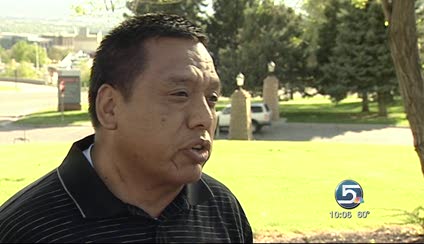
"Everything else is racist, everything else is un-Christ-like, everything else is being anti-Latino, and anti-immigration," said Tony Yapias of Proyecto Latino Utah.
He's set to do an interview next week for a national news story on the immigration issue and what states could follow in Arizona's footsteps.
If Sandstrom has his way, Utah won't be far behind. "Utah has very real problems with illegal immigration right now," he said.
Last month, he filed a bill that mirrors Arizona's law; but Sandstrom says he's tweaking it to alleviate any concerns about racial profiling. He says the changes include law enforcement officers needing probable cause, not just a reasonable suspicion, to question someone's immigration status; and granting illegal immigrants immunity from the law if they are not suspects, and help police in a criminal investigation.
"Illegal is not a race, it has nothing to do with race or ethnicity. It has to do with obeying the laws of the land," Sandstrom said.
But Yapias says Sandstrom will never understand racial profiling because he's not Latino. He recalled a recent incident at the airport when, he says, an officer stopped his brother, who was driving a Jaguar, for a broken tail light.
"He had to prove that the car was his or not. Now why would somebody ask whether or not that car belonged to him unless he was profiling?" he said.
The mayor of Phoenix says since Arizona's governor signed the immigration bill into law, boycotts have cost his city more than $150 million. Yapias says, that shows Utah has a lot to lose.
"People are going to say, 'Hey, we don't want to do business with you, with states that have discriminatory practices,'" Yapias said.
Sandstrom says the bill could be made public in June and he'll present it to a legislative committee in August.
Yapias says the best thing Sandstrom can do is withdraw the bill and let the federal government handle the issue.
E-mail: syi@ksl.com