'%3e%3cpath%20d='M34.1406%205.85938C30.3906%202.10547%2025.3047%200%2020%200C14.6953%200%209.60938%202.10547%205.85938%205.85938C2.10938%209.61328%200%2014.6953%200%2020C0%2025.3047%202.10547%2030.3906%205.85938%2034.1406C9.61328%2037.8906%2014.6953%2040%2020%2040C25.3047%2040%2030.3906%2037.8945%2034.1406%2034.1406C37.8906%2030.3906%2040%2025.3047%2040%2020C40%2014.6953%2037.8945%209.60938%2034.1406%205.85938ZM37.0117%2023.543H31.1602V13.5391H27.6328V19.9414C28.1211%2020.6914%2028.3711%2021.582%2028.3711%2022.5625V22.625C28.3711%2023.668%2028.1172%2024.6055%2027.6328%2025.4297V26.6094H36.082C33.4883%2032.9375%2027.2891%2037.3789%2020.0039%2037.3789C10.3711%2037.3789%202.62109%2029.6289%202.62109%2020C2.62109%2010.3711%2010.3711%202.62109%2020%202.62109C29.6289%202.62109%2037.3789%2010.3711%2037.3789%2020C37.3789%2021.1484%2037.2617%2022.2656%2037.0508%2023.3477C37.0391%2023.4141%2037.0234%2023.4766%2037.0117%2023.543Z'%20fill='white'/%3e%3cpath%20d='M22.3086%2018.5352C20.4336%2018.125%2019.9531%2017.8398%2019.9766%2017.1836V17.1406C19.9766%2016.6992%2020.3477%2016.2148%2021.4023%2016.2148C22.582%2016.2148%2023.8867%2016.6797%2025.0781%2017.4766L26.8516%2015.0195C25.4453%2013.8906%2023.707%2013.3398%2021.5547%2013.3398C18.5195%2013.3398%2016.4375%2015%2016.4063%2017.4766V17.5352C16.3633%2020.2617%2018.5859%2020.9805%2021.293%2021.6016C23.0391%2021.9766%2023.5703%2022.3164%2023.5703%2022.9609L23.5469%2022.9766C23.5469%2023.3906%2023.2578%2023.7031%2022.7852%2023.8359C22.5742%2023.9062%2022.1289%2023.9727%2021.5156%2023.9727C20.7617%2023.9727%2019.7539%2023.8633%2018.6328%2023.4844C18.0898%2023.2891%2017.4727%2023.0039%2016.8047%2022.6133L20.1406%2026.625C20.2813%2026.6602%2021.0977%2026.8516%2021.7734%2026.8516C25.0039%2026.8516%2027.0859%2025.2461%2027.1094%2022.6328V22.5703C27.1602%2020.1133%2025.2148%2019.1719%2022.3086%2018.5352Z'%20fill='white'/%3e%3cpath%20d='M5.24219%2013.5664V26.6133H8.75391V23.7578L10.2969%2021.9531L14.2031%2026.6133H18.3867L12.3555%2019.5195L17.4023%2013.5664H13.4531L8.75391%2019.0586V13.5664H5.24219Z'%20fill='white'/%3e%3c/g%3e%3cdefs%3e%3cclipPath%20id='clip0_97_2430'%3e%3crect%20width='40'%20height='40'%20fill='white'/%3e%3c/clipPath%3e%3c/defs%3e%3c/svg%3e)


Estimated read time: 3-4 minutes
This archived news story is available only for your personal, non-commercial use. Information in the story may be outdated or superseded by additional information. Reading or replaying the story in its archived form does not constitute a republication of the story.
Deanie Wimmer reporting April is National Child Abuse Prevention month. Today, the Centers for Disease Control released a study that shows close to one in 50 infants in this country was a victim of child abuse or neglect in the one year study period.
The study found that infant child abuse is more common than many people would ever think. Researchers focused on nonfatal abuse between Oct. 1, 2005 to Sept. 30, 2006. They found that nearly 30,000 infants in this country were abused or neglected in the first week of life.
And more than 90,000 were abused or neglected before their second birthday. Bob Cooper, CEO of Tennyson Center for Children, said, "From my experience, most abuse begins to happen in the first year or two of life."
Government researchers say they were struck by the fact that nearly a third of the abused infants were in the first week of life when the abuse began.
The study found that the abusers are parents that are isolated and don't have good connections with support groups like family or church. That kind of support is available in Salt Lake County.
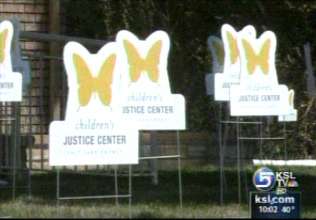
Those findings and the tragic death of a refugee girl were a telling way to begin what's designated as National Child Abuse Prevention Month. Advocates and government leaders hope we'll all play a role in keeping children safe. A display of butterflies was supposed to represent the number of Utah children served by the Children's Justice Center. But with 1,400, they ran out of lawn space.
Organizers of this Child Abuse prevention campaign started on a somber note. Utah Attorney General said, "We had a terrible, sad reminder this week that we need to continue to work hard."
They note there are dozens of laws on the books to protect children. But we all have to take action to protect children from violence or abuse and neglect.
Dr. Lori Frasier, with Primary Children's Medical Center, said, "These are infants that don't have a choice, where they're born into the home that they're born into, and they are the most dependent population,"
Frasier, a professor of pediatrics, believes Utah may not see the same levels of infant abuse as revealed in the CDC study because of three factors: Utah has extended families, resources for homelessness and resources from the LDS Church.
With new parents, she notes, the most effective intervention tool can be home visits from a mentor. To prevent other circumstances of abuse, advocates suggest:
- Always report suspected abuse,
- Teach your children to do the same,
- And get involved or donate to children's advocacy programs. Attorney General Shurtleff says, "When kids are hurt, and they are hurt, and they will continue to be hurt by bad people, they need to know first of all that they're safe, and that someone will be there to support them."