
Estimated read time: 2-3 minutes
This archived news story is available only for your personal, non-commercial use. Information in the story may be outdated or superseded by additional information. Reading or replaying the story in its archived form does not constitute a republication of the story.
SALT LAKE CITY -- Colored charts and maps sit on the tables at the University of Utah Seismograph Stations. On the walls, more maps, photos, diagrams and a large flat-screen monitor paint a picture of the forces that were at work behind the earthquakes that devastated Haiti and the one that hit last week in Chile.
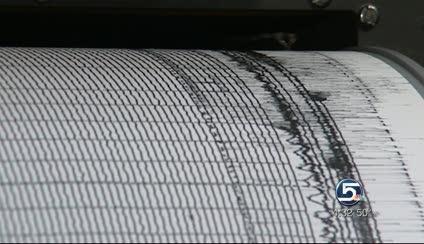
Outside the new offices are the old drums that used to record the earth's movements. They're now relics, replaced by computers.
Differences between Chile and Haiti

Associate Director of the seismograph stations, Kristine Pankow, tries to paint a picture of the differences between the driving forces behind the quakes in Haiti and Chile. In Chile, she said, the quake came from the convergence of two continental plates. The magnitude 8.8 quake was 500 times more powerful than the 7.0 magnitude quake that struck Haiti in January.
In Haiti, she said, the force came from more vertical fault between two areas that are sliding along each other, much like the San Andreas Fault in Southern California. In Haiti, the quake struck much more closely to population centers. But the big difference is social, not scientific.
"It's really the building and the building types," Pankow said, "and whether or not they're built to handle this type of shaking. Haiti hasn't seen a major earthquake in a couple of hundred years."
In Chile, by contrast, major earthquakes strike relatively often, including a 1960 quake that registered a magnitude of 9.5, the most powerful quake in recorded history. Many buildings, therefore, have been constructed to higher standards.
Different scenario in Utah
In Utah it's a different scenario, said Pankow's colleague, Relu Durlacu. The Wasatch Fault is more of a classical fault, where essentially the valley is getting lower and the mountains are getting higher. The fault-line is not vertical; rather it's at an angle that goes well beneath the Wasatch Front. But seismologists point out one major similarity between Haiti and Utah -- the Salt Lake area has not had a major earthquake in hundreds of years.
Related:
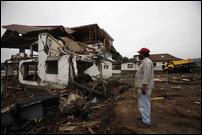
Chile troops, police attack post-quake looting
Rescuers found signs of life in the wreckage of a 15-story building Monday as the world offered aid to victims of an earthquake that killed more than 700 people."But we know that we have strain accumulating across the fault. We know this is an active fault, so we need to remember this," Pankow said.
"The fact that we haven't had a major event in so long doesn't mean we can ignore this," said Durlacu.
Pankow said preparation goes beyond building codes and retrofitting efforts to individual activities, such as anchoring water heaters, appliances and bookshelves to the walls, having emergency 72-hour kits and the like.
E-mail: mgiauque@ksl.com