'%3e%3cpath%20d='M34.1406%205.85938C30.3906%202.10547%2025.3047%200%2020%200C14.6953%200%209.60938%202.10547%205.85938%205.85938C2.10938%209.61328%200%2014.6953%200%2020C0%2025.3047%202.10547%2030.3906%205.85938%2034.1406C9.61328%2037.8906%2014.6953%2040%2020%2040C25.3047%2040%2030.3906%2037.8945%2034.1406%2034.1406C37.8906%2030.3906%2040%2025.3047%2040%2020C40%2014.6953%2037.8945%209.60938%2034.1406%205.85938ZM37.0117%2023.543H31.1602V13.5391H27.6328V19.9414C28.1211%2020.6914%2028.3711%2021.582%2028.3711%2022.5625V22.625C28.3711%2023.668%2028.1172%2024.6055%2027.6328%2025.4297V26.6094H36.082C33.4883%2032.9375%2027.2891%2037.3789%2020.0039%2037.3789C10.3711%2037.3789%202.62109%2029.6289%202.62109%2020C2.62109%2010.3711%2010.3711%202.62109%2020%202.62109C29.6289%202.62109%2037.3789%2010.3711%2037.3789%2020C37.3789%2021.1484%2037.2617%2022.2656%2037.0508%2023.3477C37.0391%2023.4141%2037.0234%2023.4766%2037.0117%2023.543Z'%20fill='white'/%3e%3cpath%20d='M22.3086%2018.5352C20.4336%2018.125%2019.9531%2017.8398%2019.9766%2017.1836V17.1406C19.9766%2016.6992%2020.3477%2016.2148%2021.4023%2016.2148C22.582%2016.2148%2023.8867%2016.6797%2025.0781%2017.4766L26.8516%2015.0195C25.4453%2013.8906%2023.707%2013.3398%2021.5547%2013.3398C18.5195%2013.3398%2016.4375%2015%2016.4063%2017.4766V17.5352C16.3633%2020.2617%2018.5859%2020.9805%2021.293%2021.6016C23.0391%2021.9766%2023.5703%2022.3164%2023.5703%2022.9609L23.5469%2022.9766C23.5469%2023.3906%2023.2578%2023.7031%2022.7852%2023.8359C22.5742%2023.9062%2022.1289%2023.9727%2021.5156%2023.9727C20.7617%2023.9727%2019.7539%2023.8633%2018.6328%2023.4844C18.0898%2023.2891%2017.4727%2023.0039%2016.8047%2022.6133L20.1406%2026.625C20.2813%2026.6602%2021.0977%2026.8516%2021.7734%2026.8516C25.0039%2026.8516%2027.0859%2025.2461%2027.1094%2022.6328V22.5703C27.1602%2020.1133%2025.2148%2019.1719%2022.3086%2018.5352Z'%20fill='white'/%3e%3cpath%20d='M5.24219%2013.5664V26.6133H8.75391V23.7578L10.2969%2021.9531L14.2031%2026.6133H18.3867L12.3555%2019.5195L17.4023%2013.5664H13.4531L8.75391%2019.0586V13.5664H5.24219Z'%20fill='white'/%3e%3c/g%3e%3cdefs%3e%3cclipPath%20id='clip0_97_2430'%3e%3crect%20width='40'%20height='40'%20fill='white'/%3e%3c/clipPath%3e%3c/defs%3e%3c/svg%3e)


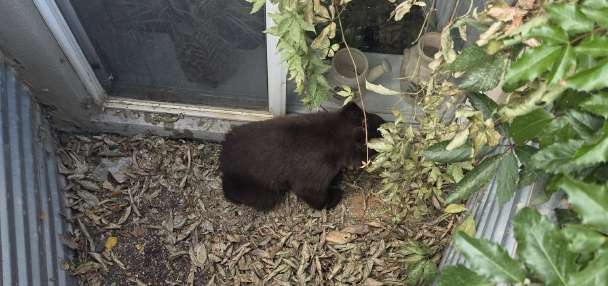
- Wildlife officials are reminding Utahns to keep their distance from baby animals this spring.
- It comes after Park City residents spotted a cow moose and newborn calves in the Pinebrook neighborhood.
- Wildlife experts stress not approaching young animals to avoid attracting predators.
PARK CITY — Wildlife officials are reminding Utah residents to keep their distance as baby animals begin to appear across the state.
Reports of young wildlife sightings are increasing, which is typical for this time of year.
In Park City's Pinebrook neighborhood, residents recently spotted a cow moose and her newborn twin calves.
"You never know when you're going to come around the corner, and a moose is going to be there, much less a mom and a baby," resident Kim Olson said.
Olson said she and her neighbors have been watching the animals from afar, noting the calves appear to be newly born.
"I've seen baby moose before. They're usually about 5 or 6 months, never fresh born," she said.
At one point, residents blocked off part of the road with garbage cans as the mother moose repeatedly crossed the street with her calves.
Wildlife experts said keeping that distance is critical for both human and animal safety.
Utah Division of Wildlife Resources big game coordinator Mike Wardle said people should watch for behavioral cues.
"If the animal's looking up at you or looking nervous at all, you're probably a little too close," Wardle said.
Late spring marks peak birthing season for many species in Utah. Wardle said deer and elk typically give birth between May and June.
It's also common for baby animals to appear to be alone.
"Mule deer, when they give birth to fawns, they want their fawns to be hidden. Does will actually leave for a period of time and leave that fawn alone to make sure that they don't attract predators to their fawn," Wardle said.
He said touching or approaching young wildlife can put them at risk. Many newborn animals, especially deer, are born with no scent, making it harder for predators to find them. Human interaction can change that.
"Predators can sometimes just follow random scents; you may be the one that leads the predator to that farm," Wardle said.
Officials also warn against taking in young animals. Wardle said raising wild animals can harm their chances of survival later.
"We've had people take fawns home and bottle-feed them and raise them," he said. "Those animals are no longer wildlife-friendly. They don't know how to survive in the wild."
Wildlife officials encourage people to take photos from a safe distance and keep pets away from young animals.
If an animal appears sick or injured, residents should contact their local DWR office rather than intervene.