- Intense debate over a massive data center proposal comes to a head at a meeting Monday of Box Elder County commissioners.
- Proponents say the project, spread across 40,000 acres of undeveloped land, is key in helping assure national security.
- The project would require development of 7.5-9 gigawatts of power, and foes worry about its environmental impact, particularly on water supplies.
BRIGHAM CITY — With a decision looming on whether to move ahead with plans for a massive data center in Box Elder County, intense debate rages.
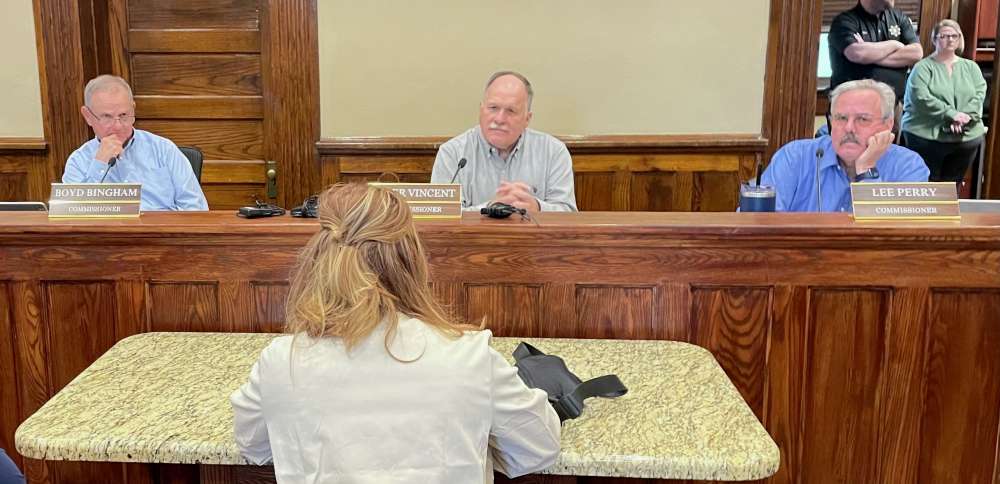
Both supporters and foes remain adamant in their positions, with the three Box Elder County commissioners to make the final call at a special meeting next Monday, May 4. They considered the matter last Monday, tabling action until May 4 so they can parse the proposal and the varied issues at play — national security, according to proponents, and, as foes see it, the future of the Great Salt Lake and the area's environment.
"This is a serious issue of national security, and all we're trying to do is be a part of the solution that protects and advances America," said Paul Palandjian, chief executive officer and co-founder of O'Leary Digital, the entity chaired by celebrity entrepreneur Kevin O'Leary that's behind the initiative. The planned data centers, boosters say, would bolster the U.S. military's access to artificial intelligence and cloud-computing capabilities, helping it counter and surpass advances by U.S. adversaries like China.
The foes' concerns center on the potential long-term environmental impacts of the project, particularly on water supplies, and, related to that, the lack of studies and public information outlining the development's effects. The data centers would be supported by 7.5-9 gigawatts of power-generating capacity, likely from natural gas-fired plants, another controversial element of the plans, stretching across 40,000 acres of undeveloped Box Elder County land.
"A lot of people from around the state are scared. The lake and its ecological collapse feels inevitable and is — without proper interventions and preservation," said Thor Dorosh, of Indivisible Ogden, one of the many foes speaking out against the plans. "This is just another example of government collaborating with private industry to worsen an ongoing crisis."
Utah Physicians for a Healthy Environment, an environmental organization, issued a full-throated critique of data centers, multiplying around the country and world to provide the computing power to meet the growing use and demand for artificial intelligence. "People in communities with data centers have been speaking out about issues with their water quality, noise pollution, energy use and climate changes like raising local temperatures as far out as 6 miles from these facilities, including temperature spikes as high as 16 degrees," the group said in a post earlier this week.
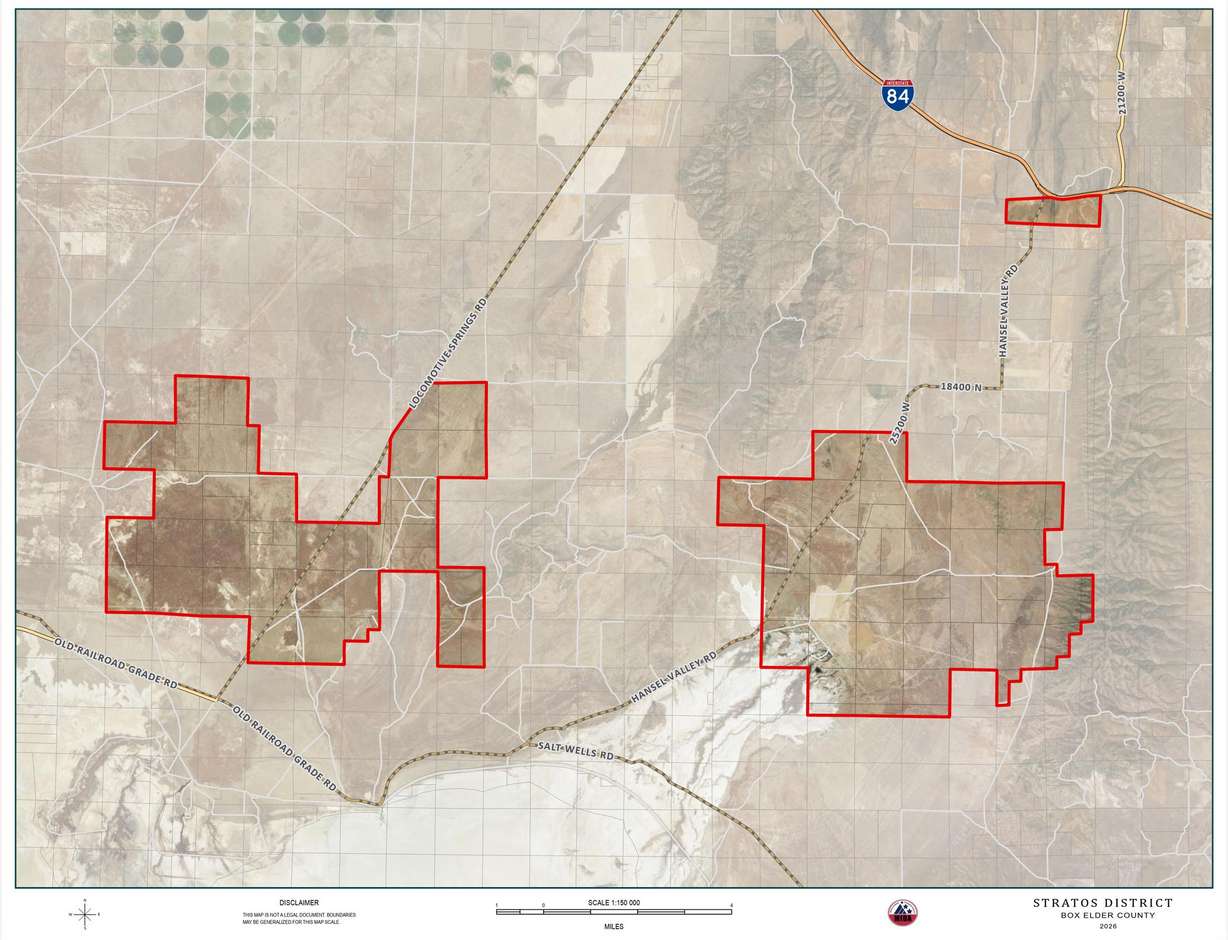
The Utah Military Installation Development Authority, a state entity that promotes economic development initiatives that support military interests, approved numerous resolutions on April 24, allowing the proposal, the Stratos Project Area or Wonder Valley, to move forward. The many landowners who own the 40,000 acres where the proposal is to be developed have also agreed to the initiative, and Utah Gov. Spencer Cox is a supporter, though his official OK isn't required.
Now it's up to the Box Elder County Commission to weigh in on the remaining resolutions of support that bear on whether the multiyear project can move ahead, presuming investors are lined up. The commission meeting next Monday starts at 4 p.m. and will be held in the Fine Arts Building at the Box Elder County Fairgrounds, 320 N. 1000 West in Tremonton.
Foes plan to rally outside the meeting site.
'A force multiplier'
Many project specifics haven't been publicly released, and questions persist, part of the reason many have been speaking out against the project. Perhaps one of the biggest fears for critics is that water used for the data centers and power-generation elements of the plans would deplete scarce resources, further exacerbating the low levels at the Great Salt Lake.
Boosters, for their part, say they plan to use state-of-the-art technology that minimizes water use. Moreover, the project would tap into existing water rights tied to the property where the development is to occur, actually using less than what the existing agriculture and ranching operations use.
Palandjian, moreover, countered the notion that data centers are dirty facilities. O'Leary Digital is pursuing a similar project in Alberta, Canada.
"It's just simply not true. It's a myth, and you should know the big tech companies have very high standards for everything from air quality, noise, emissions, clean and sustainable practices and so forth," he said.
He also had tough words for the intense pushback from critics of the proposal, which would create an estimated 2,000 permanent jobs. "They are paid thugs who are creating a dangerous human safety issue as county leadership, landowners and citizens of the county are facing death threats, harassment and bullying. It is unethical and wrong," he said.
Notwithstanding the local controversy, the U.S. Army noted the military importance of artificial intelligence in a report in late March on the selection of two firms to operate data centers for the Army, one of them at Dugway Proving Ground in Utah. That operation isn't tied to the O'Leary proposal.
"AI is a strategic asset for the Army," Secretary of the Army Dan Driscoll said in the March 26 report. "It is a force multiplier, supports future transformation and requirements, keeps the Army ahead of our adversaries and generates resiliency across the force. These data centers are a critical resource to support that strategic imperative."

Related stories
Most recent Environment stories
Related topics
 Tim Vandenack