- A coalition urges Congress to allocate $2 billion for Colorado River drought mitigation.
- The group warns of an escalating water supply crisis in the region.
- They also emphasized a need for long-term federal funding to improve future water outlooks.
SALT LAKE CITY — A coalition of businesses, agencies and nonprofits across the Colorado River Basin, including some in Utah, is urging Congress to pass at least $2 billion in new federal funds to address an "escalating water supply crisis" within the region.
The group sent their request in a letter on Wednesday to Sens. Mike Lee, R-Utah, and Martin Heinrich, D-New Mexico, as well as Reps. Bruce Westerman, R-Arkansas, and Jared Huffman, D-California, all of whom have high-ranking natural resources committee roles, and are members of the Congressional Colorado River Delegation.
"(We) write to urge Congress to act decisively to provide targeted federal investment in the Colorado River Basin to ensure water, food, and energy security while sustaining rivers and natural systems for the communities and economies that rely on it," the group wrote, adding that this water year is poised to be "one of the most challenging hydrologic years in more than a century of recordkeeping."
The money, they said, would go toward a near-term drought mitigation program, adding to the Bureau of Reclamation's existing drought mitigation investments to address immediate needs in the system and help ease "intensifying water supply challenges."
It would essentially bolster efforts to improve water efficiency throughout the seven basin states: Utah, Arizona, California, Colorado, New Mexico, Nevada and Wyoming.
"Without this bridge, the basin risks remaining in a repeated cycle of reactive, emergency-driven operations that are more disruptive, less effective, and more costly to Colorado River communities, economies and ecosystems over time," the coalition added, noting that the cost is a "small fraction of the economic value" generated by the river.
The group also urged the lawmakers to create a "long-term federal funding mechanism" to help improve future water outlooks through larger investments in conservation, writing that dealing with drought, wildfire risks and diminishing water supply "cannot be addressed through episodic or emergency appropriations alone."
They also wrote they are "committed to being part of the solution," but need "a strong partnership" with the federal government, and guidance from the states to ensure the river's future is protected.
It was signed by more than 70 groups, including the northern and southeast advisory councils to the Colorado River Authority of Utah, which are composed of stakeholders from counties across the southern Wasatch Front, central Utah and southeast Utah — some of the communities that rely most on the river in the state.
The Navajo Nation, which includes a part of southeast Utah, also signed the letter, as did a handful of national organizations that have aided recent water projects in Utah, like The Nature Conservancy, Trout Unlimited and the National Audubon Society.
The Colorado River provides water to nearly 40 million Americans. While it only accounts for a little more than a quarter of Utah's water supply, the state says about 60% of Utahns benefit from it.
However, it has faced challenges during the "megadrought," a series of droughts over the past two decades. This year's record warmth and low snowpack, which hampered the entire region, only made things worse.
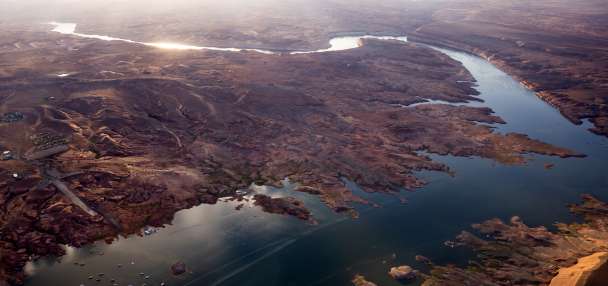
Lake Powell, one of the dividers between the Upper Basin and Lower Basin states, is now expected to receive its worst natural inflows since it started filling in the 1960s. Federal officials and the seven states intervened by authorizing releases from Flaming Gorge to help prevent the reservoir from reaching critically low levels.
It's unclear if Congress will step in with emergency aid, as the coalition requested.
It comes as the seven states near the end of a long-term agreement on how to manage Lake Powell and Lake Mead, with no resolution for a new agreement in sight. Lower Basin states have accused Upper Basin states of being "unwilling to share in major cuts," while Gene Shawcroft, chairman of the Colorado River Authority of Utah, called Lower Basin states "untruthful" in negotiations.
Shawcroft added in March that he believes the federal government will step in if a consensus plan isn't reached by July 1.