Estimated read time: 6-7 minutes
- Downtown Salt Lake City saw a significant increase in visitation last year, with ticketed attendance up 16%.
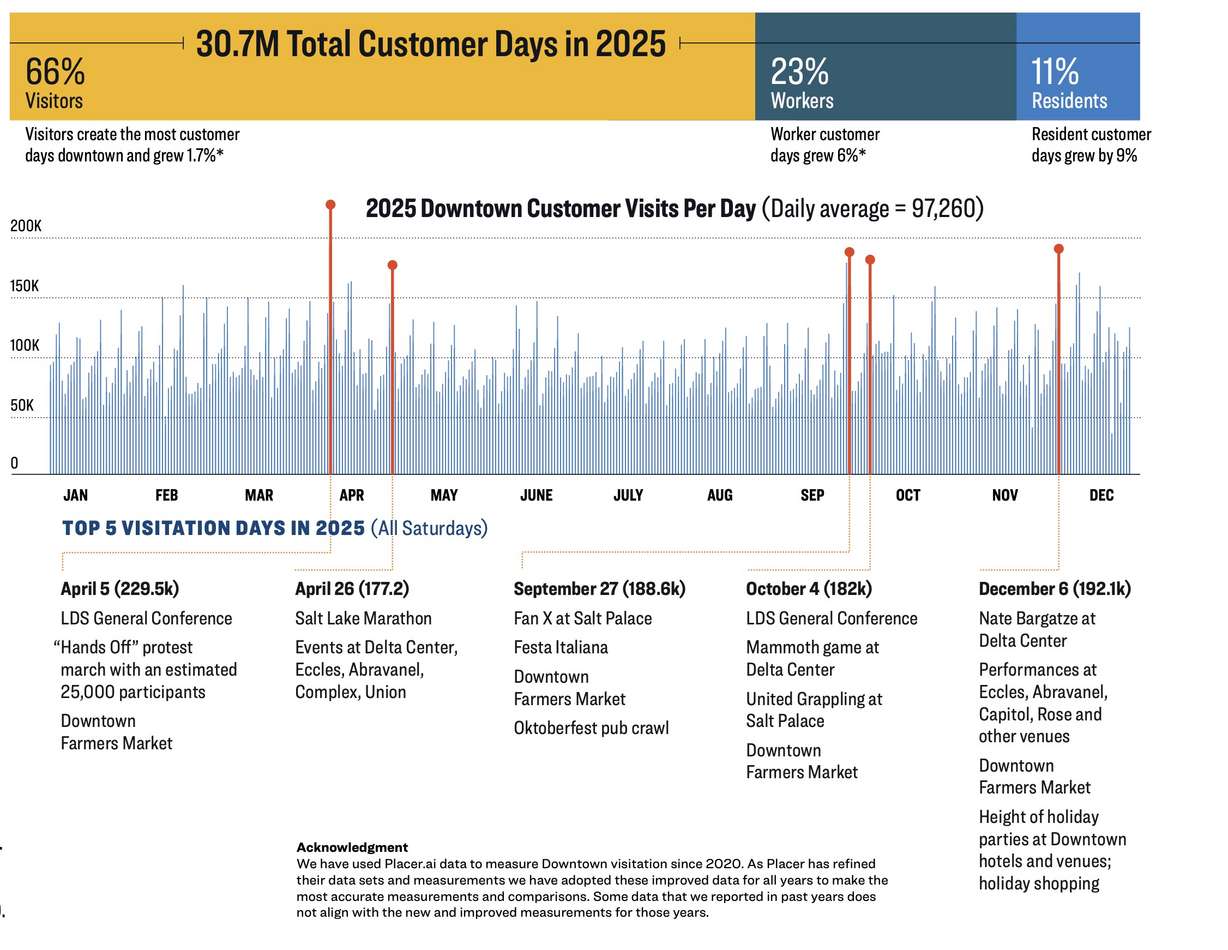
- 30.7 million total customer days were reported in 2025; visitors spent $2.1 billion.
- Challenges include stagnant office vacancy rates and upcoming Salt Palace Convention Center closure.
SALT LAKE CITY — A new report shows a mammoth uptick in downtown Salt Lake City visitation for, well, the Utah Mammoth, but also other events, while also signalling new opportunities and challenges on the horizon.
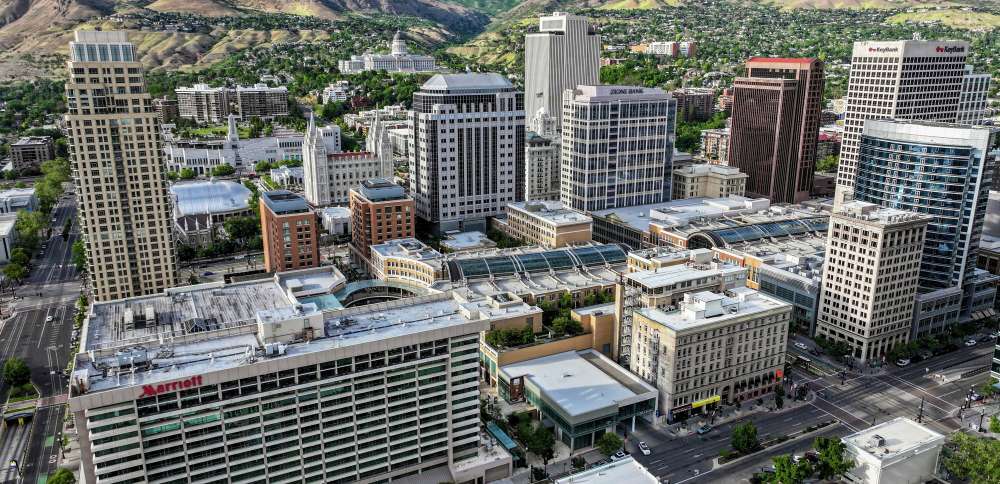
In all, there were 30.7 million total customer days logged in the downtown area last year, a figure based on cellphone data from people who stay at least an hour in the downtown area, the Salt Lake City Downtown Alliance reported in its annual economic benchmark report released on Wednesday.
Visitors accounted for two-thirds of that figure, while downtown workers accounted for nearly a quarter, and the rest came from residents living in a part of the city that is suddenly becoming more residential. They combined to spend $2.1 billion on shopping, dining, entertainment and accommodations last year, a 6% increase from 2024.
"The social economy — the economy of gathering — is really such an important driver in the overall downtown economy," said Dee Brewer, the organization's executive director, summarizing the report.
Part of that is that the Salt Palace Convention Center attracted approximately 412,000 visitors, a year-over-year increase of nearly 10% and the highest attendance since the COVID-19 pandemic. Last year's total attendance was nearly 90% of 2019 levels, indicating ongoing recovery in the convention market.
Downtown event venues also recorded nearly 5 million total ticket sales in 2025, surging by 16% from 2024, following an 18% increase the year before that, the report adds.
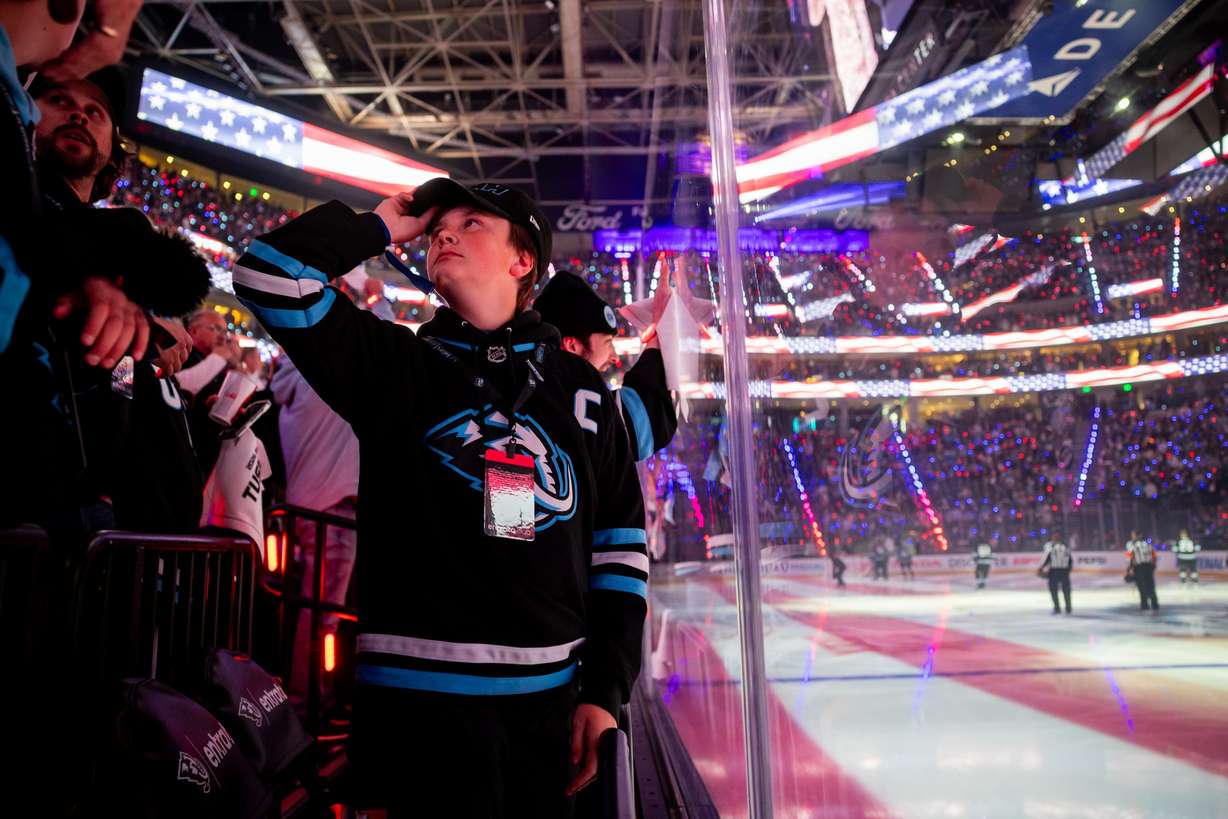
Some of the increase is associated with the Utah Mammoth. This year's report is the first to track a full year of the hockey team, since the previous one only captured the start of its first season in the Delta Center.
"Undoubtedly, the Mammoth have had an enormous impact on attendance downtown," Brewer said. "They're selling out on a regular basis, and when they complete the full arena, they'll have a higher capacity, and I think they'll continue to sell out."
Brewer pointed out that the arena has been "aggressive" in holding concerts between Mammoth and Jazz games to help make up losses from summer renovation closures.
The Downtown Alliance also tracked ticket sales at 15 other venues, ranging from church conference centers to theaters to museums and dance clubs, many of which reported increases in drawing people downtown.
Becoming residential
At the same time, the residential population grew by 9% from 2024 to 2025, and has now increased by 63% since 2019, as the central business district has suddenly become more residential. Over half of the area's residents are in their 20s, nearly double the average of the Wasatch Front.
Danilo Runjaic has lived downtown for over 20 years now, saying he enjoys the convenience of living right next to many amenities, and the traffic isn't too bad. He says the transit isn't bad either, which could be why downtown residents are five times more likely to not even own a car compared to the rest of the region.
That's something that has kept Ray Norton downtown over the past five years. She's a foodie who likes all the available restaurant options in the downtown area or close to it.
"I just like the location. There's lots to do down here," she said.
Upcoming challenges
The report reinforces a downtown trend since the COVID-19 pandemic, where the visitor economy has anchored downtown activity, while its previous anchor — the downtown office buildings — has struggled.
That's where the report signals some concerns. The vacancy rate for Class A office spaces, the most modern options on the market, stalled last year after a few years of declines.
While some offices are returning to work, space is also becoming limited. Some older, cheaper office buildings have been renovated to meet office desires, but a few have also been converted into housing to meet the growing residential demand, such as the Seraph at South Temple.
Construction could also hamper future visitation numbers. Salt Lake County officials plan to close the Salt Palace Convention Center for a massive rebuild tied to the new sports, entertainment, culture and convention district in and around the Delta Center. That closure is expected to begin in the fall of 2027 and last approximately three years.
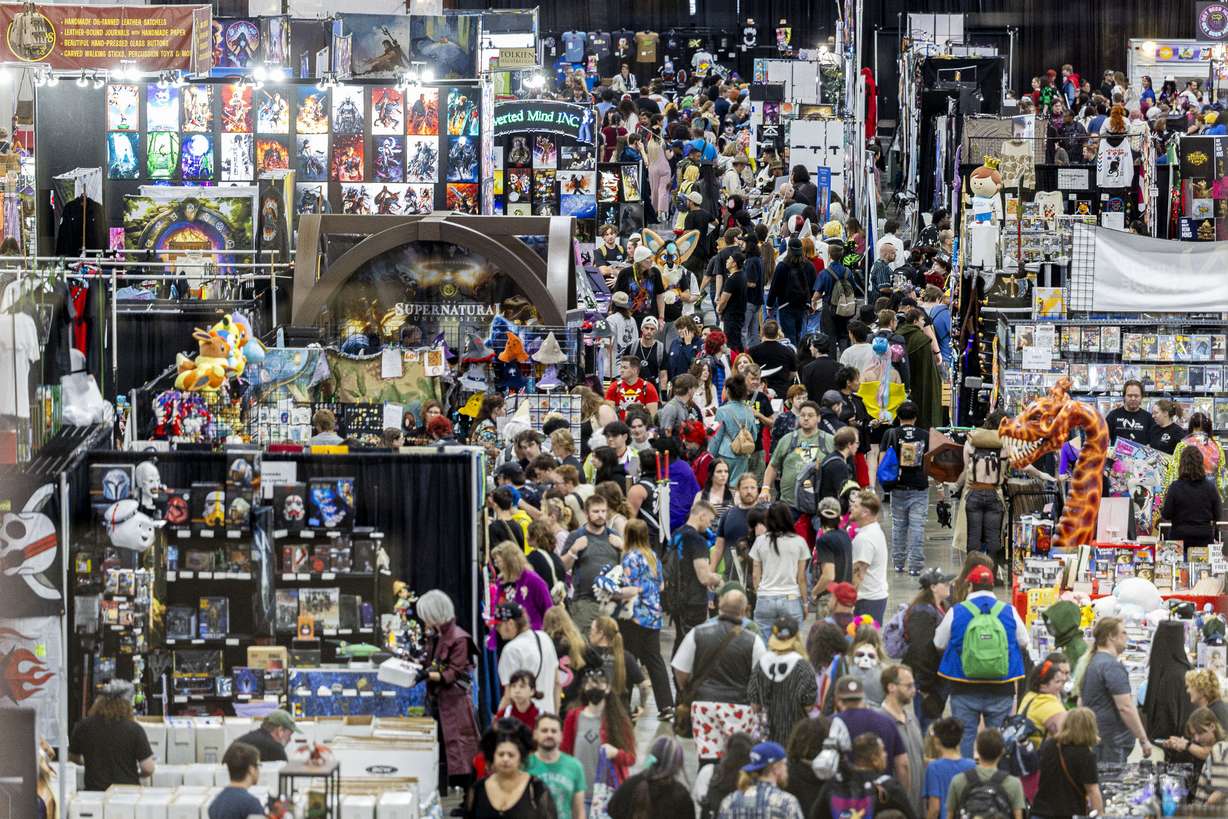
That will affect all conferences, including FanX, which contributed to the third busiest downtown day last year. Organizers told KSL last month that they expect to hold smaller events in Sandy while the Salt Palace is closed.
This will likely trickle down into downtown's surging visitor economy. One restaurant near the convention center reported that half to two-thirds of reservations were from out-of-area visitors, largely from the convention center, the Downtown Alliance noted.
Brewer said the industry has already started brainstorming ways to keep downtown bars and restaurants afloat for when the convention center is closed since it's hard to replace "high-spend midweek visitors."
"It's too early to say what those will be exactly because we're still doing some surveying and some one-on-one meetings," he said.
Residents have also seen problems. While rents have relatively stalled in Salt Lake City, they're still fairly high, especially for luxury options. Monthly rents start at $1,700 per month at the Seraph, but a prime penthouse space opened at about $10,000 per month.
Gage Matuszak said he recently moved out largely over costs. He liked being by its energy, but his wife is pregnant and moving to Cottonwood Heights helps them save up to buy a home eventually.
Runjaic said that's been the biggest drawback.
"I know a lot of my friends who have been here for a while are getting pushed out to the edge of the valley, so that's definitely a downside," he said.
Future opportunities
It's not all doom and gloom, though. The Salt Lake Temple will reopen next year, returning with a six-month open house that's expected to draw in millions of visitors. Salt Lake City is also the host of the 2034 Winter Olympics and Paralympics.
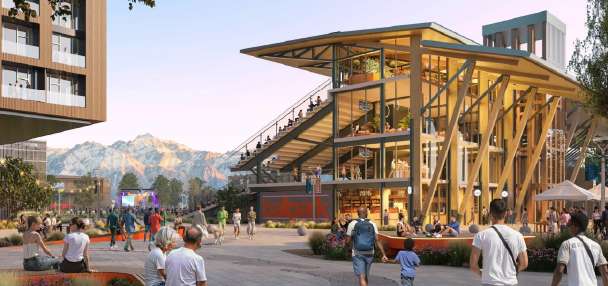
Beyond those two huge events, nearly two dozen new developments are expected to substantially change downtown over the next decade. These include redevelopment near the Delta Center, which is expected to also include new housing construction, but also other things, like Western Governors University moving its headquarters to downtown.
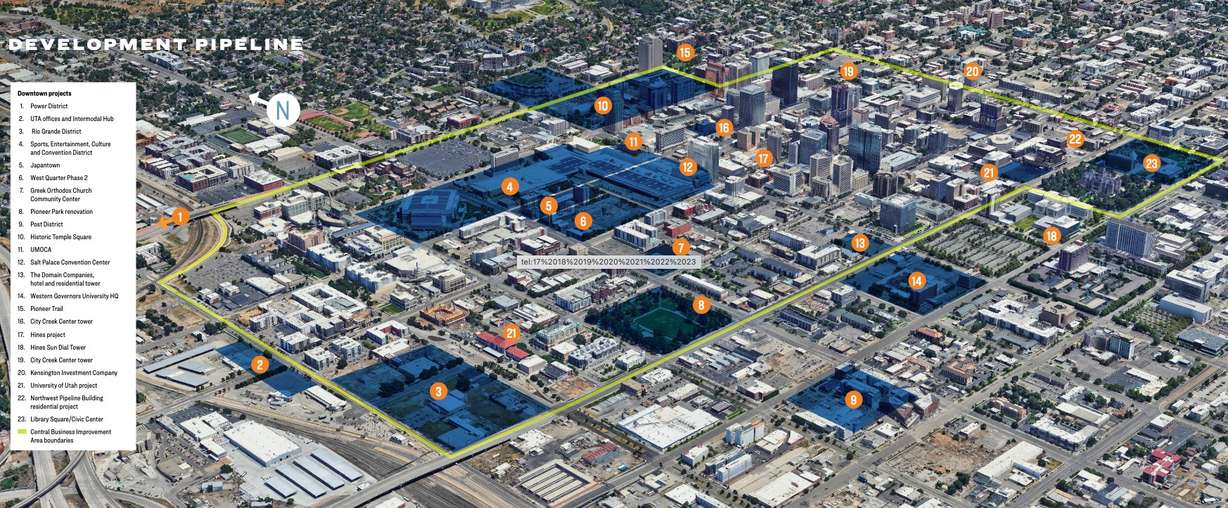
They add up to approximately $10 billion of investments into the district.
Additional planning is expected to ensure ways to protect Salt Lake City's "livable" spaces, the bars, restaurants, shops and third spaces for people to gather in between all these developments, Brewer adds.
"That investment is really important, and making downtown a better neighborhood has to be married with all of that investment," he said.