'%3e%3cpath%20d='M34.1406%205.85938C30.3906%202.10547%2025.3047%200%2020%200C14.6953%200%209.60938%202.10547%205.85938%205.85938C2.10938%209.61328%200%2014.6953%200%2020C0%2025.3047%202.10547%2030.3906%205.85938%2034.1406C9.61328%2037.8906%2014.6953%2040%2020%2040C25.3047%2040%2030.3906%2037.8945%2034.1406%2034.1406C37.8906%2030.3906%2040%2025.3047%2040%2020C40%2014.6953%2037.8945%209.60938%2034.1406%205.85938ZM37.0117%2023.543H31.1602V13.5391H27.6328V19.9414C28.1211%2020.6914%2028.3711%2021.582%2028.3711%2022.5625V22.625C28.3711%2023.668%2028.1172%2024.6055%2027.6328%2025.4297V26.6094H36.082C33.4883%2032.9375%2027.2891%2037.3789%2020.0039%2037.3789C10.3711%2037.3789%202.62109%2029.6289%202.62109%2020C2.62109%2010.3711%2010.3711%202.62109%2020%202.62109C29.6289%202.62109%2037.3789%2010.3711%2037.3789%2020C37.3789%2021.1484%2037.2617%2022.2656%2037.0508%2023.3477C37.0391%2023.4141%2037.0234%2023.4766%2037.0117%2023.543Z'%20fill='white'/%3e%3cpath%20d='M22.3086%2018.5352C20.4336%2018.125%2019.9531%2017.8398%2019.9766%2017.1836V17.1406C19.9766%2016.6992%2020.3477%2016.2148%2021.4023%2016.2148C22.582%2016.2148%2023.8867%2016.6797%2025.0781%2017.4766L26.8516%2015.0195C25.4453%2013.8906%2023.707%2013.3398%2021.5547%2013.3398C18.5195%2013.3398%2016.4375%2015%2016.4063%2017.4766V17.5352C16.3633%2020.2617%2018.5859%2020.9805%2021.293%2021.6016C23.0391%2021.9766%2023.5703%2022.3164%2023.5703%2022.9609L23.5469%2022.9766C23.5469%2023.3906%2023.2578%2023.7031%2022.7852%2023.8359C22.5742%2023.9062%2022.1289%2023.9727%2021.5156%2023.9727C20.7617%2023.9727%2019.7539%2023.8633%2018.6328%2023.4844C18.0898%2023.2891%2017.4727%2023.0039%2016.8047%2022.6133L20.1406%2026.625C20.2813%2026.6602%2021.0977%2026.8516%2021.7734%2026.8516C25.0039%2026.8516%2027.0859%2025.2461%2027.1094%2022.6328V22.5703C27.1602%2020.1133%2025.2148%2019.1719%2022.3086%2018.5352Z'%20fill='white'/%3e%3cpath%20d='M5.24219%2013.5664V26.6133H8.75391V23.7578L10.2969%2021.9531L14.2031%2026.6133H18.3867L12.3555%2019.5195L17.4023%2013.5664H13.4531L8.75391%2019.0586V13.5664H5.24219Z'%20fill='white'/%3e%3c/g%3e%3cdefs%3e%3cclipPath%20id='clip0_97_2430'%3e%3crect%20width='40'%20height='40'%20fill='white'/%3e%3c/clipPath%3e%3c/defs%3e%3c/svg%3e)


- Seraph at South Temple, a 25-story residential tower, is now open after a multiyear project.
- Hines faced challenges converting the 1966 building, turning old office space into 217 units.
- Rental costs start at $1,700 per month for units ranging in size.
SALT LAKE CITY — With a panoramic vista of downtown Salt Lake City and the Wasatch Mountains to the south, and Temple Square and Capitol Hill to the north from its 25th-story terrace, Seraph at South Temple offers some of the most unique views among any of the city's newest apartment complexes.
But it's not one of the city's newest viewpoints by any means.
This 274-foot residential tower, which officially opened at the end of last month, serves as Utah's largest office-to-housing conversion to date. What was once 217,000 square feet of office space, completed 60 years ago, is now home to 217 residential units.
"Seraph is a bold step forward for Salt Lake City's downtown, transforming a long-standing office tower into thoughtfully designed residences that reflect the city's momentum," said Dusty Harris, senior managing director for Hines, the developer behind the project.
A tricky remodel
Hines announced its plans to carry out its conversion of South Temple Tower in 2022, amid a shift in building trends during the COVID-19 pandemic. Older office spaces were harder to refill, while a demand for housing — including downtown — spiked.
The tower at 136 E. South Temple was completed in 1966 at the University Club Building. It was briefly the city's tallest office tower until The Church of Jesus Christ of Latter-day Saints' Office Building was completed to the northwest less than a decade later. It also struggled to retain commercial tenants as taller and newer options entered the market.
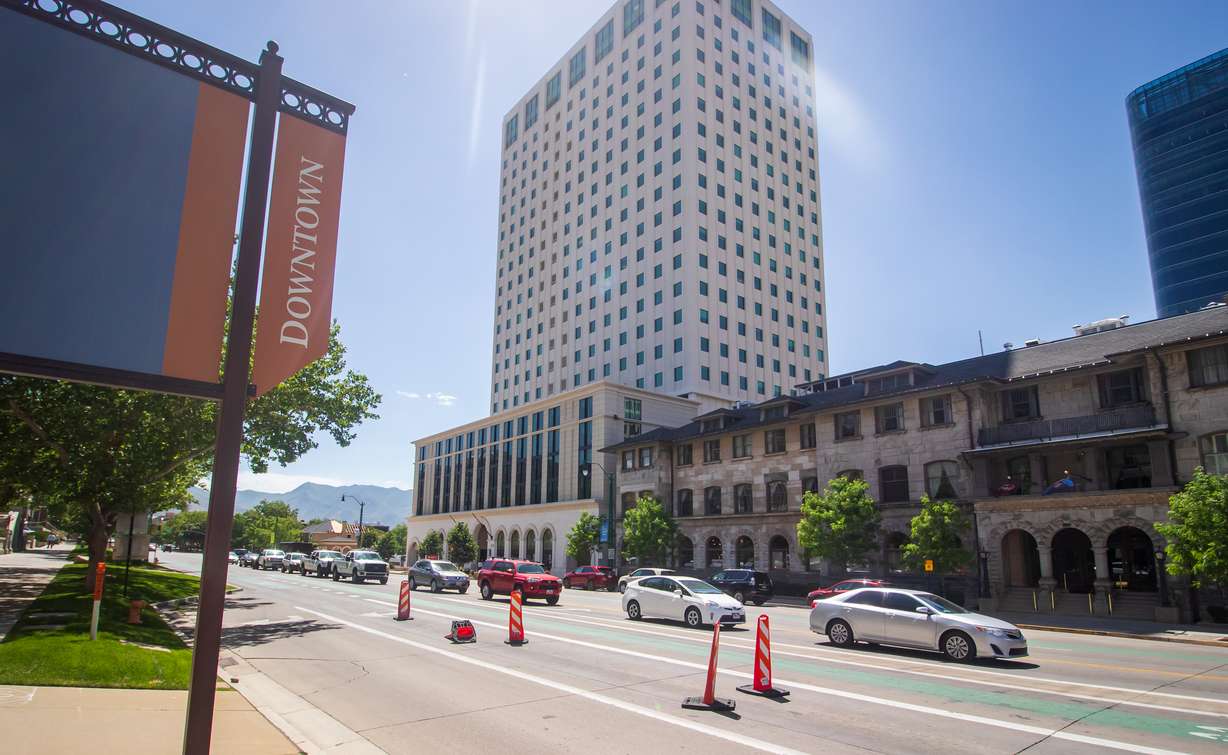
South Temple Tower's ceilings and floor plates were smaller than those of many of the city's future office towers, and its parking garage couldn't accommodate what employers needed, which contributed to its decline. Rather than tearing it down, Hines decided to flip the building into housing, where its constraints became advantages. Its 10-foot ceilings are slightly higher than those of other residential spaces in the market, and its parking garage is just large enough to offer one vehicle per resident.
Converting a historic office building into housing turned out to be much harder than developers had expected, however.
Hines had some records to work with, but the building's original blueprints weren't as detailed as modern buildings. Robots that look like dogs and circular vacuums were used on each floor, mapping out things that construction teams couldn't see without knocking down the entire interior. Even when things were ripped out, construction teams found things they didn't know about the building.
These, project officials told KSL, prolonged the project, although it was still completed by the end of 2025, which they had hoped for from the beginning.
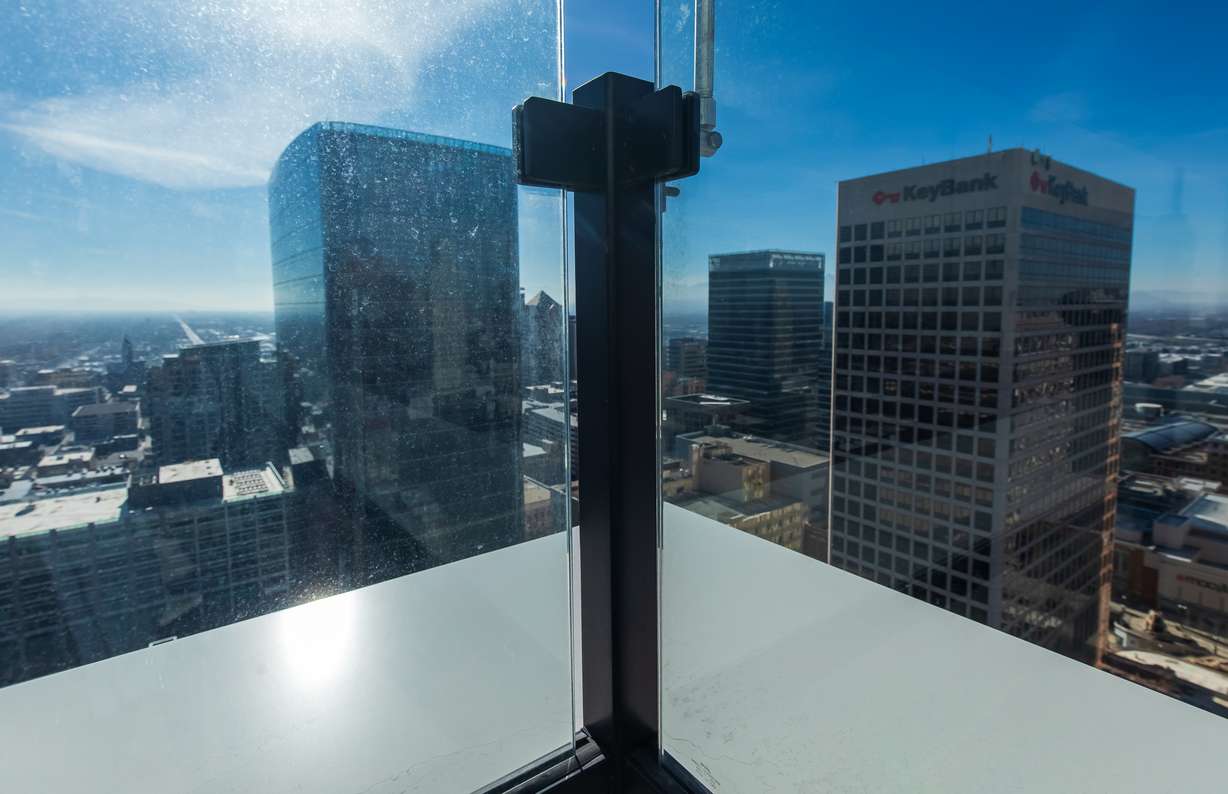
Expanded window openings were added on its north and south ends, but city codes prevented that on its east and west ends. The deck atop the building was once where mechanical equipment was stored. Crews had to extend the elevator an extra floor to reach the space, as all of those items were moved to a new storage space at the top.
The project's name pays homage to a figure in Salt Lake City's history. Seraph, project officials explain, is a subtle nod to Seraph Young, who became the first woman to vote in an election open to both men and women in U.S. history, when she cast her ballot in a 1870 municipal election.
The tower is located a block north of the original site of Salt Lake City Council Hall, where Young cast her vote. The building was later moved up to Capitol Hill in the 1960s, where it remains visible from the downtown tower. The name also means "an angelic being," which was equally interesting to Hines.
A tour inside
Most of the 217 units feature one or two bedrooms, but there are a few studio and three-bedroom units inside the building's new floor layouts. Rents start at $1,700 per month, while prime penthouse spaces run at approximately $10,000 per month.
Many of the other features inside the tower mirror what's desired in the rental market. The rooftop terrace has enough space for about 150 people to gather, which will mostly be tenants, but Hines is considering making the space bookable for some events. It includes fire pits, barbecue spaces and plenty of outdoor seating for people to soak in the views.
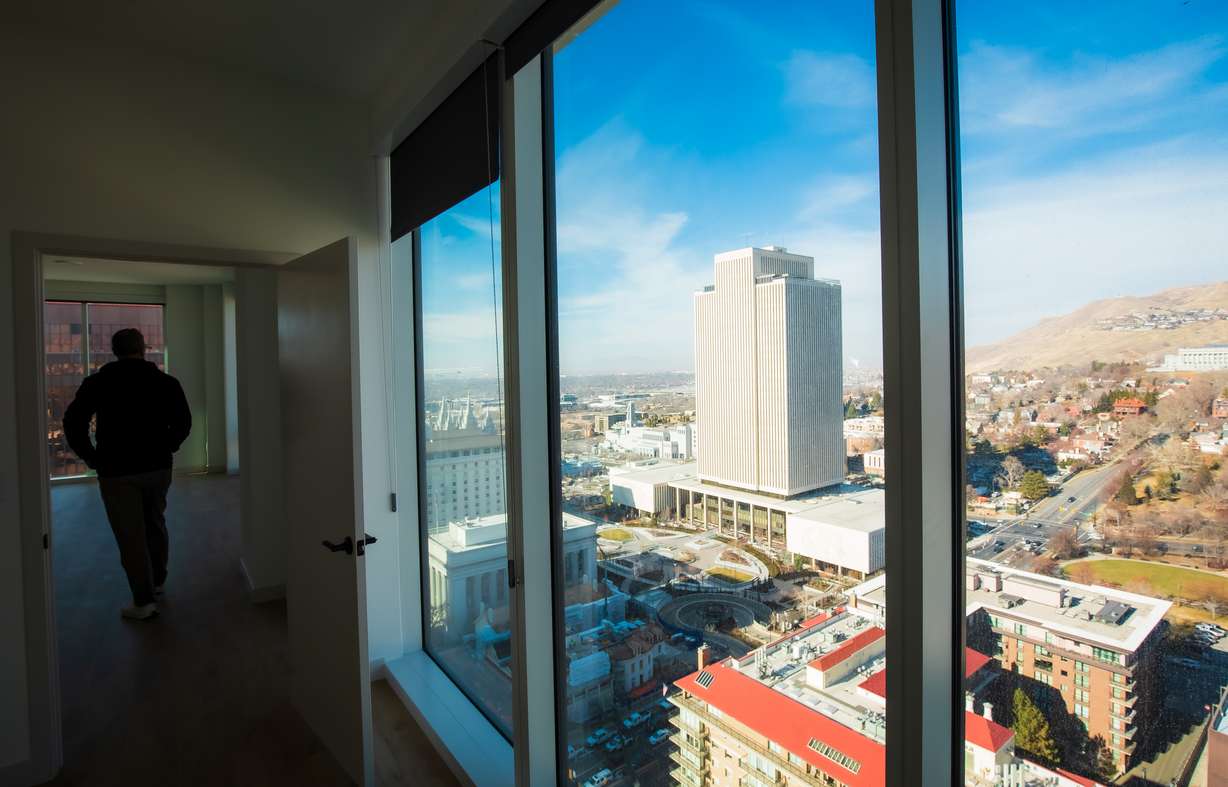
There's another resident-only shared space on the seventh floor, which was initially the top of the parking structure. Crews did some work to convert parts of it into indoor space, which is home to a lounge with different games and activities, as well as an outdoor pool and hot tub at the north end. There's a small green space on the south end for pets to run around, next to an indoor "pet spa" for owners to wash their pets.
There's a fitness center, too, which is expected to be completed in the coming weeks.
"Seraph underscores Hines' conviction in the living sector and our disciplined strategy to unlock long-term value through adaptive reuse," said Ray Lawler, head of Americas for Hines, in a statement. "As one of the few large-scale office-to-residential conversions delivering in today's evolving urban landscape, Seraph sets a benchmark for transformative projects nationwide."