'%3e%3cpath%20d='M34.1406%205.85938C30.3906%202.10547%2025.3047%200%2020%200C14.6953%200%209.60938%202.10547%205.85938%205.85938C2.10938%209.61328%200%2014.6953%200%2020C0%2025.3047%202.10547%2030.3906%205.85938%2034.1406C9.61328%2037.8906%2014.6953%2040%2020%2040C25.3047%2040%2030.3906%2037.8945%2034.1406%2034.1406C37.8906%2030.3906%2040%2025.3047%2040%2020C40%2014.6953%2037.8945%209.60938%2034.1406%205.85938ZM37.0117%2023.543H31.1602V13.5391H27.6328V19.9414C28.1211%2020.6914%2028.3711%2021.582%2028.3711%2022.5625V22.625C28.3711%2023.668%2028.1172%2024.6055%2027.6328%2025.4297V26.6094H36.082C33.4883%2032.9375%2027.2891%2037.3789%2020.0039%2037.3789C10.3711%2037.3789%202.62109%2029.6289%202.62109%2020C2.62109%2010.3711%2010.3711%202.62109%2020%202.62109C29.6289%202.62109%2037.3789%2010.3711%2037.3789%2020C37.3789%2021.1484%2037.2617%2022.2656%2037.0508%2023.3477C37.0391%2023.4141%2037.0234%2023.4766%2037.0117%2023.543Z'%20fill='white'/%3e%3cpath%20d='M22.3086%2018.5352C20.4336%2018.125%2019.9531%2017.8398%2019.9766%2017.1836V17.1406C19.9766%2016.6992%2020.3477%2016.2148%2021.4023%2016.2148C22.582%2016.2148%2023.8867%2016.6797%2025.0781%2017.4766L26.8516%2015.0195C25.4453%2013.8906%2023.707%2013.3398%2021.5547%2013.3398C18.5195%2013.3398%2016.4375%2015%2016.4063%2017.4766V17.5352C16.3633%2020.2617%2018.5859%2020.9805%2021.293%2021.6016C23.0391%2021.9766%2023.5703%2022.3164%2023.5703%2022.9609L23.5469%2022.9766C23.5469%2023.3906%2023.2578%2023.7031%2022.7852%2023.8359C22.5742%2023.9062%2022.1289%2023.9727%2021.5156%2023.9727C20.7617%2023.9727%2019.7539%2023.8633%2018.6328%2023.4844C18.0898%2023.2891%2017.4727%2023.0039%2016.8047%2022.6133L20.1406%2026.625C20.2813%2026.6602%2021.0977%2026.8516%2021.7734%2026.8516C25.0039%2026.8516%2027.0859%2025.2461%2027.1094%2022.6328V22.5703C27.1602%2020.1133%2025.2148%2019.1719%2022.3086%2018.5352Z'%20fill='white'/%3e%3cpath%20d='M5.24219%2013.5664V26.6133H8.75391V23.7578L10.2969%2021.9531L14.2031%2026.6133H18.3867L12.3555%2019.5195L17.4023%2013.5664H13.4531L8.75391%2019.0586V13.5664H5.24219Z'%20fill='white'/%3e%3c/g%3e%3cdefs%3e%3cclipPath%20id='clip0_97_2430'%3e%3crect%20width='40'%20height='40'%20fill='white'/%3e%3c/clipPath%3e%3c/defs%3e%3c/svg%3e)


- PBS this week is re-airing "The American Revolution," directed by David Schmidt, in honor of America 250.
- The 12-hour series addresses subjects such as historical figures, colonists who were loyal to Great Britain, and the role of women.
- Schmidt told KSL that the research, planning and filming for the series took nearly a decade.
SALT LAKE CITY — In this year commemorating the 250th anniversary of America, we at KSL are joining other media organizations in producing news stories and documentaries focusing on the founding of our nation.
Perhaps the most ambitious of these is "The American Revolution" which is re-airing this week on PBS.
Carole Mikita talked with David Schmidt, a partner of Ken Burns and director of this project.
There are now famous and familiar paintings and drawings, artistic images of the American Revolution that we have all seen since childhood. They have formed our impressions of what must have happened 250 years ago. And that is only one of the challenges that Ken Burns and his team faced as they created the 12-hour television series, "The American Revolution."
David Schmidt is a producer and co-director of the project.
"The very first thing we do is kind of unlearn the preconceptions that we came in with and then start building the story back up from scratch," Schmidt said.
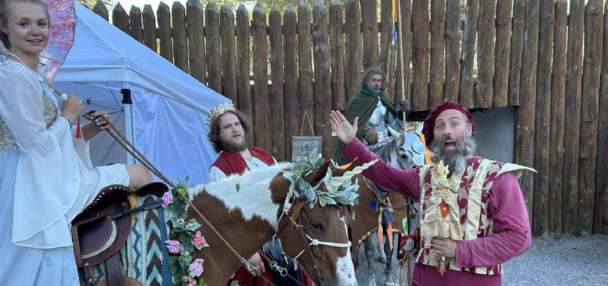
He said that process includes hours of interviews with historians and professors, Pulitzer Prize-winning authors and filming some key reenactments.
Schmidt told KSL that the research, planning and filming took nearly a decade.
"So, what we're trying to achieve, just a faithful retelling of our shared history," he said
The fight for independence was, he said, truly unique.
"… A single moment in human history where we're saying, 'This is how it's been up to this moment. We can create, here in North America, something new that offers a better future for humanity,'" Schmidt said.
The series addresses the familiar locations of the revolution and the historical figures we know but also colonists who were loyal to Great Britain, the role women played in the revolution, slavery and Indigenous peoples.
Mikita wondered what this team learned — how have viewers reacted?
"Some of the most fun reactions we've had from people who, you know, younger millennials or Generation Z, who are, 'Uh-oh, I'm turning into my dad! And that's really, kind of actually rewarding. This is the kind of history that my parents loved and I'm coming of an older age and it's actually appealing to me, too,'" Schmidt said.
In telling America's story, he said, the team tried to balance the often idealized concept of our Founding Fathers with the challenges they faced and what they actually did.
"I think the achievements that they made are remarkable. … The Declaration of Independence is an incredible document, but if you don't see them as real people, if you just see them as mythologized creatures, you can't see the possibility in yourself to imagine a different world, I think," Schmidt said.
What advice does he have on this 250th anniversary? He said see America. He started with our state.
"You live in an incredibly beautiful part of this country with how many national parks (are) inside of Utah, alone," Schmidt said.
And, he said, read or listen to the books historians have written about our fight for freedom.
"It's part of who we are and we ought to do a better job of understanding it, in addition to recognizing what we've still got and how beautiful it is," Schmidt said.
And the work of building America is not over, Schmidt said.
"The American Revolution" on PBS ultimately points toward the future.
Schmidt and his team have hope that the next generation and generations to come will continue to create "a more perfect union."
PBS Utah started rebroadcasting the episodes this week.