'%3e%3cpath%20d='M34.1406%205.85938C30.3906%202.10547%2025.3047%200%2020%200C14.6953%200%209.60938%202.10547%205.85938%205.85938C2.10938%209.61328%200%2014.6953%200%2020C0%2025.3047%202.10547%2030.3906%205.85938%2034.1406C9.61328%2037.8906%2014.6953%2040%2020%2040C25.3047%2040%2030.3906%2037.8945%2034.1406%2034.1406C37.8906%2030.3906%2040%2025.3047%2040%2020C40%2014.6953%2037.8945%209.60938%2034.1406%205.85938ZM37.0117%2023.543H31.1602V13.5391H27.6328V19.9414C28.1211%2020.6914%2028.3711%2021.582%2028.3711%2022.5625V22.625C28.3711%2023.668%2028.1172%2024.6055%2027.6328%2025.4297V26.6094H36.082C33.4883%2032.9375%2027.2891%2037.3789%2020.0039%2037.3789C10.3711%2037.3789%202.62109%2029.6289%202.62109%2020C2.62109%2010.3711%2010.3711%202.62109%2020%202.62109C29.6289%202.62109%2037.3789%2010.3711%2037.3789%2020C37.3789%2021.1484%2037.2617%2022.2656%2037.0508%2023.3477C37.0391%2023.4141%2037.0234%2023.4766%2037.0117%2023.543Z'%20fill='white'/%3e%3cpath%20d='M22.3086%2018.5352C20.4336%2018.125%2019.9531%2017.8398%2019.9766%2017.1836V17.1406C19.9766%2016.6992%2020.3477%2016.2148%2021.4023%2016.2148C22.582%2016.2148%2023.8867%2016.6797%2025.0781%2017.4766L26.8516%2015.0195C25.4453%2013.8906%2023.707%2013.3398%2021.5547%2013.3398C18.5195%2013.3398%2016.4375%2015%2016.4063%2017.4766V17.5352C16.3633%2020.2617%2018.5859%2020.9805%2021.293%2021.6016C23.0391%2021.9766%2023.5703%2022.3164%2023.5703%2022.9609L23.5469%2022.9766C23.5469%2023.3906%2023.2578%2023.7031%2022.7852%2023.8359C22.5742%2023.9062%2022.1289%2023.9727%2021.5156%2023.9727C20.7617%2023.9727%2019.7539%2023.8633%2018.6328%2023.4844C18.0898%2023.2891%2017.4727%2023.0039%2016.8047%2022.6133L20.1406%2026.625C20.2813%2026.6602%2021.0977%2026.8516%2021.7734%2026.8516C25.0039%2026.8516%2027.0859%2025.2461%2027.1094%2022.6328V22.5703C27.1602%2020.1133%2025.2148%2019.1719%2022.3086%2018.5352Z'%20fill='white'/%3e%3cpath%20d='M5.24219%2013.5664V26.6133H8.75391V23.7578L10.2969%2021.9531L14.2031%2026.6133H18.3867L12.3555%2019.5195L17.4023%2013.5664H13.4531L8.75391%2019.0586V13.5664H5.24219Z'%20fill='white'/%3e%3c/g%3e%3cdefs%3e%3cclipPath%20id='clip0_97_2430'%3e%3crect%20width='40'%20height='40'%20fill='white'/%3e%3c/clipPath%3e%3c/defs%3e%3c/svg%3e)


- Idaho Gov. Brad Little faces primary challenge from Mark Fitzpatrick, a controversial candidate.
- Fitzpatrick criticized Latter-day Saints, a significant Idaho voter base, affecting his campaign.
- Despite Fitzpatrick's fundraising, Little leads with strong endorsements and past election success.
BOISE — Idaho Gov. Brad Little will compete in a primary election on Tuesday against a conservative critic who has drawn backlash over past comments regarding members of The Church of Jesus Christ of Latter-day Saints.
Little has focused his campaign on a record of historic tax cuts, deregulation initiatives and school choice, but faces ridicule from his right flank for not taking a firm enough stand on pandemic lockdowns, immigration enforcement and social issues.
Little's most vocal opponent is Mark Fitzpatrick, a bar owner, culture warrior and former police officer. Like in 2022, Little faces seven primary challengers. Fitzpatrick appears to be the only one with fundraising to challenge Little's third-term ambitions.
"The most well-known candidate is probably the most controversial candidate," Robert Jones, a pollster at GS Strategy Group, told the Deseret News, referring to Fitzpatrick. "That's kind of why you see him trying to do some clean up in the lead-up to the election."
As Fitzpatrick tries to frame himself as the only viable conservative alternative to Little, he has found himself having to account for statements he made after the deadly attack on Latter-day Saints in Grand Blanc, Michigan, in September.
What Mark Fitzpatrick said about Latter-day Saints
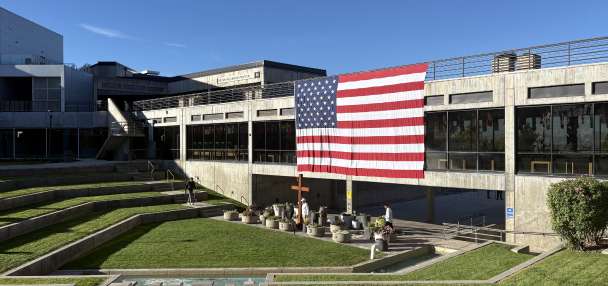
On Sept. 28 — the same day a gunman rammed into a church meetinghouse, lit the building on fire and started shooting, killing four individuals and wounding eight others — Fitzpatrick took to social media to express his distaste for the faith.
"Dear (President Donald Trump), Mormons aren't Christian. Stop saying otherwise," Fitzpatrick posted in response to Trump's statement on the shooting. Fitzpatrick posted that same day he planned to "expose the evil of the LDS church."
Ahead of Tuesday's election, Fitzpatrick's social media footprint has been increasingly devoted to insisting he does not hold bigoted views toward Latter-day Saints. But he has not distanced himself from his earlier comments, despite requests from voters.
Latter-day Saints make up roughly one-quarter of voters in Idaho and around one-third of state lawmakers. This ratio is higher in the southeastern corner of the state, where some counties boast the highest share of Latter-day Saints in the country.
In 2022, Little received nearly 60% of the vote in Bonneville County, home to Idaho Falls, and Madison County, home to Rexburg, during the GOP primary election, making these some of his "strongest performing counties," Jones said.
On April 18, Fitzpatrick stated he does not "hate LDS," saying he can love and disagree with people simultaneously. This week, several Latter-day Saints responded to Fitzpatrick's statement through their private accounts with screenshots of his earlier comments.
Multiple accounts based out of Idaho claiming to be conservative Latter-day Saints told Fitzpatrick they aligned with him on many issues but could not bring themselves to vote for him if he did not retract his previous comments about the church.
In response to Latter-day Saint Idahoans over the weekend, and on Monday, Fitzpatrick refused to apologize for his past statements, blaming what he called a "coordinated attack with exaggerations" on the "Left's establishment support" for Little.
"On Tuesday, Mormons will vote for me if they want truth and transparency in their government. Or they will vote for Brad if they want deception, liberalism, bloated government, massive illegal immigration, etc.," Fitzpatrick said on X.
Fitzpatrick, who advertises himself as a faithful Christian, represents a segment of Idaho Republicans who color their "Christian nationalist" vision of biblical policy with "anti-Mormon flavor," east Idaho politico Steve Taggart said.
In an interview with the Deseret News, Taggart pointed out that Fitzpatrick's interpretation of the Bible — which includes a belief that the "Earth is flat" and that the globe is "satanic" — has little room for Latter-day Saints.
"He is just beyond mainstream, and that's who he attracts," Taggart said. "We really don't have splits on religion, generally speaking, and when you try to inject it, or try to do it subtly, it's just a little bizarre, frankly."
The Church of Jesus Christ of Latter-day Saints is officially "neutral in matters of party politics." Church leaders have reiterated that members "come from a variety of backgrounds and experiences and may have differences of opinion in partisan political matters."
Christianity in Idaho politics
Fitzpatrick has become the face of a broader movement in Idaho to bring an explicit endorsement of traditional Protestantism to the state capitol. This attitude has historically been in tension with the state's Latter-day Saint population of nearly half a million.
One of the most influential groups pushing Idaho lawmakers to adopt policies like daily Bible reading in public schools is the Idaho Family Policy Center. Its president, Blaine Conzatti, said polls show a majority of Idahoans agree with their direction.
Surveys show many Idahoans prefer a bolder stance on social issues like diversity, equity and inclusion in universities, keeping males out of public female bathrooms and protecting children from drag shows, Conzatti said, adding that candidates should reflect that.
"Christians have a responsibility to support candidates who meet the biblical qualifications for civil leaders," Conzatti said. "That means supporting candidates who understand the essential role Christianity plays in our constitutional system of government."
Idaho Family Policy Center is a nonprofit group that does not endorse in elections. Some Latter-day Saints have publicly endorsed Fitzpatrick, with explanations of why they believe his proposals matter more than his view of church members.
Patriot Gear founder Ian Wendt, who is a member of the church, posted a video this week, which Fitzpatrick shared. In it, Wendt explains, "I don't care if he likes my religion" as long as he is committed to upholding Idaho's constitutional freedoms.
Fitzpatrick has focused his criticism of Little on illegal immigration. While Little sent National Guardsmen to help secure the Texas border in 2024, Fitzpatrick says he will go further, making it one of his priorities to "Remove all illegal aliens in Idaho."
Despite the following Fitzpatrick has among supporters online, some indicators point to an easy victory for Little: He won with a majority in a crowded primary in 2022, and has outraised Fitzpatrick by a factor of 10-to-1, pulling in $1.8 million in 2026, to Fitzpatrick's $180,000.
Little also entered his race with an endorsement from Trump, which the GOP standard-bearer reiterated on Monday, saying in a statement on TruthSocial that Little has fought to support his agenda on border security, tax cuts and a strong military.
At the end of the day, Todd Cranney, a political consultant advising on Little's campaign, believes most Idaho Republicans are conservative but not any more likely to support Fitzpatrick's firebrand style than offended Latter-day Saints.
"I would just say that's a fringe movement," Cranney told the Deseret News. "These don't represent what I think are traditional Republicans. And the traditional Republicans are still the largest, biggest piece of the electorate in the state."
The Deseret News reached out to Fitzpatrick and Little through multiple contact points but did not receive a response before publication.