'%3e%3cpath%20d='M34.1406%205.85938C30.3906%202.10547%2025.3047%200%2020%200C14.6953%200%209.60938%202.10547%205.85938%205.85938C2.10938%209.61328%200%2014.6953%200%2020C0%2025.3047%202.10547%2030.3906%205.85938%2034.1406C9.61328%2037.8906%2014.6953%2040%2020%2040C25.3047%2040%2030.3906%2037.8945%2034.1406%2034.1406C37.8906%2030.3906%2040%2025.3047%2040%2020C40%2014.6953%2037.8945%209.60938%2034.1406%205.85938ZM37.0117%2023.543H31.1602V13.5391H27.6328V19.9414C28.1211%2020.6914%2028.3711%2021.582%2028.3711%2022.5625V22.625C28.3711%2023.668%2028.1172%2024.6055%2027.6328%2025.4297V26.6094H36.082C33.4883%2032.9375%2027.2891%2037.3789%2020.0039%2037.3789C10.3711%2037.3789%202.62109%2029.6289%202.62109%2020C2.62109%2010.3711%2010.3711%202.62109%2020%202.62109C29.6289%202.62109%2037.3789%2010.3711%2037.3789%2020C37.3789%2021.1484%2037.2617%2022.2656%2037.0508%2023.3477C37.0391%2023.4141%2037.0234%2023.4766%2037.0117%2023.543Z'%20fill='white'/%3e%3cpath%20d='M22.3086%2018.5352C20.4336%2018.125%2019.9531%2017.8398%2019.9766%2017.1836V17.1406C19.9766%2016.6992%2020.3477%2016.2148%2021.4023%2016.2148C22.582%2016.2148%2023.8867%2016.6797%2025.0781%2017.4766L26.8516%2015.0195C25.4453%2013.8906%2023.707%2013.3398%2021.5547%2013.3398C18.5195%2013.3398%2016.4375%2015%2016.4063%2017.4766V17.5352C16.3633%2020.2617%2018.5859%2020.9805%2021.293%2021.6016C23.0391%2021.9766%2023.5703%2022.3164%2023.5703%2022.9609L23.5469%2022.9766C23.5469%2023.3906%2023.2578%2023.7031%2022.7852%2023.8359C22.5742%2023.9062%2022.1289%2023.9727%2021.5156%2023.9727C20.7617%2023.9727%2019.7539%2023.8633%2018.6328%2023.4844C18.0898%2023.2891%2017.4727%2023.0039%2016.8047%2022.6133L20.1406%2026.625C20.2813%2026.6602%2021.0977%2026.8516%2021.7734%2026.8516C25.0039%2026.8516%2027.0859%2025.2461%2027.1094%2022.6328V22.5703C27.1602%2020.1133%2025.2148%2019.1719%2022.3086%2018.5352Z'%20fill='white'/%3e%3cpath%20d='M5.24219%2013.5664V26.6133H8.75391V23.7578L10.2969%2021.9531L14.2031%2026.6133H18.3867L12.3555%2019.5195L17.4023%2013.5664H13.4531L8.75391%2019.0586V13.5664H5.24219Z'%20fill='white'/%3e%3c/g%3e%3cdefs%3e%3cclipPath%20id='clip0_97_2430'%3e%3crect%20width='40'%20height='40'%20fill='white'/%3e%3c/clipPath%3e%3c/defs%3e%3c/svg%3e)



- The University of Utah launched the James LeVoy Sorenson Center for Medical Innovation on Tuesday.
- The 60,000-square-foot building features advanced labs, 3-D printers and startup incubators.
- Executive Director Mark Paul highlighted the center's unique approach to medical innovation.
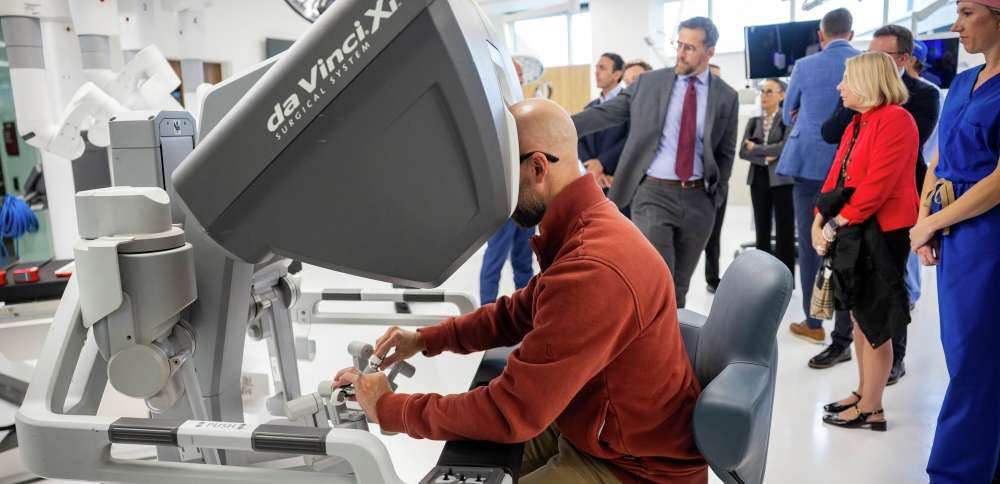
SALT LAKE CITY — In what might be a ribbon-cutting first, Dr. Chris Dechet sat at the controls of a Da Vinci robot Tuesday afternoon and carefully threaded a mere snippet of ribbon through two small holes in two small poles in front of a 5-inch-by-2-inch building model. He wiggled his fingers to have the robot arm tie them in place and then used a little scissor to snip it, which elicited excitement from a couple hundred people who watched the event on a pair of big screens a floor below.
It was an innovative — and fitting — launch to the University of Utah's James LeVoy Sorenson Center for Medical Innovation. The 60,000-square-foot building is part latest-and-greatest technology and collaboration space and part dreamscape, because it was built to launch medical devices and techniques and partnerships that may not even be dreamed of yet.
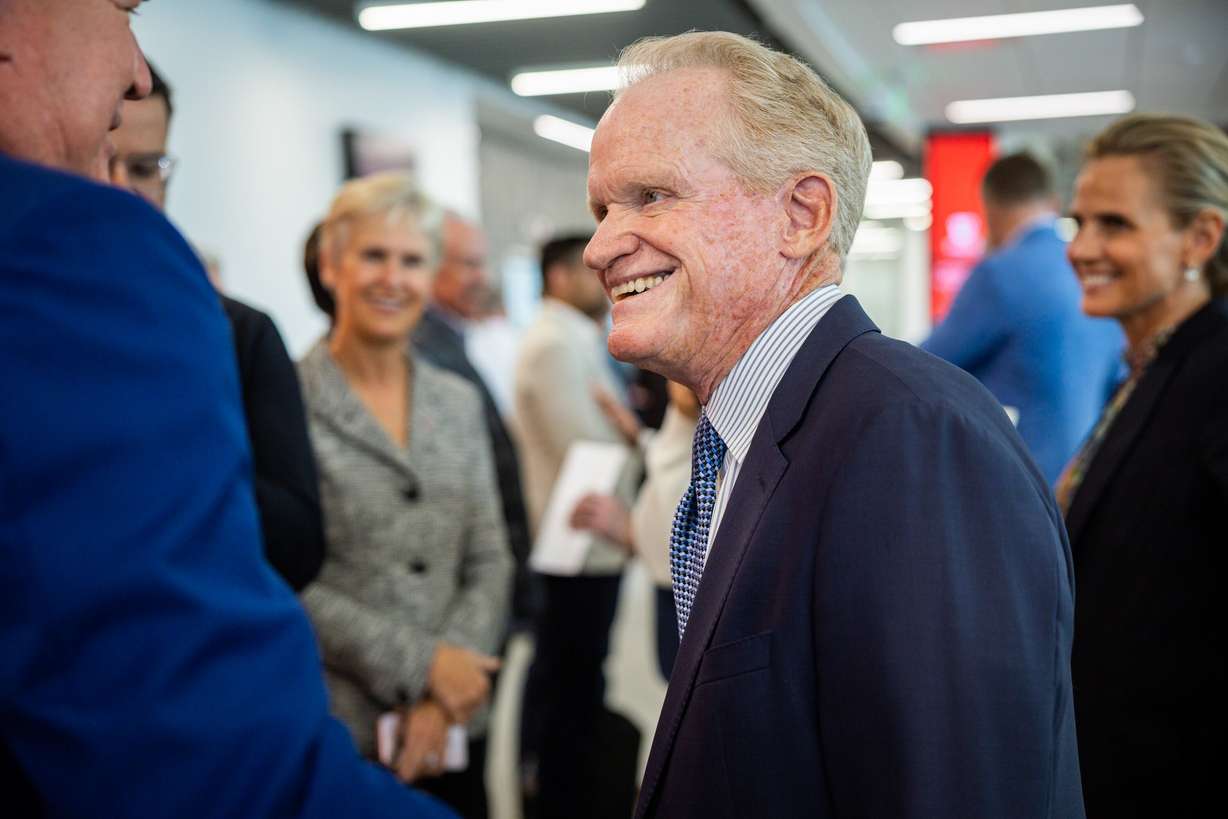
Dechet, a surgeon who specializes in urology-related cancers at the Huntsman Cancer Institute, said the most incredible aspect of the innovation center will be how it allows anybody from the university who has an idea that could in some way alleviate suffering or propel treatment to engage with a group of experts who can help the work along the pipeline. The expertise within the center is great enough, in fact, that someone could explore whether the bright idea has realistic potential.
"It's a very unique enterprise that I hope leads to continuous innovation," Dechet told Deseret News.
Among features of the four-story building, the center includes prototyping and clean room labs, as well as collaborative and event spaces designed to bring people from different disciplines in to work together on solutions to some of medicine's vexing problems. The top floor is vacant at the moment, its future to be decided by the collaboration and innovation that occurs. The rest of the building is packed with places to team up and discuss ideas, test tools and maybe improve them or launch new ways to treat illness.
There are 3-D printers in the lobby area, a commercialization floor where innovators can get expert help with next steps like applying for patents, lots of training space, 10 incubators for startups and more.
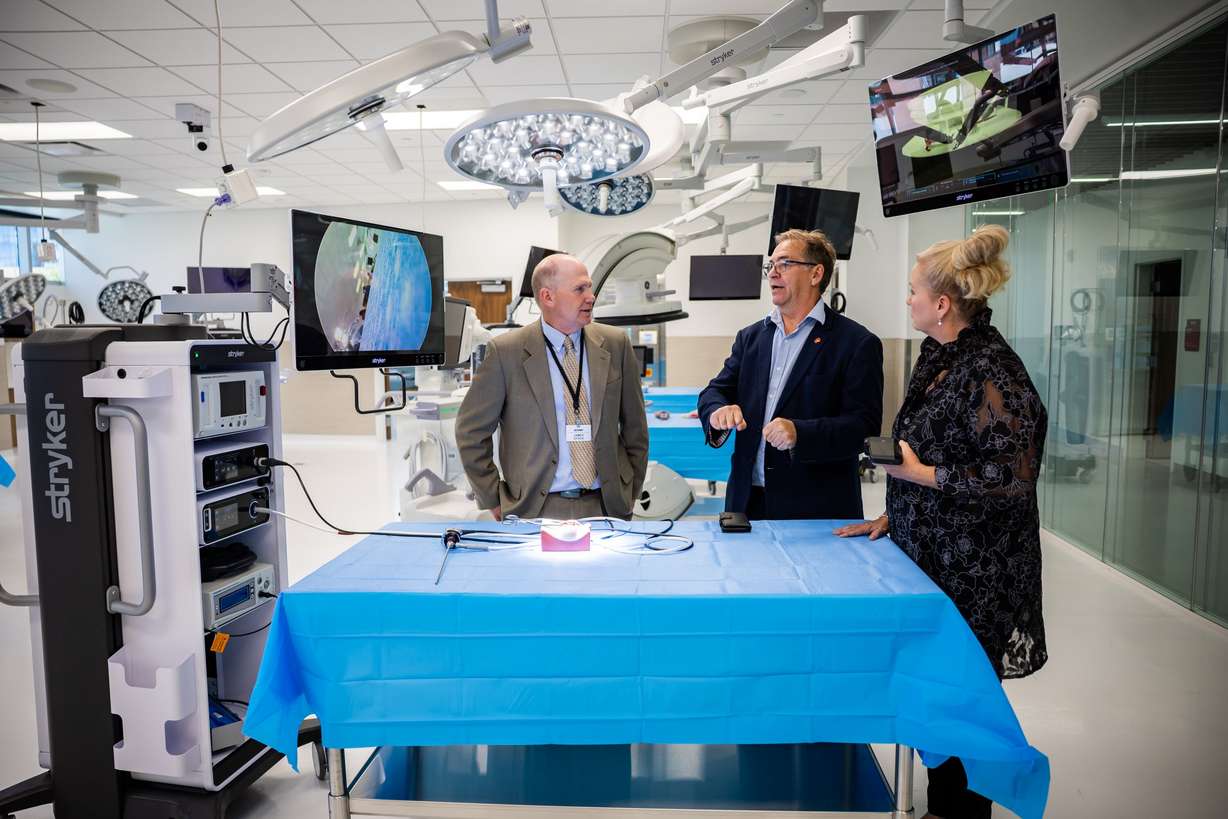
The third floor is among the building's most exciting features. The ASCENT surgical lab is set up like a series of operating rooms, where doctors, faculty, staff and students can experiment and evaluate or refine new medical technologies and procedures "in a hands-on real-work training environment," as the center's background material states. It is not a space where actual patients will be treated, but rather a place where fresh and frozen body samples can be used.
The lab has been called a "hidden gem" and features 10 operating bays, advanced imaging, live video streaming and space for clinicians, engineers, startups and others to team up in real time to test surgical tools, train on new devices and talk through problems.
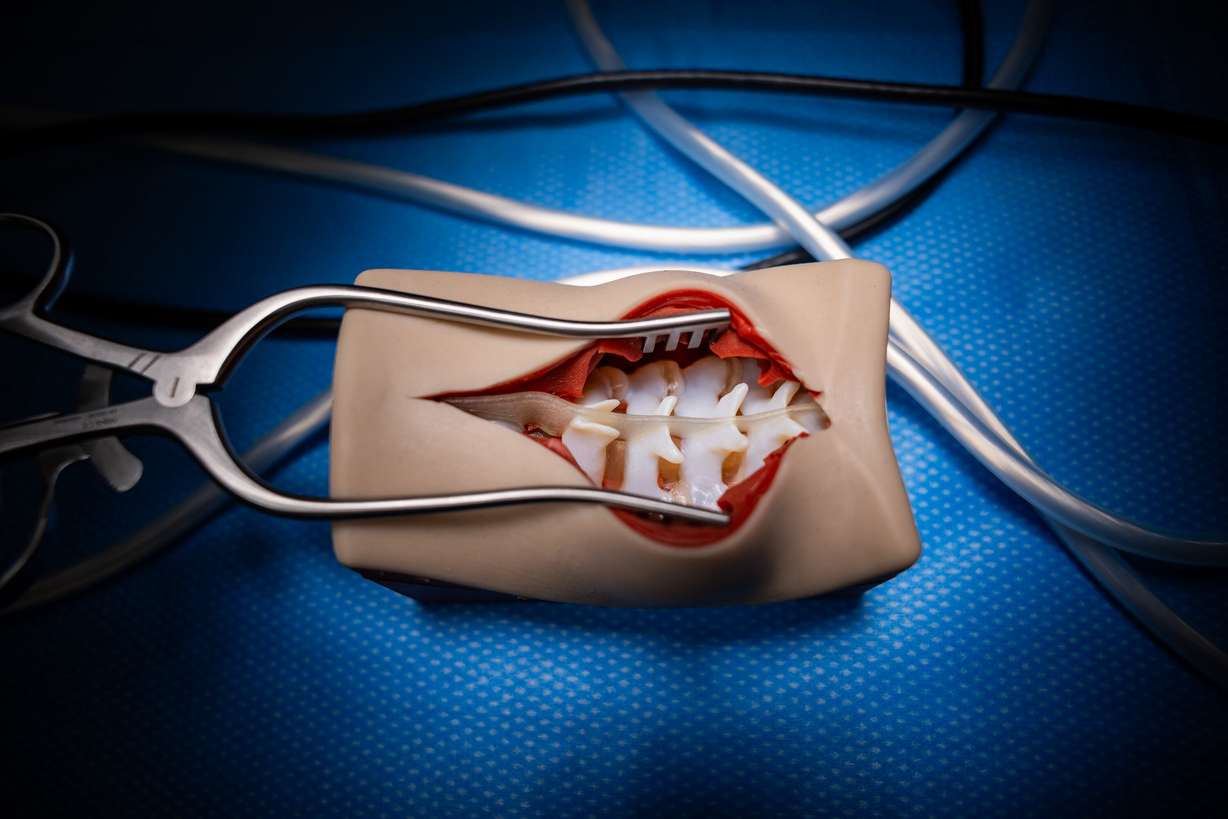
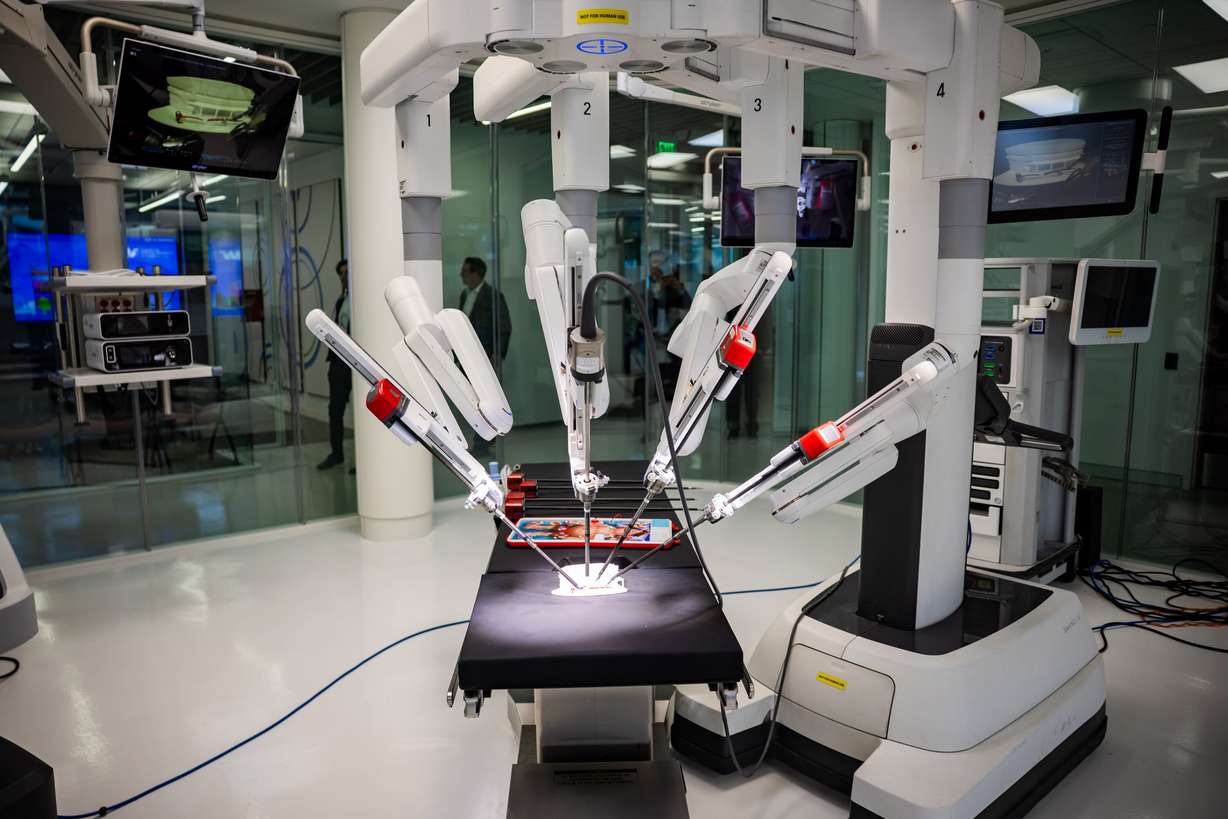
Tuesday, in the lab, Fusetec was showing off a 3-D printed model of a spine segment, laid open to reveal its structure, while some guests were looking through the Da Vinci robot's viewing system and others were admiring the below-skin view of a very realistic-looking human foot.
'Different, unique and better'
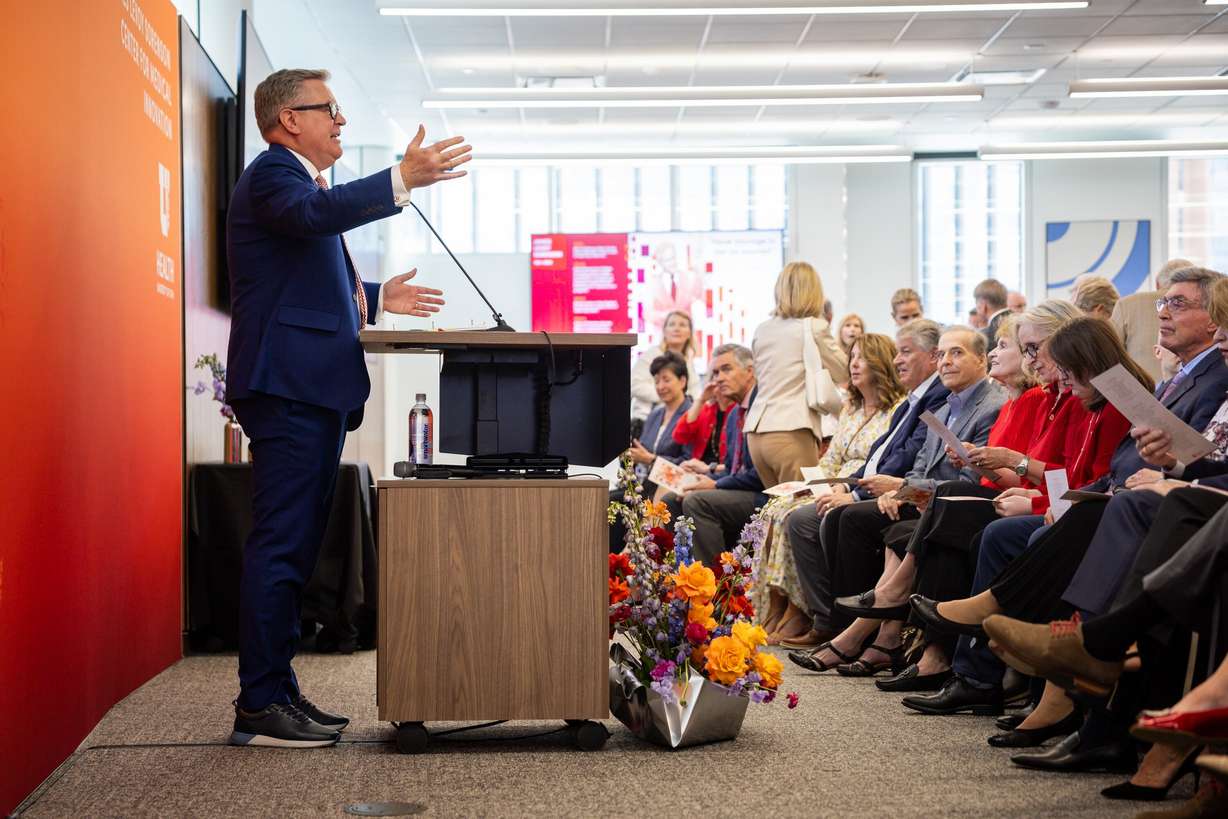
Mark Paul, the executive director of the center, called the center itself "different, unique and better" than innovative centers he's seen in the U.S. and abroad. Planning the center took two-and-a-half years, and it was designed with the "audacious goal" of creating something no one else has. Paul said that the man the building is named for would have loved it, because he was an innovator himself.
James LeVoy Sorenson devised numerous medical devices and held more than 50 patents at the time of his death in 2008. He invented a type of disposable face mask and disposable venous catheter, among other innovations. Many members of his large extended family attended the dedication, and Paul told them, "I think your dad would love this building. This would have been a dream."
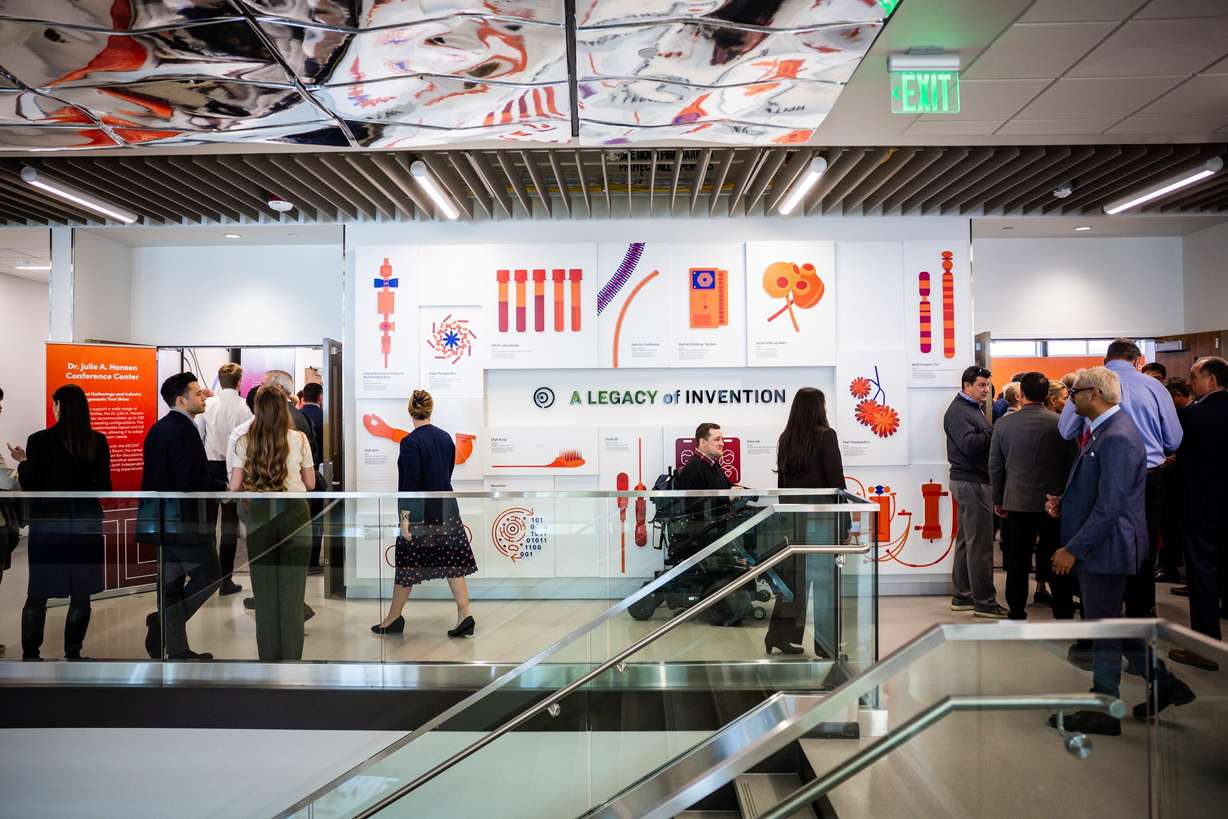
One of the goals is for a combination of collaboration, technology and creativity to "address pinch points" of medical startups and make it easier and faster to get well-thought-out ideas to market where they can meet human needs and help heal patients.
Paul noted Utah has a rich research and innovation environment that includes 1,600 life science companies, not to mention an airline hub nearby to ship things around the world. It is also home to what he called "an entrepreneurial spirit."
With so many important pieces of the innovation pipeline under one roof, one could simply run downstairs and 3-D print a missing piece or alter a tool, for example, testing modifications or ideas in near-real time, Paul said. The 3-D printers are so state-of-the-art amazing, he said, they can print chain mail, springs, hinges, doorknobs and, of course, medical devices and parts.
'Light up the world'

Innovation is grounded in creativity, University of Utah President Taylor Randall said, noting some of the most exciting conversations to be had start with "what are you working on." People light up, he said, when they are excited by their work, and what happens in this building could light up the world, he predicted.
Dr. Bob Carter, the neurosurgeon who is also the CEO of the entire University Health system, said he believes the school is earning a reputation as a research and innovation university. It is, he said, "a buzzword with real meaning."
That reputation is not new, though it is growing. The BRCA breast cancer gene was identified at the university. The first artificial heart was made at the university. The LUKE arm which allows someone to control the artificial limb with thoughts and the Utah array that provides a neural interface all are rooted in work that occurred at the university, as are many other inventions and innovations.
The University of Utah, Carter said, has a "culture of collaboration and discovery" and fosters an environment where ideas can move quickly through a pipeline, with expert advice on the business side as well. He called the center "an exciting innovation hub."
He said he is excited about "the co-creation."
After the ribbon was cut, Paul, the center executive director, joked, "It's gotta be the most expensive ribbon cutting in history," given the price of the Da Vinci robot. And perhaps the most innovative.