- Electrolyte supplements are often unnecessary; most people get enough from their diet.
- Sports dietitian Ashley Hagensick advises using supplements only for intense exercise.
- Excessive electrolytes can lead to health issues like high blood pressure and kidney damage.
MURRAY — From powders to sports drinks, electrolytes are marketed everywhere. However, experts say most people get enough naturally, and adding extra can actually be risky.
Your body does need electrolytes — minerals like sodium, potassium and magnesium that support everything from muscle function to hydration. While they're usually sufficient in a normal diet, electrolytes can also be helpful when your body is losing fluids due to illness, heat or intense exercise. But problems can occur not only when levels drop too low, but also when they get too high.
"You really don't need to supplement electrolytes if you're not exercising," said Ashley Hagensick, a sports dietitian with Intermountain Health.
For the average person, water is usually enough, she said, and electrolyte supplements should be used as a tool, not a daily habit.
"As a sports dietitian, we talk about the three H's: If it's hot, if it's high intensity and if it's over an hour, that's when you want to utilize a sports drink," Hagensick explained.
Electrolytes can also come from food, like salty snacks. However, if you do reach for a sports drink, be sure to check the label.
"It's just important to know what is actually recommended versus what's in the product," Hagensick said.
Experts recommend about 100 to 200 milligrams of sodium per 8 ounces. Some popular packets can contain more than double that amount.
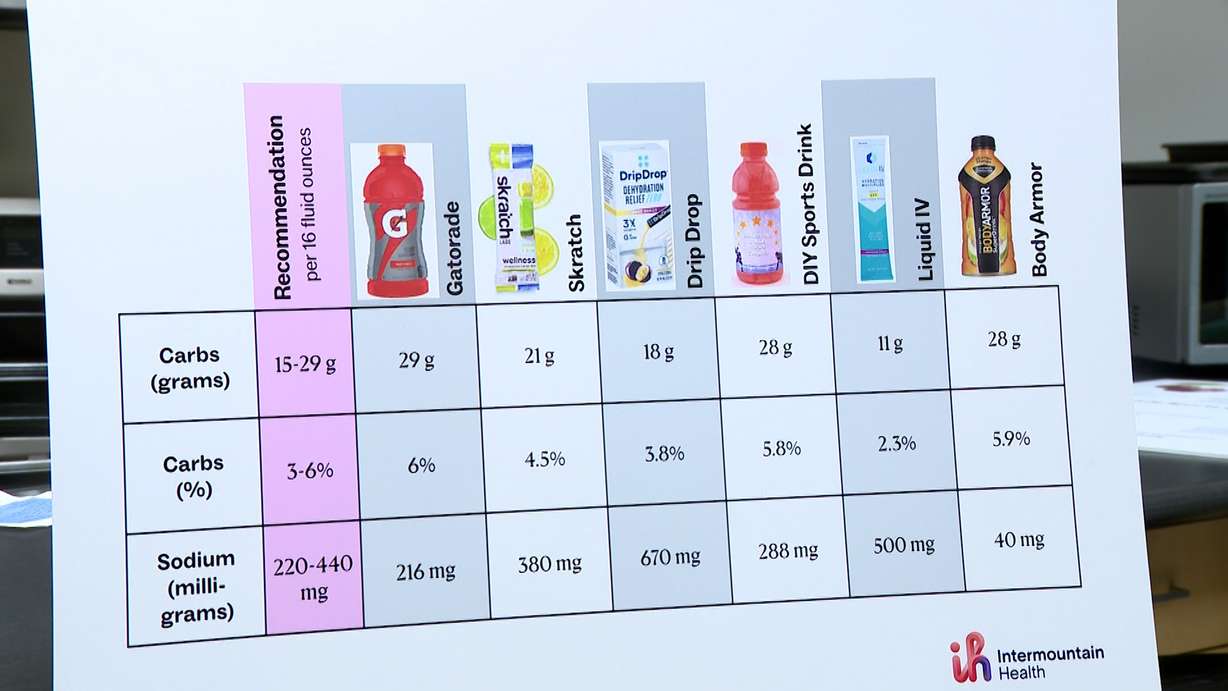
Too much sodium or added minerals may increase the risk of high blood pressure, cardiovascular problems and even kidney damage over time. Electrolyte imbalances can also cause symptoms such as muscle weakness, spasms, cramping, fatigue, confusion, irritability and irregular heartbeats.
"It's important that people aren't just drinking the sports drinks while they're sitting on their couch because they'd rather have that as a flavored beverage option," Hagensick said.
Hagensick said choosing the right approach, whether it's a packet or a homemade electrolyte mix, starts with knowing your body and your needs.
"Hydration is really individualized to what you're doing, how intensely you're exercising, how fit you are, and what your sweat rate is," she said.
Homemade electrolyte drink
Hagensick said you can also make your own electrolyte drink at home for longer or intense workouts:
Ingredients:
- 1/4 cup hot water
- 1/4 cup sugar
- 1/4 teaspoon salt
- 1/4 cup orange juice (not from concentrate)
- 2 tablespoons lemon juice
- 3 1/2 cups cold water
Directions:
- Add hot water to a pitcher.
- Stir in sugar and salt until dissolved.
- Add the juices and remaining cold water.
- Chill for 30 minutes.
Note: This homemade mix is intended for use during long or high-intensity exercise, not as an everyday beverage.

Photos
Related stories
Most recent Your Life - Your Health stories
Related topics
 Emma Benson