'%3e%3cpath%20d='M34.1406%205.85938C30.3906%202.10547%2025.3047%200%2020%200C14.6953%200%209.60938%202.10547%205.85938%205.85938C2.10938%209.61328%200%2014.6953%200%2020C0%2025.3047%202.10547%2030.3906%205.85938%2034.1406C9.61328%2037.8906%2014.6953%2040%2020%2040C25.3047%2040%2030.3906%2037.8945%2034.1406%2034.1406C37.8906%2030.3906%2040%2025.3047%2040%2020C40%2014.6953%2037.8945%209.60938%2034.1406%205.85938ZM37.0117%2023.543H31.1602V13.5391H27.6328V19.9414C28.1211%2020.6914%2028.3711%2021.582%2028.3711%2022.5625V22.625C28.3711%2023.668%2028.1172%2024.6055%2027.6328%2025.4297V26.6094H36.082C33.4883%2032.9375%2027.2891%2037.3789%2020.0039%2037.3789C10.3711%2037.3789%202.62109%2029.6289%202.62109%2020C2.62109%2010.3711%2010.3711%202.62109%2020%202.62109C29.6289%202.62109%2037.3789%2010.3711%2037.3789%2020C37.3789%2021.1484%2037.2617%2022.2656%2037.0508%2023.3477C37.0391%2023.4141%2037.0234%2023.4766%2037.0117%2023.543Z'%20fill='white'/%3e%3cpath%20d='M22.3086%2018.5352C20.4336%2018.125%2019.9531%2017.8398%2019.9766%2017.1836V17.1406C19.9766%2016.6992%2020.3477%2016.2148%2021.4023%2016.2148C22.582%2016.2148%2023.8867%2016.6797%2025.0781%2017.4766L26.8516%2015.0195C25.4453%2013.8906%2023.707%2013.3398%2021.5547%2013.3398C18.5195%2013.3398%2016.4375%2015%2016.4063%2017.4766V17.5352C16.3633%2020.2617%2018.5859%2020.9805%2021.293%2021.6016C23.0391%2021.9766%2023.5703%2022.3164%2023.5703%2022.9609L23.5469%2022.9766C23.5469%2023.3906%2023.2578%2023.7031%2022.7852%2023.8359C22.5742%2023.9062%2022.1289%2023.9727%2021.5156%2023.9727C20.7617%2023.9727%2019.7539%2023.8633%2018.6328%2023.4844C18.0898%2023.2891%2017.4727%2023.0039%2016.8047%2022.6133L20.1406%2026.625C20.2813%2026.6602%2021.0977%2026.8516%2021.7734%2026.8516C25.0039%2026.8516%2027.0859%2025.2461%2027.1094%2022.6328V22.5703C27.1602%2020.1133%2025.2148%2019.1719%2022.3086%2018.5352Z'%20fill='white'/%3e%3cpath%20d='M5.24219%2013.5664V26.6133H8.75391V23.7578L10.2969%2021.9531L14.2031%2026.6133H18.3867L12.3555%2019.5195L17.4023%2013.5664H13.4531L8.75391%2019.0586V13.5664H5.24219Z'%20fill='white'/%3e%3c/g%3e%3cdefs%3e%3cclipPath%20id='clip0_97_2430'%3e%3crect%20width='40'%20height='40'%20fill='white'/%3e%3c/clipPath%3e%3c/defs%3e%3c/svg%3e)


- The Utah Legislature has addressed environmental issues, including Colorado River litigation and water rights this session.
- HB157 prepares Utah for potential Colorado River litigation as agreements will expire 2026.
- HB546 asserts state jurisdiction over federal lands, while HB187 protects long-unused water rights.
SALT LAKE CITY — Though saving the Great Salt Lake has dominated public discourse this year during Utah's Legislature, it is not the only thing the state's governing body is trying to do about the water, land and the environment.
From protecting miners to figuring out who should have jurisdiction over federal lands, the Utah Legislature has been busy.
Here are a handful of bills with serious teeth.
Utah preps for Colorado River litigation
HB157 — With the future of Utah's Colorado River water allocations up in the air, the state appears to be preparing itself for litigation with other basin states.
Rep. Rex Shipp, R-Cedar City, and Sen. Keven Stratton, R-Orem, have proposed HB157, which includes a provision that the state's Department of Natural Resources can fund general litigation, if it's related to Utah's interests in water.
Current Colorado River agreements phase out at the end of 2026, and the most likely scenarios are a short-term agreement or litigation that goes directly to the Supreme Court.
All basin states will likely have to cut back on their water consumption, since original allocations were set too high.
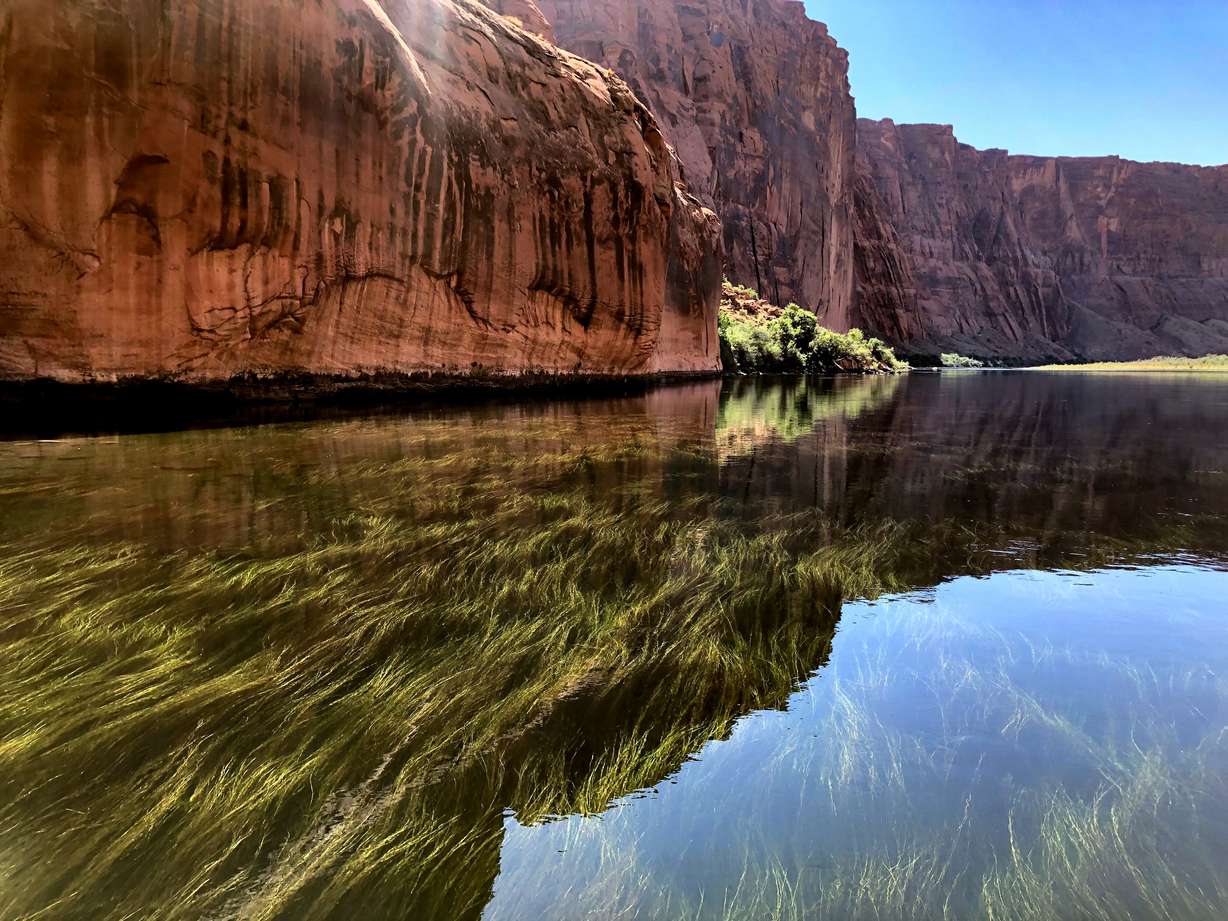
The 1922 Colorado River Compact designated 7.5 million acre-feet of water to the Upper Basin (Colorado, Utah, Wyoming and New Mexico) and 7.5 million acre-feet of water to the Lower Basin (California, Nevada and Arizona). Then in 1944, the federal government allocated an additional 1.5 million acre-feet of water annually to Mexico.
Annual flows in the last 2½ decades have averaged around 12.4 million acre-feet.
State vs federal jurisdiction of lands in the state of Utah
HB546 — About 35 million acres, or 64%, of the state of Utah is federally owned. This bill, sponsored by Rep. Ken Ivory, R-West Jordan, and Stratton, focuses on the state's jurisdiction over federally owned public lands in the state.
In a conversation with the Deseret News, Ivory said the bill does not attempt to transfer land ownership from the federal government to the state.
It is instead based on the "Eisenhower Study," which categorized federal land into several jurisdictional statuses.
The bill says the vast majority of federally owned land in Utah is held under "proprietorial interest only," which means the federal government doesn't have legislative jurisdiction. This acknowledgement gives Utah the right to regulate the land.
"The bill is to take that information that's already done, then map it over the state and measure, monitor, report on the access, health and productivity of the land," Ivory said.
He added, "It's an important issue, because we in Utah have a very genuine stake in the health of the land, the access to the land, the productivity of the land. ... The first step is to gather the data and then we go from there."
Ivory's bill passed 51-15 in the state's House of Representatives on Thursday night.
Protections to Utahns' water shares
HB187 — In Utah, if you don't use your water rights for seven years, you can legally lose them. This bill, sponsored by Sen. Don Ipson, R-St. George, and Rep. Colin Jack, R-St. George, ensures Utahns can keep control of their water even after long periods of no use.
Jack said the bill "gives water conservancy districts the water rights they're going to need in the future without needing to develop them immediately."
This is especially applicable to people in Jack's own district in St. George. The idea for the bill came, after city managers approached Jack with the issue.
"We're changing a law to meet the needs of these high-growth areas," he said. "The one underlying message is that here in the entire state of Utah, water is a huge deal."
After being passed in the House and Senate, HB187 went to the governor to be signed on Thursday.
Permanent legal framework for water leasing
HB348 and HB410 — These bills would create a legal framework for farmers to lease their water rights to the Colorado River system reservoirs and the Great Salt Lake, respectively.
This year's water-leasing bills are an extension of a bill passed in 2020. Currently, farmers can sell their water to the state for about $300 per acre. The state, in addition to the money, promises to divert the water into the Great Salt Lake.
Related:
These 3 Great Salt Lake-related bills pass their first test. Here's how they'd help the lake
A trio of Great Salt Lake-related bills passed through a House of Representatives committee with glowing reviews. All three would help get more water to the lake, their sponsors say.One of the bill's sponsors, Sen. Scott Sandall, R-Tremonton, said the water "won't stay in the reservoir. It has to be water that's delivered."
Taxpayers foot the bill to pay farmers for their water, unless a philanthropist steps in with donations, Sandall said.
He added that the bill is "not meant to be disruptive." Agriculture producers "will have the opportunity to choose voluntarily to leave their water in the stream and not irrigate their crops as much."
Protecting mining from environmental lawsuits
HB419 — This bill, signed, will return the state of Utah to a decade-long law that protected coal mining from environmental lawsuits.
Currently, if someone challenges an environmental coal mining permit in the state, they don't have to post a bond. If passed, coal mining permit challenges would be treated the same as other environmental permit challenges.
At the end of 2024, the outgoing Biden administration complied with environmentalists' requests to change that specific Utah law, Jack explained. So in 2025, he and Sen. David Hinkins, R-Ferron, changed Utah's law to comply with President Biden.
"That went for a couple months until the Trump admin overturned Biden's order," Jack told the Deseret News. "Now that it's overturned, we had to wait for this session and undo the change we made in 2025. We put it back to the way it was in 2014 when Rep. Noel put the law in the first place.
HB419 also went to the Cox's desk to sign on Thursday.