- GLP-1 medications, initially for diabetes, now aid weight management and mental health.
- Experts caution GLP-1s aren't a one-size-fits-all; mental health impacts vary.
- Users report benefits like energy boost but face potential side effects and costs.
SALT LAKE CITY — Alexis Ioane wasn't sure about hopping on the GLP-1 train.
"At first, it was something that I was embarrassed to talk about," she said. "People kind of look at it as, 'Oh, you're doing it the easy way.'"
But after having two kids and struggling with high blood pressure, her doctor suggested the weekly injection.
Despite her dislike for needles, she started tirzepatide, a GLP-1 receptor agonist, two months ago. Although she experienced extreme fatigue at first, she said she's already noticed a drop on the scale and feels better overall.
"I have a lot more energy for my kids. I have a lot more motivation. My mind is a lot clearer, too," she said.
GLP-1s were first approved in 2005 for the treatment of Type 2 diabetes. Over the past two decades, more versions of the medication have hit the market, becoming more accessible to patients and used for a wider range of health concerns, including weight management. Just last month, a pill version of Wegovy (semaglutide) was released, offering an alternative to weekly injections.
As demand grows, surveys show roughly 1 in 8 Americans have tried a GLP-1 medication.
Experts say for many, GLP-1s can be life-changing, but they're not a one-size-fits-all solution, and mental health should be part of the conversation.
"I'm really conflicted about these medications," said Dr. Kristin Francis, a psychiatrist with Huntsman Mental Health Institute. "On one hand, we're being asked to have this idealized body type in our society, and on the other hand, we're being shamed if someone gets to it."
While some studies show improvements in mood, Francis noted others suggest a potential increased risk of anxiety or depression, particularly for those with pre-existing conditions.
Many initial trials for GLP-1s excluded participants with a history of major depressive disorder or any significant psychiatric conditions.
"We just don't have enough information yet," Francis said. "We would say you need to proceed with caution and keep a good eye on your depressive and anxious symptoms."
Francis also noted that those with eating disorders can be a lot more vulnerable.
"Now there is a medication that can essentially change your weight and shape pretty quickly, and that definitely reinforces those eating disorder thoughts," she said.

The average person can lose between 15% and 25% of their body weight while on a GLP-1. GLP-1s like Ozempic, Wegovy and Zepbound can range from around $150 to more than $1,000 per month, depending on dosage, formulation and insurance coverage.
"You cannot believe the psychological impact of losing that weight," said Dr. Steve Warren, medical director at Regenerative Wellness Center. "They suddenly get confidence in themselves. They feel better. They work better at work."
Warren explained GLP-1s mimic a natural hormone that regulates appetite and blood sugar.
"So basically, it's just that signal to say to your body, 'Hey, I'm full, I don't need any food,'" he said.
The potential side effects, like nausea, vomiting, constipation, and muscle or hair loss, aren't for everyone and in some cases can be debilitating. GLP-1s are also associated with a low but increased risk of pancreatitis.
Warren emphasized these drugs are a tool — not a replacement — for healthy habits, and should be used under close medical supervision to monitor dosing and side effects.
"Nothing's going to be the magic pill to lose weight," he said. "You've got to put some work into it."
Erykah Tuakimoana knows that firsthand — as she's paid more attention to her eating habits and strength training while on a GLP-1 medication.
"This isn't a quick fix; you have to change your lifestyle as well," she said.
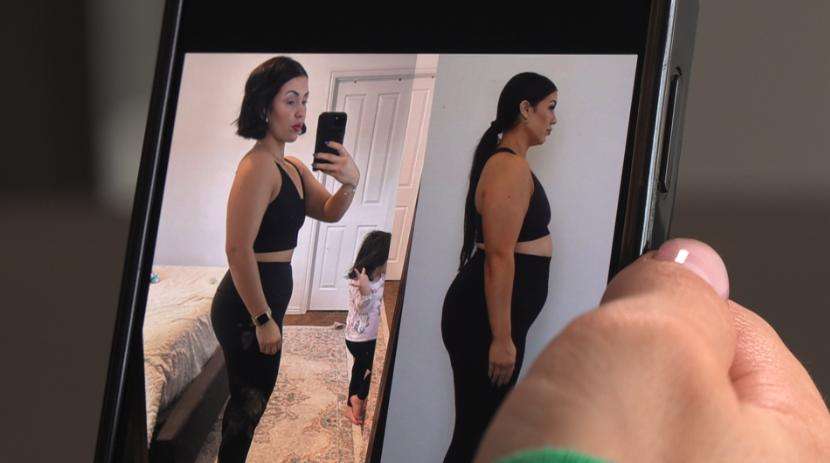
After having her third baby, bloodwork showed Tuakimoana's insulin levels were off, and she was borderline diabetic. "My body just was not changing and responding to literally anything," she said.
She started a GLP-1 and has gradually lost more than 100 pounds over the last three years.
"I feel like I have become a better version of myself," she said. "I never wanted my kids to feel like mommy needed to change the shape of her body, because I was bigger — I just needed to be healthier."
Tuakimoana said the medication has helped quiet her "food noise."
"I grew up constantly thinking about food. I was thinking about what my next meal was going to be, and the second I was eating, I was thinking about what my next meal was going to be on top of that," she said. "It really just keeps that food noise at bay."
That suppressed food noise is something experts are taking note of.
"We're seeing something similar in alcohol and substance use as well, that it's quieting those cravings, quieting that pull towards use," Francis said. "Researchers are looking at how we would dose these medications to help someone be more successful in their sobriety."

And as Ioane begins her weight loss medication journey, her goal is to look beyond the scale — it's about feeling healthier, stronger and being more present for her family.
"I'm doing it for my kids and for myself — I want to go out and run with them and play with them," she said. "It's not just a goal weight, but goal health."
While GLP-1s can be a powerful tool for weight loss and metabolic health, experts say they are not a shortcut — and should always be taken under medical guidance, as monitoring both body and mind is key.

Most recent Health stories
Related topics
 Emma Benson