- President Donald Trump urged Republicans to pass Utah Sen. Mike Lee's voter ID bill during the State of the Union on Tuesday.
- Lee's bill still faces hurdles, including a Senate filibuster and government funding issues.
- Utah's HB209 mirrors the SAVE Act, and it is awaiting a final Senate vote.
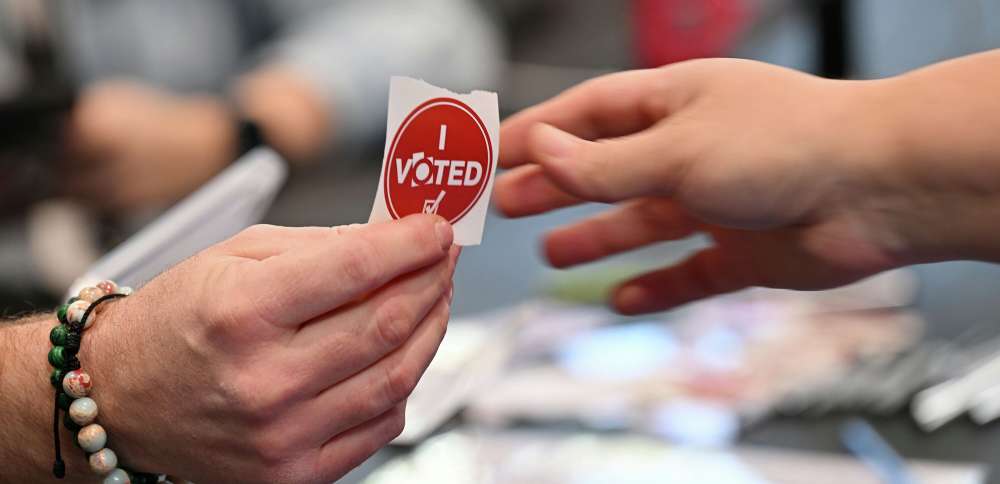
SALT LAKE CITY — President Donald Trump sent a jolt of energy through conservative Republicans during the State of the Union on Tuesday evening as he implored the majority party to pass stronger voter identification laws and proof-of-citizenship requirements.
But the reality of mustering those changes through Congress is much more complicated beneath the surface.
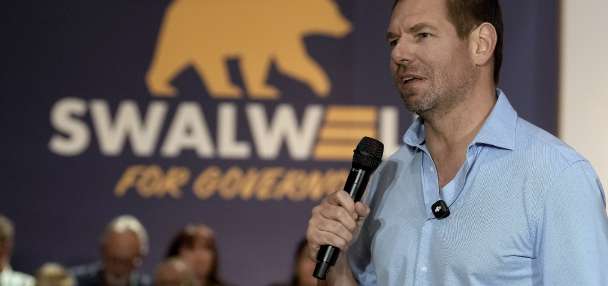
Partway through Trump's hour-and-47-minute address to lawmakers, the president used the spotlight to implore Republicans to pass the SAVE America Act to establish stricter guardrails for voting in federal elections. The bill is being spearheaded by Utah Sen. Mike Lee, who has recently launched a pressure campaign online pressuring GOP leaders in the Senate to schedule a vote.
"The cheating is rampant in our elections — it's rampant. It's very simple: all voters must show voter ID; all voters must show proof of citizenship in order to vote," Trump said in his speech. "And no more crooked mail-in ballots except for illness, disability, military, or travel — none. And this should be an easy one, by the way, it's polling at 89% including Democrats!"
The remarks prompted a standing ovation from the Republican side of the chamber, many of whom were hoping the president would endorse the bill during his prime-time address. Lee and other conservative Republicans behind the legislation have been relying on Trump's public support of the measure to ensure a vote.
Lee told the Deseret News the president's remarks have "helped generate additional interest and additional enthusiasm" among Republican ranks. However, the Utah Republican acknowledged the question remains on "how we're going to go about it."
"We got a lot of work to do, but I'm encouraged by a number of things, including the president's remarks last night," Lee said.
Senate Majority Leader John Thune, R-S.D., reiterated his support for the legislation to reporters, but appeared to temper expectations about when its passage could become reality.
"In terms of the timing, we can't do it while we're trying to fund the government, because you can't pivot back and forth," Thune said, referring to the ongoing shutdown of the Department of Homeland Security that stretched into its 11th day on Wednesday.
Lee similarly conceded the partial shutdown must be addressed, noting he has been under the assumption "we have to get that done before we turn to this."
Related:
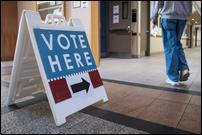
Mike Lee's SAVE Act gains momentum in Congress as he adds photo ID requirements
Sen. Mike Lee, R-Utah, is adding stricter requirements to his election security bill that would ban noncitizens from voting in federal elections as nearly every Republican senator has signed on to co-sponsor the legislation.Another obstacle standing in Republicans' way: the Senate filibuster.
Under Senate rules, most legislation is subject to what is known as the filibuster. Those Senate requirements were updated in 1917 to allow for an alternative route known as invoking cloture, which would allow senators to vote on ending debate so long as they had significant support — which requires 60 votes under current rules.
Cloture has since become the norm in the Senate because it expedites voting schedules, although it often requires a bipartisan vote to pass any one piece of legislation. That's effectively halted Lee's SAVE America Act from being considered, as Democrats are staunchly opposed.
Instead, Lee has been pushing to revive what is known as the talking filibuster, which would require opposing senators to be present on the floor and actively talking in order to stall a vote.
"I've done my homework very thoroughly on this," Lee said. "That is not to say that nobody has concerns with it, but those concerns deal more with time demands and uncertainty about how long it would take and exactly what might be the outcome ... because this is a muscle that hasn't been flexed by the Senate in a long time."
The Utah senator has been engaged in conversations with both the White House and Senate GOP leadership to utilize that strategy, although there doesn't appear to be consensus.
"The talking filibuster issue is one on which there is not … a unified Republican conference, and there would have to be, if you go down that path," Thune said.
That's because, the top Senate Republican said, the talking filibuster opens the door to unlimited amendment votes that would eat up weeks of floor time — stalling action on other legislation. It would also require something that has become increasingly rare on Capitol Hill: unanimous votes across the Republican conference.
"You're talking about the need to table what are going to be numerous amendments and an ability to keep 50 Republicans unified pretty much on every single vote," Thune said. "And there's just not, there isn't support for doing that."
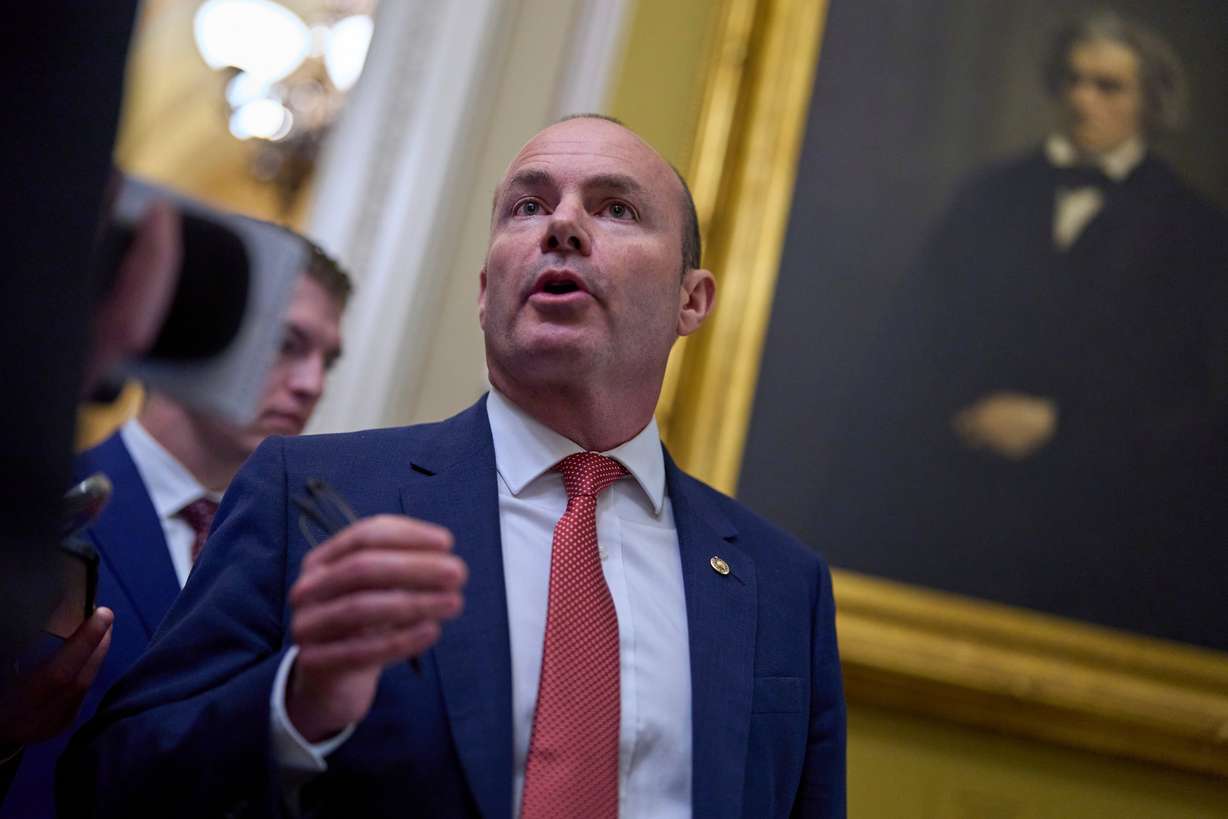
Lee has engaged in a weekslong campaign to educate his fellow Republican senators on the talking filibuster, hoping to ease concerns and convince members to embrace the alternative strategy.
But there's skepticism about even invoking the talking filibuster as some senators — including Utah's junior senator, John Curtis — have said they don't support changes to the chamber rules.
"For those concerned in the House, I also oppose skirting around the filibuster," Curtis said in a post on X earlier this month. "We need to pass our conservative agenda, but not at the expense of our institutions."
Meanwhile, Utah is advancing its own version of the SAVE Act in its ongoing state legislative session. HB209 mirrors a process in a handful of other red states that would create a process for county clerks to verify documentary proof of U.S. citizenship to vote in state elections. The bill has passed the Utah House and is waiting for a final vote in the Senate.