'%3e%3cpath%20d='M34.1406%205.85938C30.3906%202.10547%2025.3047%200%2020%200C14.6953%200%209.60938%202.10547%205.85938%205.85938C2.10938%209.61328%200%2014.6953%200%2020C0%2025.3047%202.10547%2030.3906%205.85938%2034.1406C9.61328%2037.8906%2014.6953%2040%2020%2040C25.3047%2040%2030.3906%2037.8945%2034.1406%2034.1406C37.8906%2030.3906%2040%2025.3047%2040%2020C40%2014.6953%2037.8945%209.60938%2034.1406%205.85938ZM37.0117%2023.543H31.1602V13.5391H27.6328V19.9414C28.1211%2020.6914%2028.3711%2021.582%2028.3711%2022.5625V22.625C28.3711%2023.668%2028.1172%2024.6055%2027.6328%2025.4297V26.6094H36.082C33.4883%2032.9375%2027.2891%2037.3789%2020.0039%2037.3789C10.3711%2037.3789%202.62109%2029.6289%202.62109%2020C2.62109%2010.3711%2010.3711%202.62109%2020%202.62109C29.6289%202.62109%2037.3789%2010.3711%2037.3789%2020C37.3789%2021.1484%2037.2617%2022.2656%2037.0508%2023.3477C37.0391%2023.4141%2037.0234%2023.4766%2037.0117%2023.543Z'%20fill='white'/%3e%3cpath%20d='M22.3086%2018.5352C20.4336%2018.125%2019.9531%2017.8398%2019.9766%2017.1836V17.1406C19.9766%2016.6992%2020.3477%2016.2148%2021.4023%2016.2148C22.582%2016.2148%2023.8867%2016.6797%2025.0781%2017.4766L26.8516%2015.0195C25.4453%2013.8906%2023.707%2013.3398%2021.5547%2013.3398C18.5195%2013.3398%2016.4375%2015%2016.4063%2017.4766V17.5352C16.3633%2020.2617%2018.5859%2020.9805%2021.293%2021.6016C23.0391%2021.9766%2023.5703%2022.3164%2023.5703%2022.9609L23.5469%2022.9766C23.5469%2023.3906%2023.2578%2023.7031%2022.7852%2023.8359C22.5742%2023.9062%2022.1289%2023.9727%2021.5156%2023.9727C20.7617%2023.9727%2019.7539%2023.8633%2018.6328%2023.4844C18.0898%2023.2891%2017.4727%2023.0039%2016.8047%2022.6133L20.1406%2026.625C20.2813%2026.6602%2021.0977%2026.8516%2021.7734%2026.8516C25.0039%2026.8516%2027.0859%2025.2461%2027.1094%2022.6328V22.5703C27.1602%2020.1133%2025.2148%2019.1719%2022.3086%2018.5352Z'%20fill='white'/%3e%3cpath%20d='M5.24219%2013.5664V26.6133H8.75391V23.7578L10.2969%2021.9531L14.2031%2026.6133H18.3867L12.3555%2019.5195L17.4023%2013.5664H13.4531L8.75391%2019.0586V13.5664H5.24219Z'%20fill='white'/%3e%3c/g%3e%3cdefs%3e%3cclipPath%20id='clip0_97_2430'%3e%3crect%20width='40'%20height='40'%20fill='white'/%3e%3c/clipPath%3e%3c/defs%3e%3c/svg%3e)



- BYU researchers studied aquarium noise impact on sharks at the Loveland Living Planet Aquarium.
- Hydrophones showed most noise doesn't penetrate tanks; low frequencies travel best underwater.
- Findings influenced a new tank design at Sam & Aline Skaggs Science Learning Center.
DRAPER — While many kids enjoy staring at the sharks swimming gracefully through the tanks at the Loveland Living Planet Aquarium in Draper, do the sharks enjoy it as well?
Some BYU researchers set out to find an answer to that question by studying how much the noise of the aquarium affects the aquatic inhabitants.
Around 1 million people visit the Draper aquarium each year, and with many of those attendees being young children, noise is sure to occur during visits. Facility managers make efforts to control visitor noise, but have not been able to accurately measure how much sound passes through the glass and water.
"While we have tools for measuring sound in the air, the behavior of sound underwater is totally different," said Ari Fustukjian, vice president of zoological operations at the aquarium. "We want to really understand how sound works in this space and interacts with the animals."
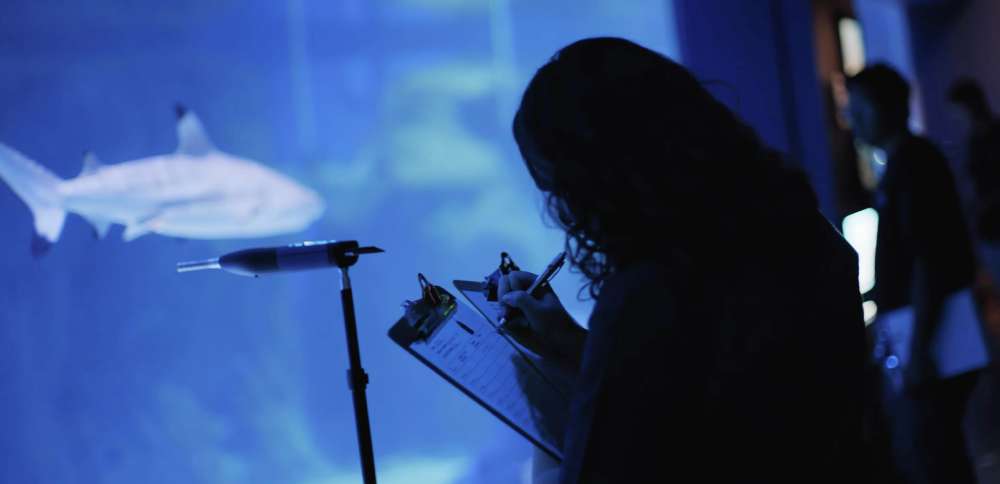
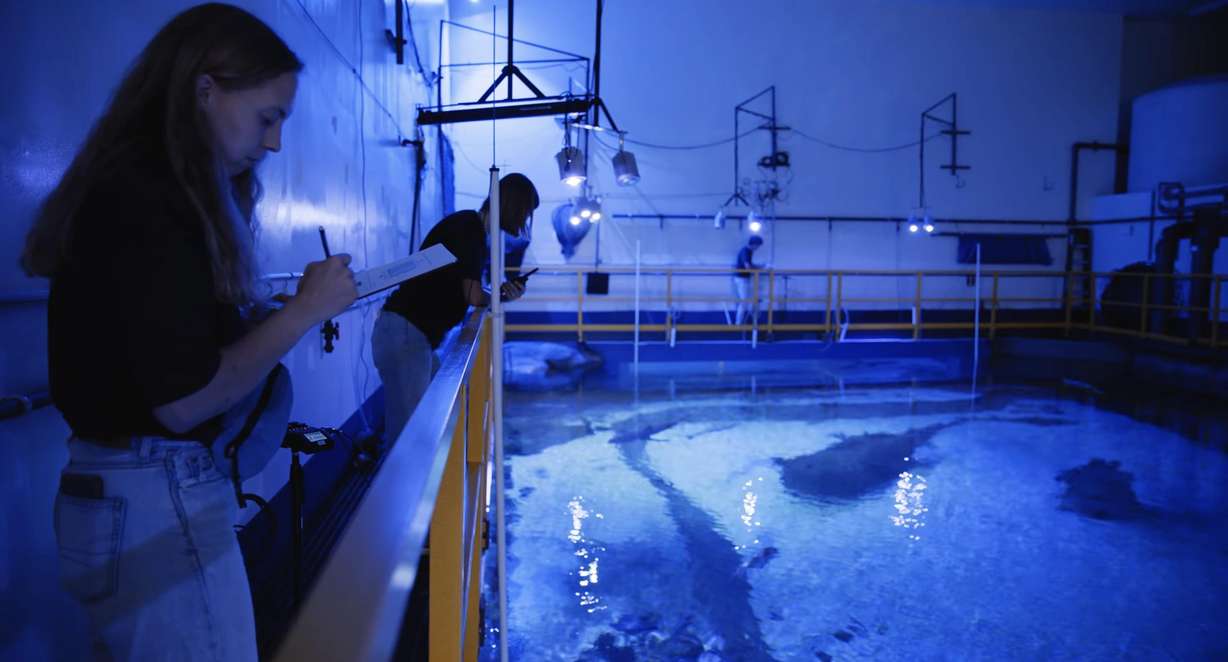
Professor Traci Neilsen and a group of student researchers set up specialized hydrophones in tanks to track the distance sound was traveling underwater. The researchers played different noises in the viewing area to test what sound traveled more than others, such as white noise and high-pitched chirps.
"A hydrophone is an underwater microphone. These were placed very close to the acrylic walls and then in the water. On the other side, we had sound level meters that were reading the level in the rooms that could then be compared to the levels in the tank," Neilsen explained.
The students faced many challenges in figuring out how to accurately measure the sound in the tanks. The hydrophones were attached to long stick so they could place them in the habitats, but as the sharks are usually fed in a similar manner with long poles, the students had to install them very slowly so the sharks wouldn't try to eat them, lead student researcher Madilyn Randall said.
Neilsen also joked that the longer the hydrophones were in the tanks, the more the sharks became curious, and they would start bumping them at times.
The data showed that while noise from the aquarium's viewing area and the tank's maintenance system does travel into the fish tanks, the sound levels remained in a healthy range for the animals.
"The interesting thing we found was only a small amount of the sound from the room is actually being transmitted. All of the rest of it is either being stopped by the acrylic or just dying out really fast in the water," Neilsen said.
The hydrophones predominantly picked up lower-frequency sounds rather than higher-pitched noises. Low-frequency sounds that traveled best through water lie within the same range as human speech and the sharks' natural hearing range, the researchers said.
Fish, the researchers explained, hear differently than humans. They "hear" with their whole body through a network of sensory cells that detect vibrations and movement in the water, the university said.
Sharks are even more sensitive to sounds with two different ways their body hears, making them the perfect animal to use in this research.
"With their unique hearing, sharks can detect animals in the water from miles away," Randall said. "Because of their heightened senses, they would be the first animals to key into any disruptive sounds."
The research helped guide the aquarium as it was building a new tank in the soon-to-open Sam & Aline Skaggs Science Learning Center.
"Our findings were a tool that the director of the aquarium was able to use in building a new, large tank in their new facility. He was able to use this as evidence that the filtration system in the new tank should be higher quality and have a lower background noise level," Neilsen said.
Randall said she enjoyed seeing how their scientific findings were immediately implemented to help the sharks.
Fustukjian said while the aquarium is glad it is maintaining safe noise levels for the animals, he is grateful for the insights so they can continue raising the standard of animal care.
"At our heart, we are an educational organization," Fustukjian said. "It is our mission to facilitate education and pursue scientific investigation. This type of scientific collaboration with groups like BYU is really the whole point."