- Sen. Luz Escamilla, D-Salt Lake City, proposed on Thursday to use liquor tax revenue to fund school lunches.
- SB180 suggests 20% of funds to be used for students below the 200% federal poverty level.
- The bill passed the Senate Education Committee unanimously, continuing to highlight commitment to food insecurity issues.
SALT LAKE CITY — One of the Legislature's ranking Democrats wants more Utah kids to enjoy a healthy school lunch with funds supplemented by the state's liquor tax revenue.
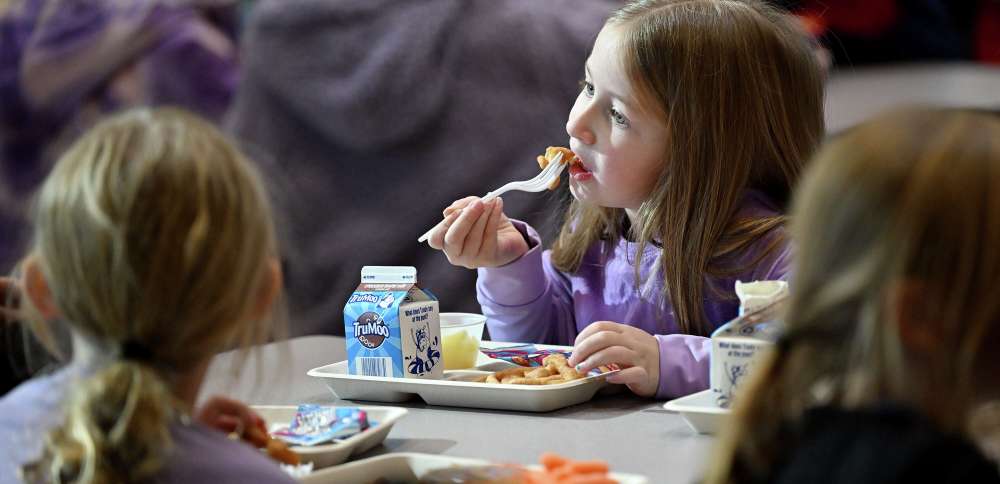
Senate Minority Leader Luz Escamilla, D-Salt Lake City, presented Senate Bill 180 on Thursday to the Senate Education Committee. Her proposed legislation calls for more of Utah's K-6 school children to receive free school lunch.
Currently, 10% of the revenue that Utah gleans in liquor taxes goes toward the Uniform School Fund and is used to support the school meals program.
Escamilla's bill calls for the state Board of Education to use at least 20% of the cash credited to the Uniform School Fund to pay for the lunches for students who would otherwise not qualify for reduced-price meals — but "whose family income is at or below 200% of the federal poverty level."
What does it mean to be within 200% of the poverty level? "In a family of four, that is $64,300 a year," said Escamilla.
SB180 would allow for the children in such families, she added, "to have access to food."
The committee voted unanimously to pass Escamilla's school lunch bill to the Senate floor.
Escamilla: 'It's hard to learn when you're hungry'
During Thursday's presentation, Escamilla said 10% of Utahns rank food insecurity as the most significant issue they are facing. "And that (figure)," she added, "looks bigger when it comes to kiddos."
It's essential that young children from low-income families — including those who may not meet the established eligibility threshold for free or reduced-cost meals — can still enjoy a healthy lunch each day in school.
Closing that cost gap would come with funds from the Uniform School Fund, with the rest to be drawn from Utah's Public Education Economic Stabilization Restricted Account — with a $5 million cap.
"We have hundreds of millions of dollars in (that account), " said Escamilla. "I think $5 million to invest in our children's ability to learn and to be able to not suffer hunger is a good investment."
The bill sponsor added that the state appears poised to dedicate a substantial amount of money for early literacy programs in Utah schools — an effort she supports.
"But it's really hard to learn when you're hungry," she said. "You can have the best teachers, educators and specialists — but if you're hungry, that makes learning really hard."
Keeping school kids well-fed has been an ongoing priority for Escamilla. Last year, she sponsored legislation that called for free school meals for every K-12 student enrolled in Utah's public schools.
While that "universal free school meals" push proved unsuccessful, it focused continued attention on food security issues in Utah schools.
Hunger prevention advocates embrace school nutrition bill
While education-related bills often prompt questions and debate among committee members, SB180 advanced without discussion from lawmakers.
During the public comment, Utahns Against Hunger child nutrition advocate Neil Rickard applauded the bill's efforts to enhance K-6 student access to school meals.
The "200% federal poverty level" population is one in proven need, he said.
"We see increased demand on food pantries around the state for people who are in this income category. … And we know that young kids are the ones for whom the impact of nutrition interventions are most impactful."
Tamra Watson from the Utah Association of Public Charter Schools said that the state's charter schools are becoming community hubs — "and with these hubs, we're seeing an increased demand for food pantries."
All across the state, Utahns are feeling the squeeze of inflation and food costs, added Watson.
SB180, she said, "is just a step in trying to meet community needs because we all need food, and that brings us together."

Most recent Utah Legislature stories
Related topics
 Jason Swensen





