- Northern Utah and northern Italy share Winter Olympic legacies but differ in geography.
- Utah's higher elevation creates a colder ski climate than Italy's lower-altitude regions.
- Milan's population vastly exceeds Salt Lake City's, highlighting differences beyond climate and geography.
MILAN — Northern Italy and northern Utah like to tell a familiar story about themselves. Both have welcomed the world before. Both will do it again.
And on the surface, the comparison feels natural: two mountain regions, two Winter Olympic legacies, two places that know what it means to host snow sports on a global stage.
But look a little closer and the similarities start to thin out fast.
On a map, Utah actually sits farther south than Italy's Winter Games footprint. Salt Lake City and Park City sit near 41 degrees north latitude. Milan is closer to 45 degrees north, while Cortina d'Ampezzo sits even higher, near 46 degrees. On latitude alone, you might expect February to feel roughly the same in both places.
It doesn't.
Elevation changes everything.
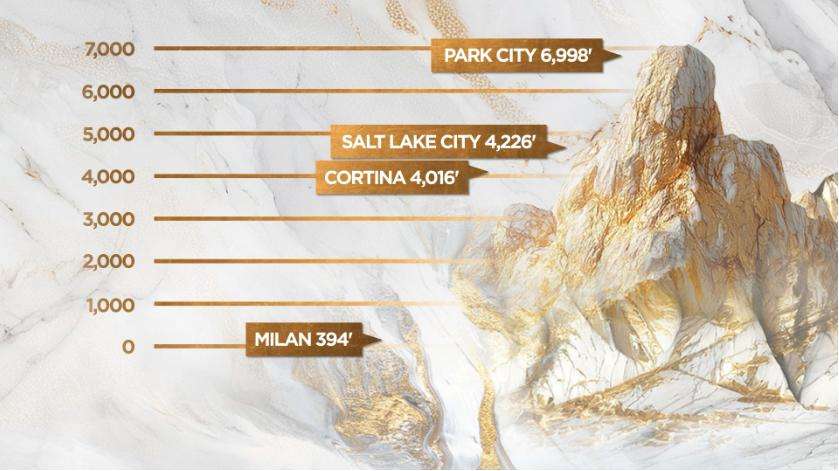
Cortina, home to many of the mountain events, sits at roughly 4,000 feet above sea level. Park City, by comparison, is closer to 7,000 feet. That's significantly higher, and a big reason Utah's ski climate feels the way it does.
Even away from the slopes, elevation tells a different story. Salt Lake City is still very much a mountain town at around 4,200 feet. Milan, where many of the indoor and non-snow events will take place, sits barely 400 feet above sea level.
That difference shows up fast when you step outside.
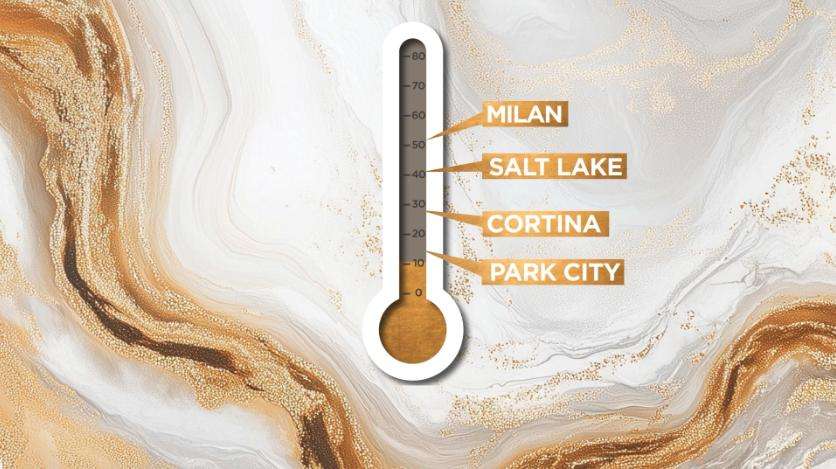
In February, Milan often reaches the low 50s, a temperature that would feel almost springlike to Utahns most Februarys. Salt Lake City typically lives in the 40s this time of year. Cortina and Park City, meanwhile, are cut from the same cold-weather cloth: daytime highs around 30, nighttime lows sinking into the teens.
Snowfall follows suit. Milan gets far less of it, thanks in part to its lower elevation and comparatively mild winter temperatures. Cortina, tucked into the Dolomites, feels much more familiar to anyone who has spent time in Park City.
Cortina is similar to Park City not just in climate, but in scale. Their populations are comparable, and both are accustomed to swelling with visitors during peak season.
Milan, on the other hand, is in a different universe than Salt Lake, with a population hovering around three million compared to Utah's capitol's two hundred thousand.
So yes, northern Italy and northern Utah share Olympic DNA. But once you factor in latitude, elevation, climate, and sheer size, they stop being twins and start looking more like distant cousins.