'%3e%3cpath%20d='M34.1406%205.85938C30.3906%202.10547%2025.3047%200%2020%200C14.6953%200%209.60938%202.10547%205.85938%205.85938C2.10938%209.61328%200%2014.6953%200%2020C0%2025.3047%202.10547%2030.3906%205.85938%2034.1406C9.61328%2037.8906%2014.6953%2040%2020%2040C25.3047%2040%2030.3906%2037.8945%2034.1406%2034.1406C37.8906%2030.3906%2040%2025.3047%2040%2020C40%2014.6953%2037.8945%209.60938%2034.1406%205.85938ZM37.0117%2023.543H31.1602V13.5391H27.6328V19.9414C28.1211%2020.6914%2028.3711%2021.582%2028.3711%2022.5625V22.625C28.3711%2023.668%2028.1172%2024.6055%2027.6328%2025.4297V26.6094H36.082C33.4883%2032.9375%2027.2891%2037.3789%2020.0039%2037.3789C10.3711%2037.3789%202.62109%2029.6289%202.62109%2020C2.62109%2010.3711%2010.3711%202.62109%2020%202.62109C29.6289%202.62109%2037.3789%2010.3711%2037.3789%2020C37.3789%2021.1484%2037.2617%2022.2656%2037.0508%2023.3477C37.0391%2023.4141%2037.0234%2023.4766%2037.0117%2023.543Z'%20fill='white'/%3e%3cpath%20d='M22.3086%2018.5352C20.4336%2018.125%2019.9531%2017.8398%2019.9766%2017.1836V17.1406C19.9766%2016.6992%2020.3477%2016.2148%2021.4023%2016.2148C22.582%2016.2148%2023.8867%2016.6797%2025.0781%2017.4766L26.8516%2015.0195C25.4453%2013.8906%2023.707%2013.3398%2021.5547%2013.3398C18.5195%2013.3398%2016.4375%2015%2016.4063%2017.4766V17.5352C16.3633%2020.2617%2018.5859%2020.9805%2021.293%2021.6016C23.0391%2021.9766%2023.5703%2022.3164%2023.5703%2022.9609L23.5469%2022.9766C23.5469%2023.3906%2023.2578%2023.7031%2022.7852%2023.8359C22.5742%2023.9062%2022.1289%2023.9727%2021.5156%2023.9727C20.7617%2023.9727%2019.7539%2023.8633%2018.6328%2023.4844C18.0898%2023.2891%2017.4727%2023.0039%2016.8047%2022.6133L20.1406%2026.625C20.2813%2026.6602%2021.0977%2026.8516%2021.7734%2026.8516C25.0039%2026.8516%2027.0859%2025.2461%2027.1094%2022.6328V22.5703C27.1602%2020.1133%2025.2148%2019.1719%2022.3086%2018.5352Z'%20fill='white'/%3e%3cpath%20d='M5.24219%2013.5664V26.6133H8.75391V23.7578L10.2969%2021.9531L14.2031%2026.6133H18.3867L12.3555%2019.5195L17.4023%2013.5664H13.4531L8.75391%2019.0586V13.5664H5.24219Z'%20fill='white'/%3e%3c/g%3e%3cdefs%3e%3cclipPath%20id='clip0_97_2430'%3e%3crect%20width='40'%20height='40'%20fill='white'/%3e%3c/clipPath%3e%3c/defs%3e%3c/svg%3e)



- Utah's snowpack likely to set record low for modern era this weekend.
- Officials warn of potential water impacts as reservoirs depend on snowpack levels.
- Gov. Cox urges prayer and water conservation amid bleak snowpack forecasts.
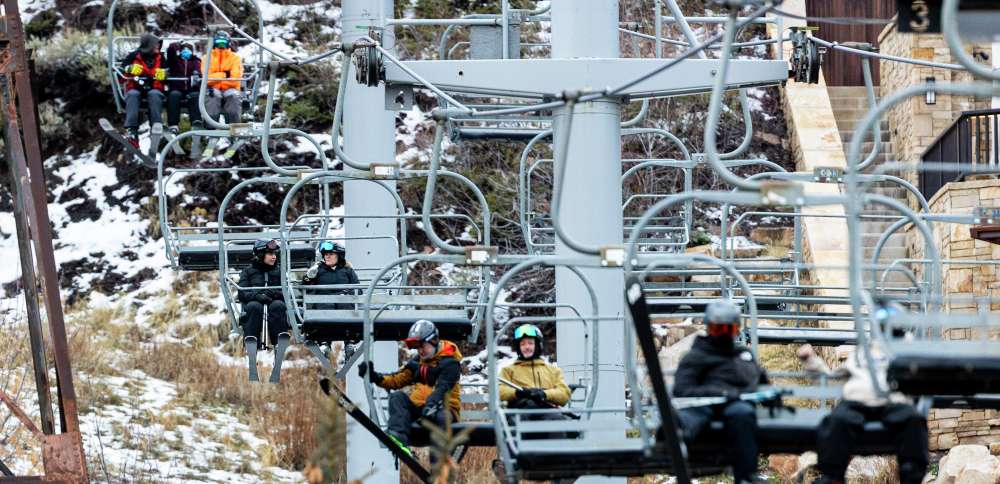
SALT LAKE CITY — Utah's statewide snowpack is on track to be the lowest early-February total yet.
The state has collected about 5.2 inches of water contained in snow so far this winter. It is among the lowest levels recorded at this time of year since at least 1981, according to Natural Resources Conservation Service data. As of Friday, its level is 58% of the median for late January.
With no storms in the forecast, the meager snowpack levels are on track to tie a record on Saturday — before setting a new low on Sunday — dropping below the 5.4 inches reported on Feb. 1, 2018.
"The snowpack is dismal right now," said Joel Williams, interim director at the Utah Division of Water Resources, as he provided an update on the situation to state lawmakers on Friday.
The update was no surprise to members of the Utah Legislature's Natural Resources, Agriculture and Environmental Quality Appropriations Subcommittee, who listened to several presentations about the state's water situation throughout the morning. It's also been a subject of discussion for months, especially as planning for this year's water outlook begins.
Snow accounts for approximately 95% of Utah's water supply. What doesn't help is that every basin is struggling, including some more than others, Williams said.
Every basin is below 80% of the median average, but half — mostly in central and southern Utah — are below 50%. While there are still two months left in the normal snowpack collection season, federal hydrologists recently lowered their expectations for a normal season from 30% to 20%.
"Our only hope is Mother Nature sees that as a challenge, and says, 'Hey, maybe February and March can really show them what I can do,'" he said. "But, for now, we're in this uncertain period of sitting at a much lower snowpack than we would hope."
Long-range forecasts don't suggest much help over the next week or two, before storms may begin to return to Utah. The entire Great Salt Lake Basin will also likely reach a record low sometime next week, added Brian Steed, Utah's Great Salt Lake commissioner.
Gov. Spencer Cox referenced the situation earlier this week, calling on people of all faiths to pray for snow this weekend and urging them to reduce water consumption.
Tracking water for this year
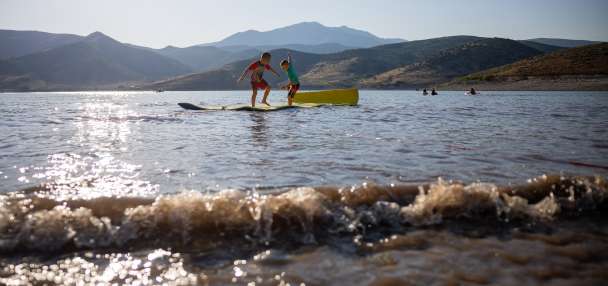
Utah's reservoir system, at 66% capacity, is above normal for January, but many of the smaller reservoirs that rely on snowpack to refill every year may not fill up much in 2026, barring any changes, state water managers said. They plan to monitor the situation over the next few months.
"It's our agricultural areas that could be really impacted if we do not get a spring runoff this year," Williams told lawmakers.
Preliminary water forecasts have the Great Salt Lake water levels only gaining a little more than a half-foot from their current state, which remains in what the state considers its "serious adverse effects" range of health.
Yet, soil moisture levels in the mountains are well above average for this point in the year, which means any snowpack collected in late winter and early spring has a better chance of ending up in Utah's water system. It's just a matter of collecting that snow over rain at this point, which has been difficult because of record-setting temperatures since the water year began in October.
Utah's neighbors understand this struggle all too well, which is why there's a common interest in solutions to handle the situation, said Joel Ferry, director of the Utah Department of Natural Resources and the state's water agent.
Colorado's snowpack remains at record lows, while Arizona's and Idaho's are flirting with record lows. Nevada isn't at its lowest point, but it's also at 56% of its median for late January. Wyoming is in a slightly better position, at 84%.
"There is common interest because we're not alone in the drought conditions," he said.