'%3e%3cpath%20d='M34.1406%205.85938C30.3906%202.10547%2025.3047%200%2020%200C14.6953%200%209.60938%202.10547%205.85938%205.85938C2.10938%209.61328%200%2014.6953%200%2020C0%2025.3047%202.10547%2030.3906%205.85938%2034.1406C9.61328%2037.8906%2014.6953%2040%2020%2040C25.3047%2040%2030.3906%2037.8945%2034.1406%2034.1406C37.8906%2030.3906%2040%2025.3047%2040%2020C40%2014.6953%2037.8945%209.60938%2034.1406%205.85938ZM37.0117%2023.543H31.1602V13.5391H27.6328V19.9414C28.1211%2020.6914%2028.3711%2021.582%2028.3711%2022.5625V22.625C28.3711%2023.668%2028.1172%2024.6055%2027.6328%2025.4297V26.6094H36.082C33.4883%2032.9375%2027.2891%2037.3789%2020.0039%2037.3789C10.3711%2037.3789%202.62109%2029.6289%202.62109%2020C2.62109%2010.3711%2010.3711%202.62109%2020%202.62109C29.6289%202.62109%2037.3789%2010.3711%2037.3789%2020C37.3789%2021.1484%2037.2617%2022.2656%2037.0508%2023.3477C37.0391%2023.4141%2037.0234%2023.4766%2037.0117%2023.543Z'%20fill='white'/%3e%3cpath%20d='M22.3086%2018.5352C20.4336%2018.125%2019.9531%2017.8398%2019.9766%2017.1836V17.1406C19.9766%2016.6992%2020.3477%2016.2148%2021.4023%2016.2148C22.582%2016.2148%2023.8867%2016.6797%2025.0781%2017.4766L26.8516%2015.0195C25.4453%2013.8906%2023.707%2013.3398%2021.5547%2013.3398C18.5195%2013.3398%2016.4375%2015%2016.4063%2017.4766V17.5352C16.3633%2020.2617%2018.5859%2020.9805%2021.293%2021.6016C23.0391%2021.9766%2023.5703%2022.3164%2023.5703%2022.9609L23.5469%2022.9766C23.5469%2023.3906%2023.2578%2023.7031%2022.7852%2023.8359C22.5742%2023.9062%2022.1289%2023.9727%2021.5156%2023.9727C20.7617%2023.9727%2019.7539%2023.8633%2018.6328%2023.4844C18.0898%2023.2891%2017.4727%2023.0039%2016.8047%2022.6133L20.1406%2026.625C20.2813%2026.6602%2021.0977%2026.8516%2021.7734%2026.8516C25.0039%2026.8516%2027.0859%2025.2461%2027.1094%2022.6328V22.5703C27.1602%2020.1133%2025.2148%2019.1719%2022.3086%2018.5352Z'%20fill='white'/%3e%3cpath%20d='M5.24219%2013.5664V26.6133H8.75391V23.7578L10.2969%2021.9531L14.2031%2026.6133H18.3867L12.3555%2019.5195L17.4023%2013.5664H13.4531L8.75391%2019.0586V13.5664H5.24219Z'%20fill='white'/%3e%3c/g%3e%3cdefs%3e%3cclipPath%20id='clip0_97_2430'%3e%3crect%20width='40'%20height='40'%20fill='white'/%3e%3c/clipPath%3e%3c/defs%3e%3c/svg%3e)




- A wrongful death lawsuit filed by Gabby Petito's family and dismissed in the district court will be heard in the Utah Supreme Court in March.
- Moab argues police are not responsible for her death after responding to an August 2021 incident with Petito and Laundrie, and Utah filed a brief in support of them.
- Petito's family claims Moab police were negligent in their briefs, which were supported by a brief from parents of another Utah crime victim.
SALT LAKE CITY — The city of Moab said it feels "profound sympathy" for Gabby Petito's family but its officers are not responsible for her death "some 400 miles away, and weeks after the couple left Moab."
The city spoke out on Thursday as attorneys prepare for oral arguments in a wrongful death lawsuit filed by Petito's family, which was dismissed in November 2024.
The Utah Supreme Court scheduled oral arguments in an appeal of that dismissal for March 4.
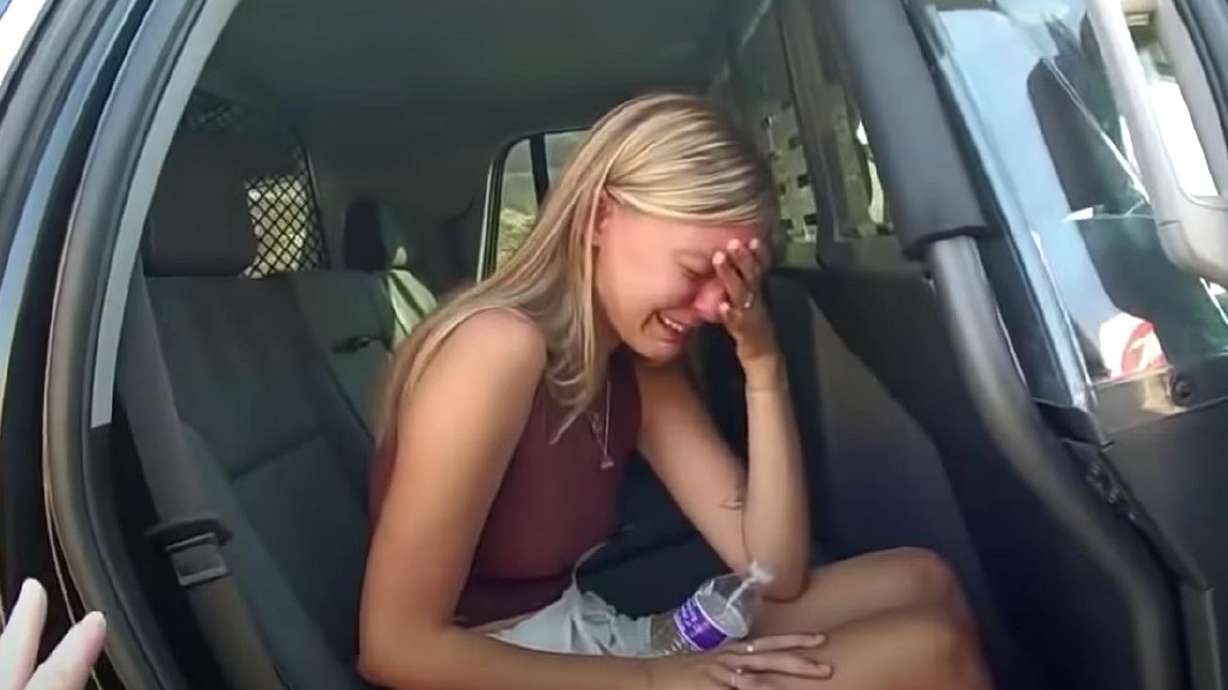
Police responded to a domestic violence call related to 22-year-old Petito and her fiancé Brian Laundrie on Aug. 12, 2021. The two were visiting Moab and other national parks during a road trip. This was just over a month before Laundrie arrived home alone, and Petito's parents and many around the United States began searching for her.
Petito's body was found in Wyoming's Bridger-Teton National Forest. Laundrie went missing following the discovery, and his body was later found at a nature preserve in Florida near a notebook where he admitted to killing her.
The family filed a lawsuit against Moab, arguing that the police department was grossly negligent in its investigation, claiming it sympathized with Laundrie and did not follow the proper response for a domestic violence situation.
Moab's statement said the city "stands behind" its police department and will continue to defend that the lawsuit should be dismissed throughout the appeal. It said Moab is a city of about 5,000 people that gets millions of tourists each year, and Petito and Laundrie were just two of those tourists.
"When Moab's officers interacted with Ms. Petito, they did so with kindness, respect and empathy. The officers also separated Ms. Petito from Mr. Laundrie for the night. The following day, the couple voluntarily reunited and left Moab — like millions of other tourists before and since," the statement said.
Arguments from the Petito family's attorneys
Parker & McConkie, the law firm representing Petito's parents, said they "remain steadfast in their pursuit of justice for Gabby."
Attorney Judson Burton said in the statement that the briefing underscores the case's significance in Utah law, citing multiple local governments that have weighed in.
"We are confident that at oral argument, the justices will recognize that Utah's Constitution protects every citizen's right to hold even government entities accountable for the wrongful death of a loved one," he said.
The statement included a quote from Petito's family: "While we miss Gabby every day, the continued love and support we feel gives us strength. We look forward to this next important step, but regardless of the outcome, will remain determined to seek justice for her and to advocate for other victims and their families."

In their brief, they said Moab's claim that there is no judicial redress in this case despite the city's negligence was not the view of those who settled Utah, "many of whom lost children and family to religious and political violence sanctioned by government actors."
It claims that the wrongful death clause in the Utah Constitution means no one, "not even a municipality like Moab," is immune when causing death through negligence.
It said a 1996 Utah case, Tiede v. State, that the government has relied on to claim it is immune deals with sovereign immunity rather than municipal liability and does not apply, but if the court finds it does, it should overturn that ruling.
Moab's legal arguments
The attorneys representing the Moab Police Department said the pioneer influence of Utah's founding did not drive the wrongful death law and that the influence would not explain the outcome for the case requested by Petito's parents.
According to their brief, no case from Utah or the Territory of Deseret (the name of the region before it was established as a state) allowed people to assert claims against a government entity for an improper police investigation.
The attorneys said although the killing of Petito is "heartbreaking," consequences of a lawsuit in Utah for a crime that occurred more than a month later and hundreds of miles away "would be widespread and counterproductive."
It said a change of the law would also cause "immediate and uninsured budgetary impacts."
Hunter Jackson's parents join in
Brooke and Jeromey Jackson, the parents of Hunter Jackson, a 3-year-old boy who was killed in a crash in Eagle Mountain along with his friend Odin Ratliff while playing in a horse corral, filed an amicus brief in support of the Petito family in the case. It said the outcome could impact a case they currently have going in the 3rd District Court.
They said they "stand behind" Gabby Petito's parents in the legal debate, while grieving their son.
They claim in their lawsuit that the government built a road "dangerously close to neighboring property" and that it "let a repeat felon with a history of drug-fueled driving stay on the streets despite repeated parole violations."
In their brief in the Petito case, they argued that sovereign immunity sprang from lawsuits against Southern states during the Civil War and does not have intellectual or moral basis.
"The doctrine does not express the sovereignty of the people. It expresses the arrogance of government that refuses to take responsibility for its wrongs and to provide redress," their brief says.
Kent Cody Barlow was found guilty of the murder of Jackson and his friend in a 4th District Court trial last year and sentenced to prison. A separate wrongful death suit filed by Odin Ratliff's parents against the Utah Board of Pardons and Parole and Wasatch Behavioral Health was dismissed previously and is also under appeal and will be heard by the Supreme Court.

The state of Utah also filed an amicus brief in support of Moab and "defending the constitutionality of the Utah Governmental Immunity Act."
It argued that applying the act to this wrongful death lawsuit is not unconstitutional, as Petito's parents claim, citing that when the Utah Constitution was adopted, "it was well settled" that a municipality was not accountable for its officers' actions.