'%3e%3cpath%20d='M34.1406%205.85938C30.3906%202.10547%2025.3047%200%2020%200C14.6953%200%209.60938%202.10547%205.85938%205.85938C2.10938%209.61328%200%2014.6953%200%2020C0%2025.3047%202.10547%2030.3906%205.85938%2034.1406C9.61328%2037.8906%2014.6953%2040%2020%2040C25.3047%2040%2030.3906%2037.8945%2034.1406%2034.1406C37.8906%2030.3906%2040%2025.3047%2040%2020C40%2014.6953%2037.8945%209.60938%2034.1406%205.85938ZM37.0117%2023.543H31.1602V13.5391H27.6328V19.9414C28.1211%2020.6914%2028.3711%2021.582%2028.3711%2022.5625V22.625C28.3711%2023.668%2028.1172%2024.6055%2027.6328%2025.4297V26.6094H36.082C33.4883%2032.9375%2027.2891%2037.3789%2020.0039%2037.3789C10.3711%2037.3789%202.62109%2029.6289%202.62109%2020C2.62109%2010.3711%2010.3711%202.62109%2020%202.62109C29.6289%202.62109%2037.3789%2010.3711%2037.3789%2020C37.3789%2021.1484%2037.2617%2022.2656%2037.0508%2023.3477C37.0391%2023.4141%2037.0234%2023.4766%2037.0117%2023.543Z'%20fill='white'/%3e%3cpath%20d='M22.3086%2018.5352C20.4336%2018.125%2019.9531%2017.8398%2019.9766%2017.1836V17.1406C19.9766%2016.6992%2020.3477%2016.2148%2021.4023%2016.2148C22.582%2016.2148%2023.8867%2016.6797%2025.0781%2017.4766L26.8516%2015.0195C25.4453%2013.8906%2023.707%2013.3398%2021.5547%2013.3398C18.5195%2013.3398%2016.4375%2015%2016.4063%2017.4766V17.5352C16.3633%2020.2617%2018.5859%2020.9805%2021.293%2021.6016C23.0391%2021.9766%2023.5703%2022.3164%2023.5703%2022.9609L23.5469%2022.9766C23.5469%2023.3906%2023.2578%2023.7031%2022.7852%2023.8359C22.5742%2023.9062%2022.1289%2023.9727%2021.5156%2023.9727C20.7617%2023.9727%2019.7539%2023.8633%2018.6328%2023.4844C18.0898%2023.2891%2017.4727%2023.0039%2016.8047%2022.6133L20.1406%2026.625C20.2813%2026.6602%2021.0977%2026.8516%2021.7734%2026.8516C25.0039%2026.8516%2027.0859%2025.2461%2027.1094%2022.6328V22.5703C27.1602%2020.1133%2025.2148%2019.1719%2022.3086%2018.5352Z'%20fill='white'/%3e%3cpath%20d='M5.24219%2013.5664V26.6133H8.75391V23.7578L10.2969%2021.9531L14.2031%2026.6133H18.3867L12.3555%2019.5195L17.4023%2013.5664H13.4531L8.75391%2019.0586V13.5664H5.24219Z'%20fill='white'/%3e%3c/g%3e%3cdefs%3e%3cclipPath%20id='clip0_97_2430'%3e%3crect%20width='40'%20height='40'%20fill='white'/%3e%3c/clipPath%3e%3c/defs%3e%3c/svg%3e)


- Salman Rushdie's new documentary "Knife" premiered at Sundance, exploring his 2022 attack.
- Directed by Alex Gibney, it highlights themes of identity, forgiveness and free speech.
- Rushdie calls it a love story, showcasing his bond with wife Rachel Eliza Griffiths.
SALT LAKE CITY — Two nights before he was scheduled to speak at an event in the small town of Chautauqua, New York, renowned author Salman Rushdie awoke from a dream that he said felt like a premonition.
In the dream, Rushdie said he was being pursued in an amphitheater by a man with a spear. When he woke up, the dream made such an impression on him that he told his wife that maybe he shouldn't go to the event in Chautauqua. He would be speaking in a theater, and he said "it all felt a bit close" to what he'd experienced in the dream.
"And then I thought, 'Well, you know, you don't change your plans because you had a bad dream,'" Rushdie, author of the acclaimed novels "Midnight's Children" and "The Satanic Verses," said during a panel discussion at the Sundance Film Festival in Park City on Sunday. He decided to go ahead and attend the event, but he told the Sundance audience, "maybe I should have paid attention to the dream."
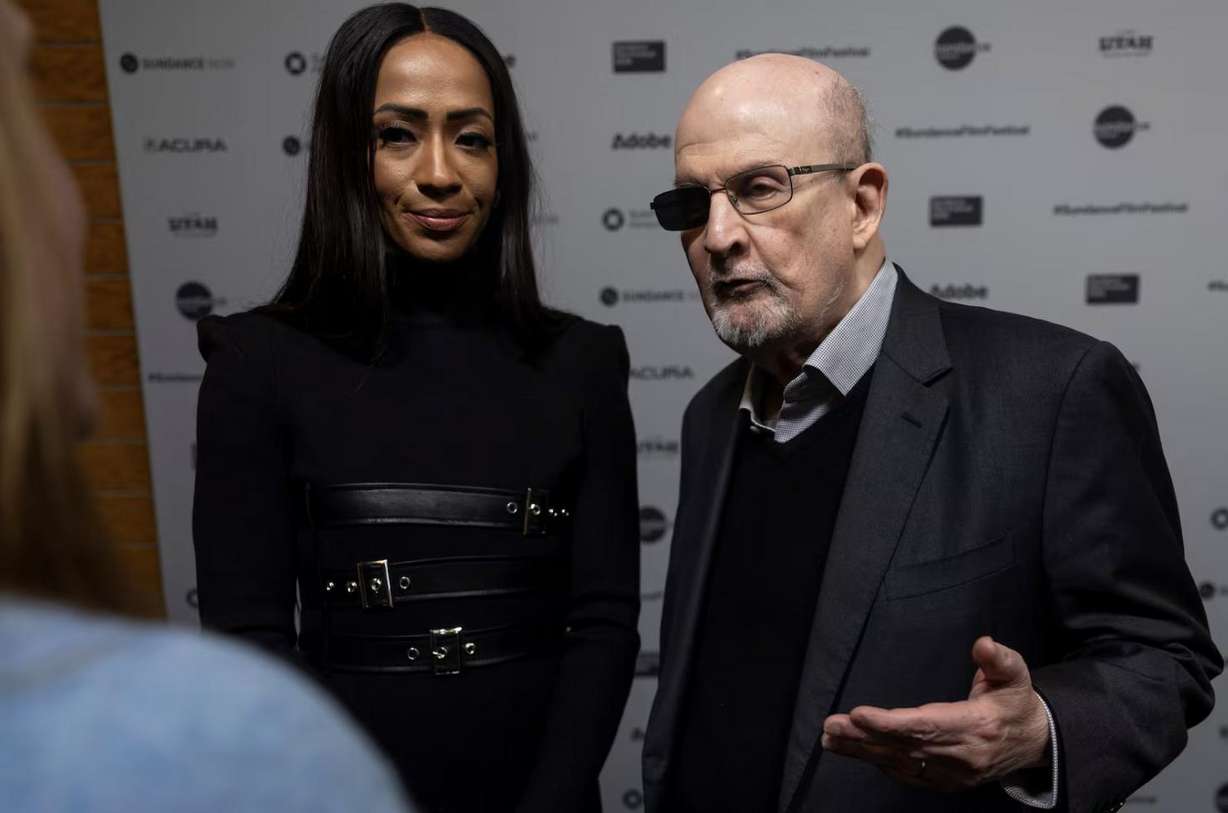
Rushdie was in Park City to promote the new documentary "Knife: The Attempted Murder of Salman Rushdie," directed by Academy Award-winning filmmaker Alex Gibney. Premiering at Sundance this week, the film tells the full story of what happened to him at that event in Chautauqua — and the aftermath.
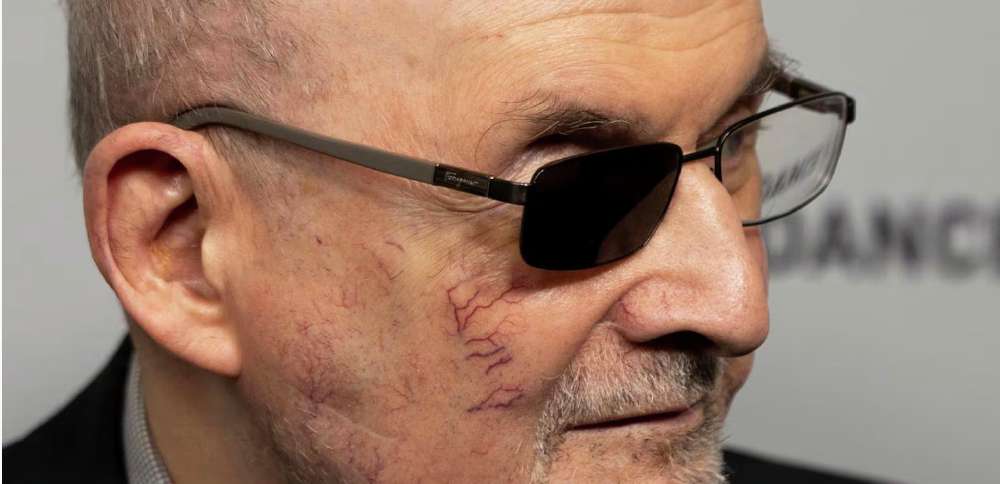
While preparing to speak at the event in 2022, Rushdie was brutally attacked on stage by a man wielding a knife. He was stabbed 15 times and was left blind in one eye by the attack, leading to months of challenging recovery, which the documentary chronicles through intimate footage taken by Rushdie's wife, the poet and photographer Rachel Eliza Griffiths.
But although the documentary is centered on the attack, it also explores much deeper themes of identity, forgiveness and freedom of speech. And it's anchored by his relationship with Griffiths, showing how the strength of their relationship helped pull him through the ordeal, leading Rushdie himself to say on Sunday that "Knife" is actually, in a way, "a love story."
Decades of threats
Rushdie was no stranger to attempts on his life. The Indian-born author has lived under death threats for nearly four decades, ever since the publication of his 1988 novel "The Satanic Verses."
The documentary chronicles the violent backlash that Rushdie received to the novel, which was perceived by some Muslims as blasphemous. It was banned in 20 (predominantly Muslim) countries, and there were book burnings and riots around the globe, including in London and New York. But it all came to a head when then-Supreme Leader of Iran Ayatollah Ruhollah Khomeini issued a fatwa, or religious decree, calling for the death of Rushdie and anyone involved in the book's publication.
"Knife" leaps backward and forward in time, showing the effect of the fatwa on Rushdie — who was born into a Muslim family in Mumbai and has lived most of his life in London and New York City — throughout the last 30-plus years of his life.
"We felt we had to revisit that story (in the documentary)," Rushdie said at the panel. "Otherwise, people wouldn't understand what happened now if they didn't know what happened then."
As a result of the fatwa, Rushdie was forced to live in hiding for many years. He talks in the documentary about how the possibility of an assassination attempt loomed in the back of his mind as he began to live more publicly. But it also inspired him to become a proponent of free speech, particularly when it comes to religion, speaking up on behalf of the rights of authors and artists around the world.
Gibney, who won an Oscar in 2008 for his Afghanistan War documentary "Taxi to the Dark Side," told the Deseret News that he wanted to "tell everybody something about who Salman is, where he came from, what kind of writer was he, what kind of man he was. You know, how long he suffered under the threat of political violence. And how strong he's fought for the right for free speech."
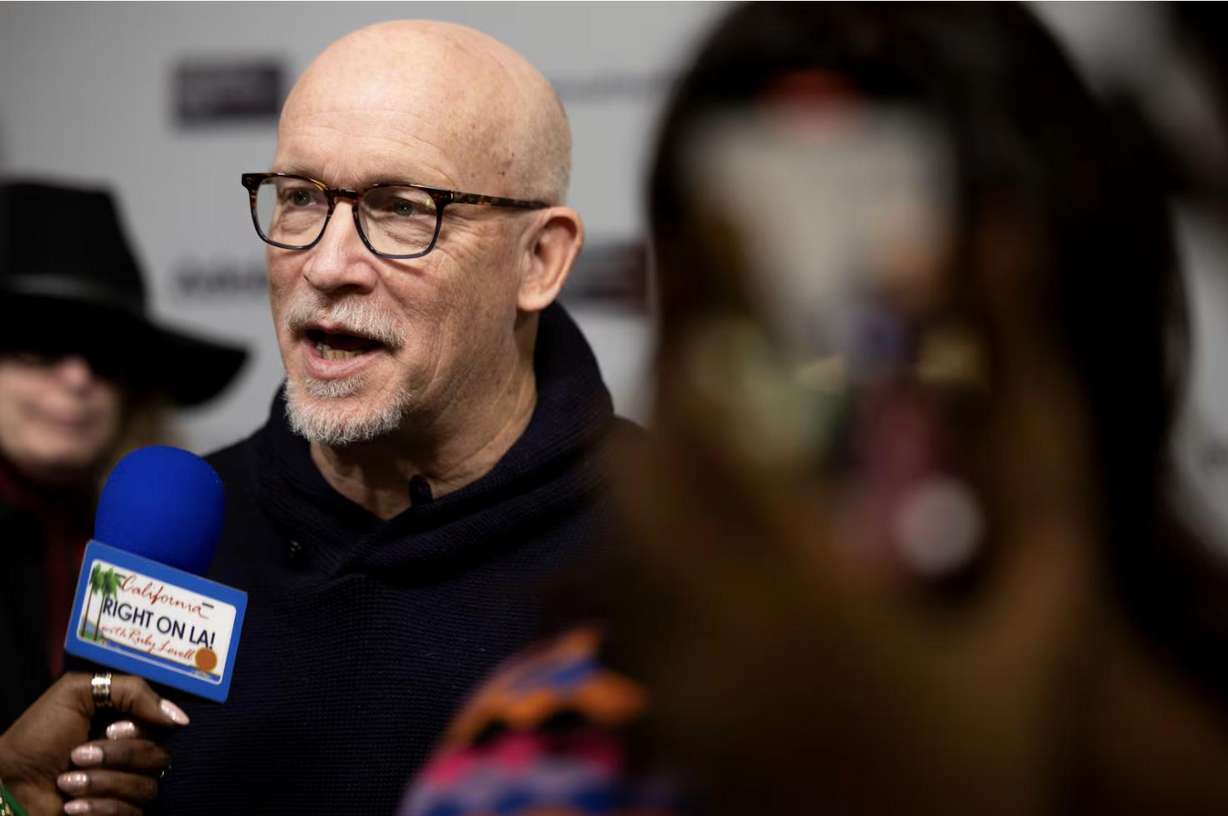
But those themes were an undercurrent in the documentary, Gibney said, to a much simpler story: "Let's see if he makes it."
Healing — and filming
It wasn't immediately clear whether Rushdie was going to make it in the immediate aftermath of the attack. He was rushed to a hospital in nearby Erie, Pennsylvania, where he underwent surgeries and was placed on a ventilator for several days. He was later transferred to a rehabilitation center, where he spent several weeks recovering.
The documentary depicts in brutal detail the extent of Rushdie's injuries, including the loss of his eye. This is thanks to footage taken by Rushdie's wife, Griffiths, who began taking photos and videos of him about five days after he arrived at the hospital.
Her footage unflinchingly shows his bloody wounds and deep bruising, his many stitches, and the damage to his eye. But it also shows the deep bond between the two of them — a "date night" while Rushdie lies in a hospital bed, Griffiths cheering him on as he takes his first steps after the attack, and frequent "I love yous" shared by them both.
Although Griffiths is constantly upbeat and encouraging in her videos with Rushdie, one of the most moving parts of the film comes when she turns the camera on herself while she's alone. Without Rushdie present, she emotionally shares how the attack has impacted her and her worries for her husband.
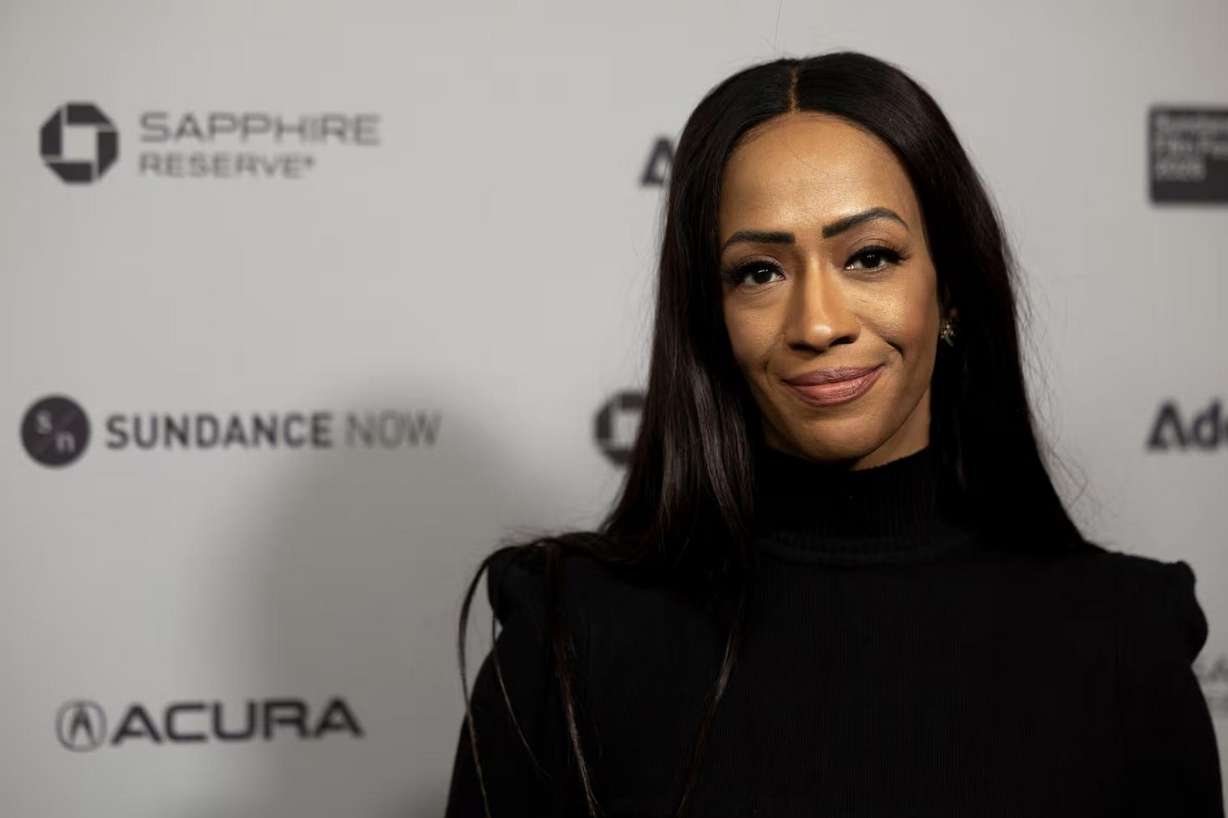
At first, they weren't sure they would do anything with the footage that Griffiths captured, Rushdie told the Deseret News. But as they began to look back on what she had filmed, they began to think there was a story there that was worth telling.
That largely came down to Griffiths' talents as a photographer and cinematographer, Rushdie said.
"It was very, very well shot," Rushdie told the Deseret News. "And actually, when Alex saw it, he was also very impressed by the quality of the filmmaking. And I think without that, there would be no film."
Rushdie and Griffiths originally considered making the film themselves, but ultimately decided to approach Gibney about the project.
"They have this extraordinary footage that Eliza had shot of his recovery, starting in about Day 5, after, you know, once they knew he would survive," Gibney said. "And for a while, they considered doing the film themselves, and then I think they decided they were too close to it. So they were looking for a filmmaker who had a vision of how to put the footage at the center, but to do something else with it."
Rushdie says that Gibney's vision was critical to creating the film.
"I didn't know exactly what I wanted it to be," Rushdie said during the panel. "I knew that the footage that Eliza had made would be very central to whatever the film ended up being. But beyond that, I didn't really have a picture in my head. And that's, actually, that's why we needed a really brilliant filmmaker to say, 'OK, we've got this stuff, and what's the film?' And that's what Alex brought to it."